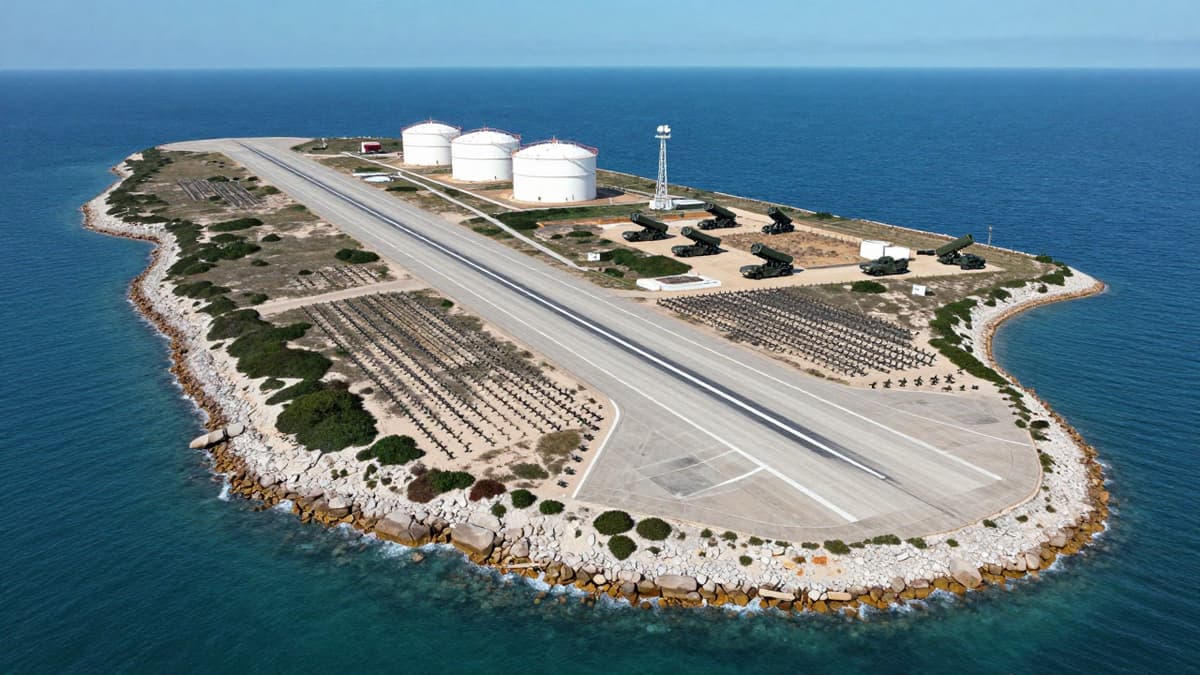
Iran is aggressively preparing Kharg Island with traps and personnel, raising fears of a high-casualty US ground invasion intended to force Strait of Hormuz reopening.
Iran has been intensifying defensive measures on Kharg Island in recent weeks, including laying traps and repositioning military personnel, specifically to counter a potential US ground attack, according to multiple sources familiar with US intelligence reporting. The island serves as a critical economic lifeline for Iran, handling roughly 90% of the country's crude exports. The Trump administration is reportedly considering a ground operation to seize the territory as leverage to coerce Tehran into reopening the Strait of Hormuz, a vital global energy artery.
The strategic stakes are high, with the island located at the northern end of the Persian Gulf, away from the Strait but critically near major oil facilities. Despite US military strikes on March 13 that hit 90 targets, including missile bunkers and mine storage, sources indicate the island retains significant layered defenses. The US is now grappling with whether a ground mission is worth the risk of a large number of American casualties, as Iranian air defenses and mines pose a severe threat to any invading force.
US officials and military experts emphasize the dangers, noting that the island has been fortified with shoulder-fired surface-to-air guided missile systems known as MANPADs. In addition to these weapons, sources confirm that anti-personnel and anti-armor mines have been laid around the island, particularly on the shoreline where US troops would likely stage an amphibious landing if President Donald Trump authorizes the plan. The island, roughly one-third the size of Manhattan, would require a robust landing force, potentially involving Marine Expeditionary Units specialized in amphibious assaults.
Retired Adm. James Stavridis, a CNN military analyst and former NATO Supreme Allied Commander, expressed deep concern about the potential human cost. "Iranians are clever and ruthless. They will do everything they can to inflict maximum casualties on US forces both on the ships at sea, and especially once ground troops are anywhere in their sovereign territory," Stavridis warned. An Israeli source echoed these sentiments, citing fears that capturing the island could lead to devastating drone and missile attacks against American troops. "The hope is that they won't take that risk and will instead fire at the oil fields, but there is no way to know," the source stated.
Amidst the strategic deliberations, some allies of the president are raising serious questions about the necessity of a ground assault. They argue that successfully taking the island would not, on its own, resolve the geopolitical problems related to the Strait of Hormuz or Iran's stranglehold on the global energy market. Furthermore, Gulf allies are privately urging the administration against prolonging the war by committing US military operation forces to occupy the island or attempting to remove uranium from a previously bombed nuclear facility. A senior Gulf official noted that occupying Kharg could trigger high casualties, likely leading to Iranian retaliation against Gulf countries' infrastructure and extending the conflict indefinitely.
Instead, Gulf nations are pressing for the complete dismantling of Iran's ballistic missile program. The Pentagon has recently briefed allies that a large portion of Iran's ballistic and cruise missile capability has been destroyed, though no timeline for completion was specified. US Central Command maintains near-constant surveillance of the island, allowing the military to observe physical and environmental changes, including areas where traps appear to have been laid. While recent strikes degraded some defenses, including HAWK surface-to-air missiles and Oerlikon anti-aircraft guns, US forces would remain vulnerable to Iranian ballistic missile and drone attacks due to the island's proximity to the Iranian coast.
Iranian officials have also voiced their defiance. Speaker Mohammad Bagher Ghalibaf of Iran's parliament warned "enemies" against attempting to occupy any Iranian islands, citing data suggesting such preparations are underway with regional support. "Based on some data, Iran's enemies, with the support of one of the regional countries, are preparing to occupy one of the Iranian islands," Ghalibaf posted on X. He warned that if enemies step out of line, all vital infrastructure of the supporting regional country would become the target of relentless attacks.
Adm. Stavridis suggested an alternative approach to pressure Iran without deploying ground troops. He proposed an offshore blockade of Kharg Island to prevent oil exports, a measure that could be implemented without the high risks associated with a ground invasion. The US also retains plans to destroy sensitive information and infrastructure if its installations abroad are overrun, a contingency that might parallel Iranian preparations. As the administration weighs the options, the debate continues over whether the strategic gain justifies the potential loss of life in a highly fortified environment.
The intensifying buildup on Kharg Island signals a critical escalation in the region, where the US faces a difficult strategic calculus between coercive leverage and operational risk. If the Trump administration proceeds with a ground invasion despite the heavy losses it could incur, it risks deepening a prolonged conflict that could see Iranian retaliatory strikes against Gulf allies' energy infrastructure. The most likely long-term outcome, given the current posture of both sides and the warnings from Gulf nations, is a continued reliance on naval blockades and missile strikes rather than a ground occupation, as the human and political costs of seizing the island appear to outweigh the immediate strategic benefits.
May 9, 2026 21:40 UTC
Russia Cuts Heavy Armor From Victory Day Parade Amid War
Join 50,000+ readers getting the global briefing every morning.
No spam. Unsubscribe anytime.
May 9, 2026 23:27 UTC
India’s Strategic Leap: Agni-5 with MIRV Trial Success
May 9, 2026 21:40 UTC
Russia Cuts Heavy Armor From Victory Day Parade Amid War
May 9, 2026 21:28 UTC
Delhi Terror Threat: Security Intensified at BJP HQ on Deen Dayal Upadhyaya Marg
May 9, 2026 19:32 UTC
Hardliners Sabotage Iran-US Negotiations Amidst Fractured Regime


