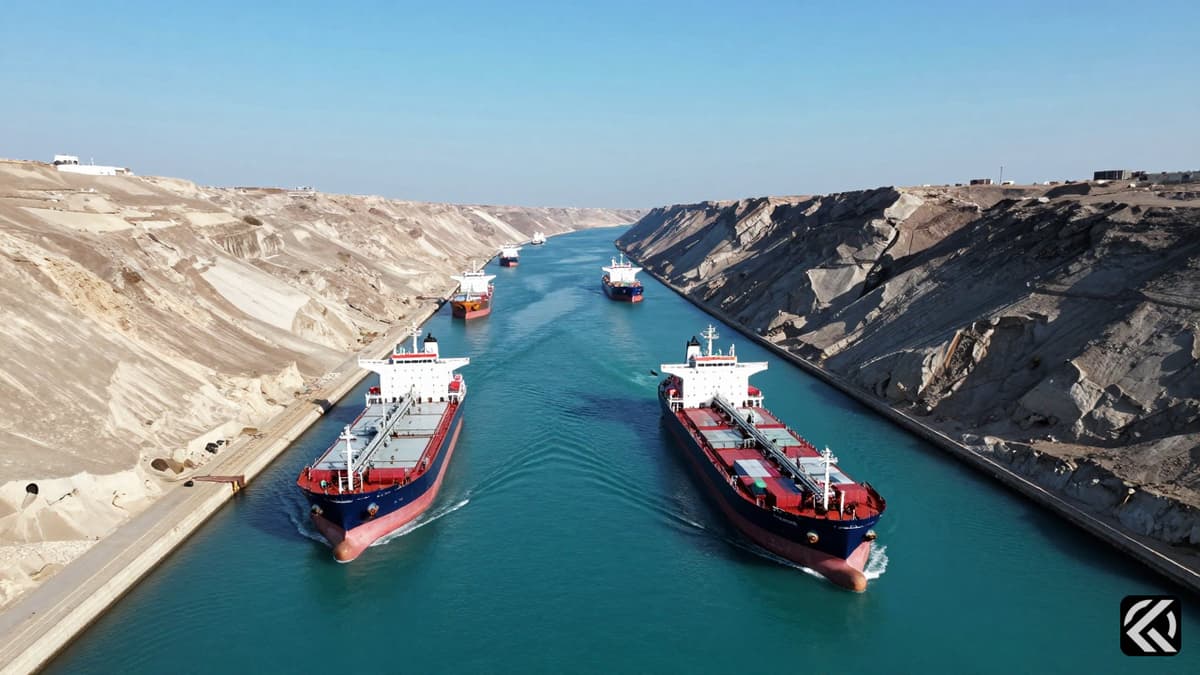
Oil prices plummet after Iran declares the Strait of Hormuz open for commercial ships, easing fears from the US-Israel war with Iran and lifting global markets.
Oil prices have plummeted after Iran declared the Strait of Hormuz would be completely open to commercial ships for the remainder of the current ceasefire. This announcement comes amidst the ongoing US-Israel war with Iran, where the vital waterway had been effectively shut since late February. The move caused the cost of a barrel of Brent crude to drop to $88 from above $98 earlier on Friday, signaling a significant shift in global energy markets.
The announcement triggered an immediate rally in global markets, with the S&P 500 index closing up 1.2%. European indices also surged, as the CAC index in Paris and the Dax in Frankfurt both ended the day around 2% higher, while London's FTSE 100 closed 0.7% up. Iranian Foreign Minister Abbas Araghchi explicitly stated that the passage for all commercial vessels through the strait is declared completely open for the remaining period of the ceasefire.
The Strait of Hormuz, a narrow strip of water south of Iran, typically transports a fifth of the world's oil and liquefied natural gas. Its closure during the conflict had drastically reduced the amount of oil and gas available, causing prices to spike. Before the conflict, Brent crude traded under $70 per barrel, rising above $100 and peaking at more than $119 in March before retreating.
While the Iranian government insists the waterway is clear, international shipping bodies have expressed caution. BIMCO, the global shipping body, advised operators to consider avoiding the area, citing unclear status regarding mine threats in the traffic separation scheme. Jakob Larsen, BIMCO's chief safety and security officer, stated that shipping companies should not transit until satisfied regarding safety.
Similarly, the International Maritime Organization (IMO) is verifying the details behind Iran's commitment. IMO Secretary General Arsenio Dominguez noted they are currently verifying the announcement regarding compliance with freedom of navigation and secure passage. Tracking shows minimal ship movement has occurred so far, raising questions about the immediate practicality of the reopening.
The sharp rises in oil prices previously pushed up the cost of petrol and diesel, sparking fears that airlines might have to ground flights due to jet fuel supply issues. The closure also cut off a major supply line of fertilizer, used by farmers, raising the prospect of higher food prices. A third of the world's key fertilizer chemicals pass through the strait, and prices for these chemicals have risen steeply since the outbreak of war.
Despite the official declaration, some shipping operators remain hesitant. An unnamed operator stated, "We don't feel like we need to be taking unnecessary risks," emphasizing that the safety of crew and vessels governs every routing decision. They added that they will not transit until satisfied it is safe to do so. Kieran Tompkins, a senior economist at Capital Economics, noted the ceasefire offers a narrow window for tankers to navigate, load, and exit, suggesting vessel numbers may not return to pre-war norms immediately.
US President Donald Trump welcomed the announcement, writing on Truth Social that Iran has fully opened the strait and thanking the nation. Trump claimed Iran agreed to never close the strait again, stating it will no longer be used as a weapon. However, he clarified that a naval blockade remains in full force until a permanent deal is reached.
Meanwhile, the RAC motoring group noted that pump prices in the UK had fallen slightly for the first time since the war began, though costs remain higher than in February. The removal of sanctions aimed at cutting off Russian oil exports, which Trump implemented in March, had previously drawn criticism from European and Canadian leaders.
The opening of the waterway offers a temporary relief to global energy supplies, but the underlying risks remain significant. The nine-day ceasefire provides a brief opportunity for trapped tankers to exit and new ones to enter, yet the lack of immediate large-scale traffic suggests lingering caution among operators. The disconnect between official declarations and on-the-ground reality, evidenced by BIMCO's warnings and minimal ship movement, indicates that the situation remains fragile. If mine threats persist or if the ceasefire expires without a permanent agreement, the Strait of Hormuz could close again, causing immediate volatility in Brent crude prices and exacerbating the US-Israel war with Iran's economic fallout. The global economy now watches closely to see if this temporary opening can stabilize the energy market or if the security concerns will continue to dictate shipping routes.
Jun 8, 2026 04:15 UTC
Trump Urges Netanyahu to Halt Iran Strike for Peace
Join 50,000+ readers getting the global briefing every morning.
No spam. Unsubscribe anytime.
Jun 8, 2026 02:28 UTC
Trump Walks Out of Meet the Press After Rejecting Evidence Demands
Jun 8, 2026 02:17 UTC
Magnitude 7.8 Quake Shakes Philippines, Urging Immediate Evacuations
Jun 8, 2026 00:51 UTC
Trump Claims Iran Nuclear Deal Imminent Despite Diplomatic Fractures
Jun 8, 2026 00:47 UTC
Iran Fires Missiles at Israel After Beirut Strike


