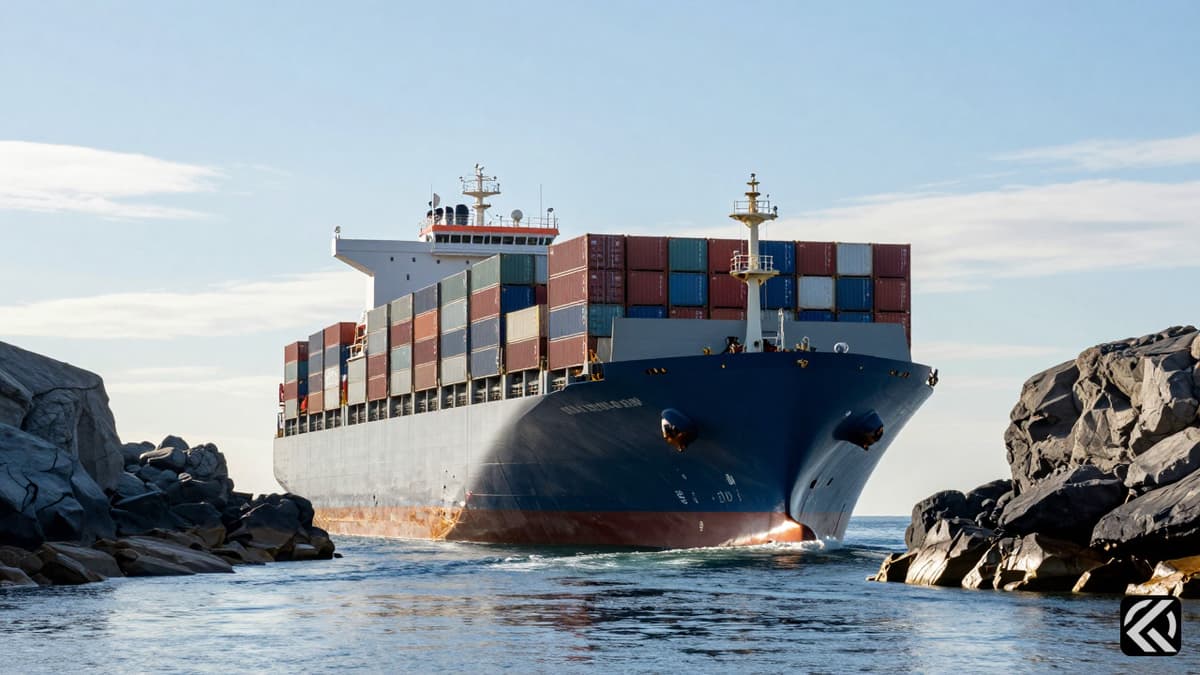
Indian businesses breathe a sigh of relief as the Strait of Hormuz reopens, ending weeks of disruption for vital energy and trade shipments.
NEW DELHI: Indian oil companies, fertilizer importers, and exporters are celebrating the reopening of the Strait of Hormuz for global commercial vessels. This development marks the end of a significant blockade that began on February 28, following a joint military strike by the US and Israel. The resolution brings immediate relief to the nation's energy and agricultural supply chains after more than 45 days of disruption.
The reopening comes at a critical time as 41 India-bound ships, comprising both Indian and foreign-flagged vessels, were waiting west of the narrow channel. These vessels carry essential cargo including crude oil, liquefied natural gas (LNG), liquefied petroleum gas (LPG), and fertilizer. Of the 41 vessels, 15 are Indian-flagged, while 26 are under foreign flags. Among those waiting, 10 are loaded with crude oil, four are LPG tankers, and three are carrying LNG. The blockage had specifically halted the movement of fertilizers, which are crucial for the upcoming kharif sowing season.
The market reaction was swift and positive. Soon after the announcement regarding the opening, oil prices retreated below the $90 level. Brent futures specifically traded at $87.9 a barrel, marking an 11.5% decrease. Experts indicate that this drop in oil prices will directly translate into lower transport costs for the coming period. Dev Garg, director at Singapore-based shipping firm Eximwala Solutions, stated that the fall in oil prices will result in a decline in international freight rates, representing a significant gain across various sectors.
For exporters, the return of free sailing is a turning point after a period of uncertainty. Danish Shah, owner of Pune-based Sanghar Exports, noted that freight costs had previously soared to exceed the price of entire consignment of onions, effectively halting exports to West Asia, a key market. The perishable nature of goods like bananas also forced the suspension of exports to most of West Asia during the conflict. Shah emphasized the immediate need for shipping lines to respond effectively, as the previous conditions made exports unviable.
The agricultural and food export sectors are equally optimistic about the resumption of trade. Amit Marwah, Managing Director of Amritsar-based DRRK Foods, anticipates a surge in demand from West Asia. His company currently has 18,000 tonnes of basmati rice stranded at Indian ports. Marwah expects bulk demand to increase, driven by the expectation of lower freight rates. Previously, freight rates had surged four-to-five times, rising from the $700 per container DRRK was accustomed to paying for shipments to Jeddah port.
Ajai Sahay, Director General at the exporters' body Fieo, highlighted the broader strategic benefits of the reopening. He noted that the resumption of normalcy will not only allow goods to reach West Asia but also provide a shorter route for cargo destined for Europe. This efficiency is expected to positively impact exports in April. Currently, around two dozen Middle East-bound ships are still waiting at Indian ports, and the situation is expected to clarify further in the next couple of days as more vessels begin their crossing.
Officials tracking the developments acknowledged that while the Strait is open, operational details remain to be resolved. The time it takes for shipping lines to complete procedures and negotiate war risk charges with insurers remains a factor to watch. It typically takes four to six days for ships to travel from the west of the Strait to Indian ports. A senior official at a government-owned port expressed that the resumption of free sailing would bring huge relief to the energy supply sector.
To ensure no shortage of energy supplies occurred during the conflict, India utilized diplomatic channels to secure the safe passage of nine Indian merchant ships, all carrying LPG, the primary cooking fuel for the country. The government has not disclosed details regarding foreign-flagged vessels, citing trade confidentiality and varied chartering firms. Officials confirmed that India secured supplies from diversified sources to maintain energy security throughout the 45-day disruption.
The reopening of the Strait of Hormuz signals a critical stabilization for India's trade and energy infrastructure. With oil prices retreating and freight rates poised to fall, the immediate effect will be a restoration of economic viability for exporters whose operations were paralyzed by soaring transport costs. As the 41 stranded ships, including those carrying vital fertilizers for the kharif season, begin their transit, the pressure on India's energy supplies will ease. However, the next few days will be pivotal as shipping lines navigate the negotiation of war risk charges and complete necessary procedures. While the immediate blockade has lifted, the speed at which India-bound ships clear the 36-km passage and the subsequent normalization of freight rates to pre-blockade levels will determine the long-term impact on April exports and regional trade dynamics. The diversification of energy supply sources undertaken by officials will continue to serve as a buffer against future volatility, ensuring that the nation remains resilient in the face of geopolitical fluctuations.
Jun 8, 2026 04:15 UTC
Trump Urges Netanyahu to Halt Iran Strike for Peace
Join 50,000+ readers getting the global briefing every morning.
No spam. Unsubscribe anytime.
Jun 8, 2026 02:28 UTC
Trump Walks Out of Meet the Press After Rejecting Evidence Demands
Jun 8, 2026 02:17 UTC
Magnitude 7.8 Quake Shakes Philippines, Urging Immediate Evacuations
Jun 8, 2026 00:51 UTC
Trump Claims Iran Nuclear Deal Imminent Despite Diplomatic Fractures
Jun 8, 2026 00:47 UTC
Iran Fires Missiles at Israel After Beirut Strike


