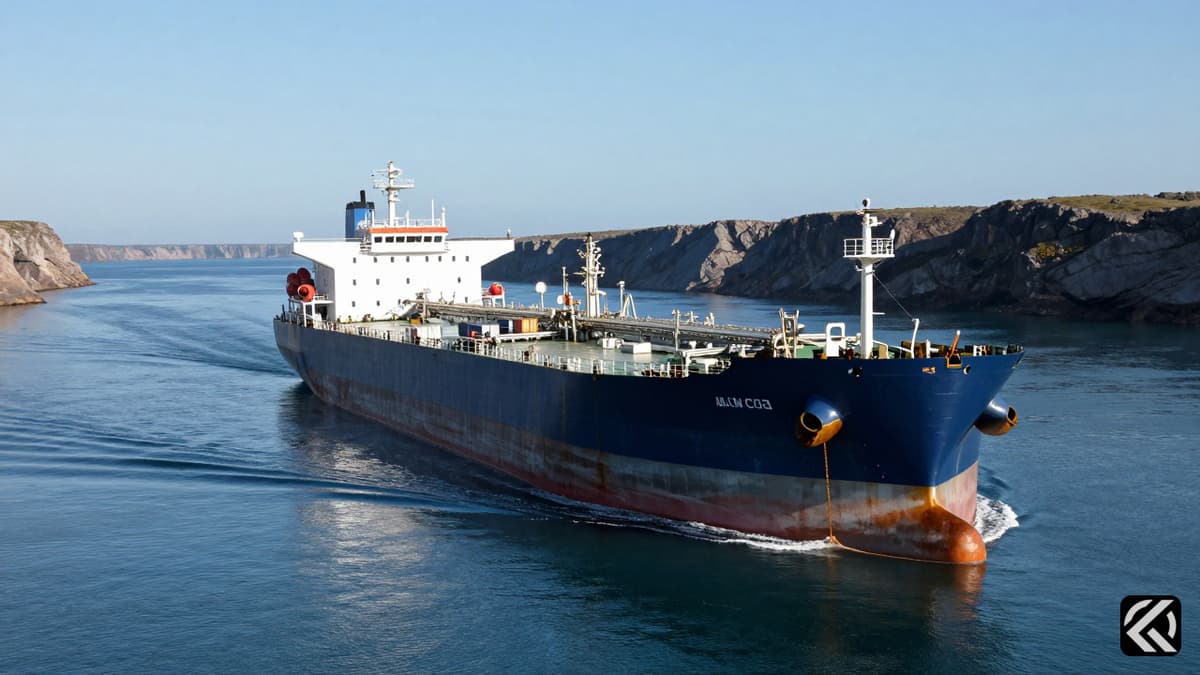
The US has reversed course, granting a month-long waiver for Russian oil already at sea to stabilize markets disrupted by the ongoing regional war and supply constraints.
The US administration has reversed course and extended a narrow window for global buyers to purchase Russian oil shipments currently at sea. This decision comes despite earlier indications from the Treasury Department that such relief would not continue. Late Friday, the US Treasury Department published a new license granting a roughly month-long Russian oil waiver. The measure allows nations to buy Russian oil and petroleum products loaded onto vessels as of Friday, with the provision running until 12:01 am (0401 GMT) on May 16. This renewal replaces the previous 30-day waiver that had expired on April 11.
The decision marks a sharp reversal from comments made just two days earlier by Treasury Secretary Scott Bessent, who had explicitly stated Washington would not extend waivers covering Russian or Iranian oil. "We will not be renewing the general license on Russian oil," he said, adding, "That was oil that was on the water prior to March 11, so all that has been used." This shift in policy is part of a broader attempt to manage volatility in energy markets during the ongoing US-Israeli war against Iran. Since the conflict began back on February 28, it has disrupted energy supplies across the globe. After US and Israel launched joint strikes on Iran, the country extended its control over the crucial Strait of Hormuz, effectively draining global oil and gas shipments. Prior to the war, about a fifth of the world's energy flows passed through the route. As supplies squeezed, oil prices surged, affecting economies worldwide and placing additional pressure on countries reliant on energy imports.
The renewed relief for Russian shipments has drawn criticism from US lawmakers across party lines. These critics argue that such measures risk supporting economies engaged in conflicts with Washington and its partners. Despite this opposition, the extension addresses the immediate supply pressures created by the escalating geopolitical tensions. The earlier waiver issued on March 20 enabled around 140 million barrels of Iranian oil to reach global markets, helping to ease supply pressures, according to Bessent. That arrangement is due to expire on Sunday, highlighting the precarious nature of the current market situation.
The role of the Strait of Hormuz in this crisis cannot be overstated. The region serves as a vital artery for global energy, with about a fifth of the world's energy flows passing through it before the conflict began. The control extended by Iran over this choke point has effectively drained global oil and gas shipments, leading to a significant surge in oil prices. This inflationary pressure has rippled through economies worldwide, placing additional strain on nations that rely heavily on energy imports. The surge in prices threatens to exacerbate economic instability, making the management of these supply chains a critical priority for international policymakers.
Russian presidential envoy Kirill Dmitriev had previously told Reuters that the original waiver could release 100 million barrels of Russian crude into the market, an amount close to a full day of global production. The extension of the Russian oil waiver ensures that this potential influx remains available to stabilize the market, at least for the duration of the current month. However, the uncertainty surrounding future waivers, including the Iranian arrangement set to expire on Sunday, leaves the global energy landscape in a state of flux. The US decision underscores the delicate balance between enforcing sanctions and maintaining global economic stability.
As the conflict continues to evolve, the US administration faces the difficult task of navigating sanctions enforcement without causing further disruption to global energy markets. The recent extension suggests a pragmatic approach, prioritizing immediate market stability over rigid adherence to previous statements. However, the underlying tension between strategic objectives and economic realities remains a defining feature of this complex geopolitical situation.
The extension of the Russian oil waiver by the US Treasury Department represents a critical pivot in managing the fallout from the ongoing conflict. While the move aims to mitigate the economic shock of supply disruptions in the Strait of Hormuz, it risks facing continued scrutiny from lawmakers who oppose supporting entities involved in hostilities. The upcoming expiration of the Iranian waiver on Sunday adds another layer of complexity, potentially leaving the market with fewer stabilizing mechanisms. If the surge in oil prices persists due to ongoing supply constraints, the pressure on energy-importing nations could intensify, forcing a reevaluation of current sanction frameworks. The interplay between diplomatic pressure and economic necessity will likely dictate the next phase of US policy in this volatile region.
Jun 8, 2026 02:17 UTC
Magnitude 7.8 Quake Shakes Philippines, Urging Immediate Evacuations
Jun 8, 2026 00:51 UTC
Trump Claims Iran Nuclear Deal Imminent Despite Diplomatic Fractures
Jun 8, 2026 00:47 UTC
Iran Fires Missiles at Israel After Beirut Strike
Jun 7, 2026 22:00 UTC
US, Iran Peace Hops Fade 100 Days Into War
Jun 8, 2026 04:15 UTC
Trump Urges Netanyahu to Halt Iran Strike for Peace


