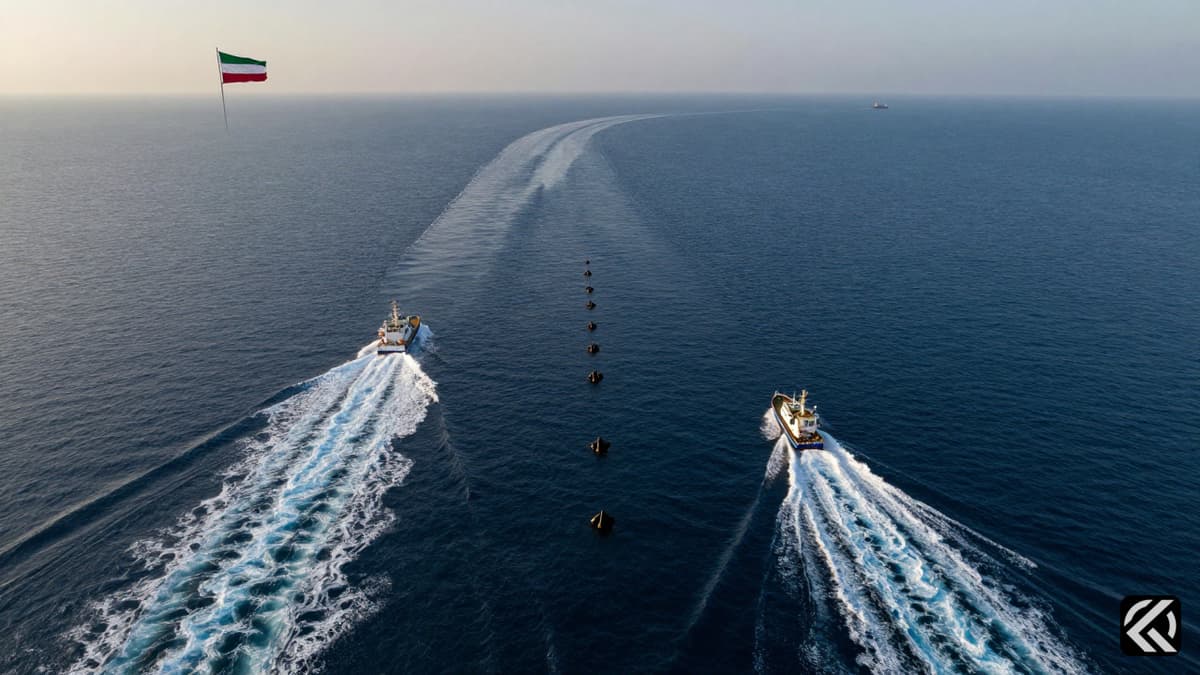
As the West Asia crisis escalates, Iran has declared alternative shipping lanes for vessels navigating the Strait of Hormuz, addressing critical concerns regarding sea mines in the vital waterway.
Iran has officially announced the establishment of alternative routes for ships travelling through the Strait of Hormuz, citing a growing threat from sea mines in the main zone of the vital waterway. This strategic move comes as the broader West Asia crisis continues to escalate, creating a precarious environment for international maritime trade. The announcement was made on Thursday, April 9, 2026, marking a significant development in the ongoing geopolitical situation that threatens to disrupt global energy supplies. The core of the statement focuses on the immediate safety of maritime traffic, acknowledging that the primary channels are no longer secure for routine transit.
Tehran has agreed to temporarily reopen the strait, through which one-fifth of the world's oil usually passes, as part of a two-week truce. This decision highlights the delicate balance between maintaining regional stability and ensuring the free flow of essential commodities. The truce serves as a critical framework for this reopening, suggesting a temporary de-escalation of hostilities that allows for logistical planning regarding the new pathways. The specific inclusion of sea mines as the primary reason for the detour underscores the severity of the current threat level in the region. By identifying the specific hazard, Iran provides a clear rationale for the deviation, moving beyond general warnings to address a tangible danger on the water.
The implications of this announcement are far-reaching for global energy markets. The Strait of Hormuz remains one of the most critical chokepoints in the world, handling a substantial volume of daily oil shipments. The introduction of sea mines as a specific threat vector necessitates a complete restructuring of how vessels navigate this narrow channel. Consequently, ships must now utilize the alternative routes announced by Iranian authorities to ensure safe passage. This shift is not merely a procedural adjustment but a direct response to the volatile security situation that has engulfed the region. The truce provides a narrow window of opportunity, yet the presence of sea mines requires immediate and sustained vigilance.
Authorities have emphasized that the reopening is strictly tied to the duration of the two-week truce. This time-bound nature of the agreement suggests that the situation remains fluid and potentially unstable beyond the immediate two-week period. The decision to reopen the strait indicates a willingness to engage in dialogue and facilitate trade, provided the safety of the vessels is prioritized. However, the underlying cause-the risk of sea mines-remains an unresolved factor that could quickly undo the progress made. The alternative routes serve as a temporary buffer, but the fundamental security concern persists until the mines are cleared or the broader conflict is resolved.
For the maritime industry, the announcement signals a need for heightened caution and updated navigation protocols. The volume of oil that typically traverses this route makes any disruption a matter of global economic significance. The one-fifth statistic emphasizes the sheer scale of the operation and the potential ripple effects of any further instability. As the West Asia crisis continues to evolve, the reliance on these alternative paths will test the limits of international cooperation and regional diplomacy. The ability of Iran to manage this reopening effectively will likely influence future diplomatic interactions in the region.
The focus on sea mines as the catalyst for the route change adds a specific, technical dimension to the crisis. It suggests that the threat is not just from military vessels or political posturing but from asymmetric warfare tactics that pose a silent danger to commercial shipping. The implementation of new routes requires precise coordination between naval forces, port authorities, and shipping companies to ensure that vessels avoid these mined areas. This logistical challenge is compounded by the urgency of the two-week truce, leaving little room for error or extended delays.
Iran's strategic pivot to alternative routes within the Strait of Hormuz sets a precedent for future diplomatic and logistical responses in the region. While the two-week truce offers a temporary reprieve, the persistence of sea mines indicates that the underlying conflict remains unresolved. If the truce is not extended or the mines are not cleared, the region risks a return to even more stringent disruptions. The success of these new routes will depend entirely on the duration of the truce and the willingness of all parties to maintain the fragile peace. Without a long-term resolution to the security threats, the world will continue to face uncertainty regarding the flow of energy resources through this vital waterway. The immediate reopening is a vital step, but the shadow of the mines looms large over the future stability of the passage.
Jun 8, 2026 02:17 UTC
Magnitude 7.8 Quake Shakes Philippines, Urging Immediate Evacuations
Jun 8, 2026 00:51 UTC
Trump Claims Iran Nuclear Deal Imminent Despite Diplomatic Fractures
Jun 8, 2026 00:47 UTC
Iran Fires Missiles at Israel After Beirut Strike
Jun 7, 2026 22:00 UTC
US, Iran Peace Hops Fade 100 Days Into War
Jun 8, 2026 04:15 UTC
Trump Urges Netanyahu to Halt Iran Strike for Peace


