Prime Minister Modi rallies voters in Bengal, while Sharad Pawar urges Congress to withdraw in Baramati. Amidst rising tensions in Nagaland and AI monitoring in Kerala, democracy takes center stage.
Leadership changes and strategic shifts dominated the first phase of the 2026 Assembly elections on Thursday, April 9. Prime Minister Narendra Modi addressed a massive crowd in Haldia, West Bengal, while Nationalist Congress Party leaders issued a significant plea in Maharashtra. The day was marked by high voter participation in Assam and Nagaland, where security concerns were addressed following recent incidents, and technological innovations were deployed in Kerala. The narrative of the day focused on development promises, the tragic loss of political figures, and the urgent call for youth participation.
In Maharashtra, the political landscape saw a unique request from within the Nationalist Congress Party (NCP). Sharad Pawar, along with Supriya Sule and Rohit Pawar, appealed to the Congress party to withdraw its candidate in the Baramati Assembly bypoll. The bypoll was necessitated by the tragic plane crash that claimed the life of Maharashtra Deputy Chief Minister Ajit Pawar. Speaking in Baramati, Sharad Pawar noted that while the NCP could not direct a national party, he advised that it would be appropriate for the contest to become unopposed given the circumstances. He emphasized that the seat fell vacant due to the tragic accident that snatched away an efficient leader, though he clarified that the final decision rested with the Congress.
Conversely, in West Bengal, Prime Minister Modi took a combative stance against the incumbent Trinamool Congress (TMC). Addressing a rally in Haldia in Bengali, Modi invoked Chaitanya Mahaprabhu and cited the huge attendance despite inclement weather as a sign of change. He argued that the country is moving forward while the TMC's "Nirmam Sarkar" pulls Bengal back. Modi accused the TMC of deceiving the youth by squeezing the private sector and looting government posts for money, stating that removing this administration is essential for a developed Bengal.
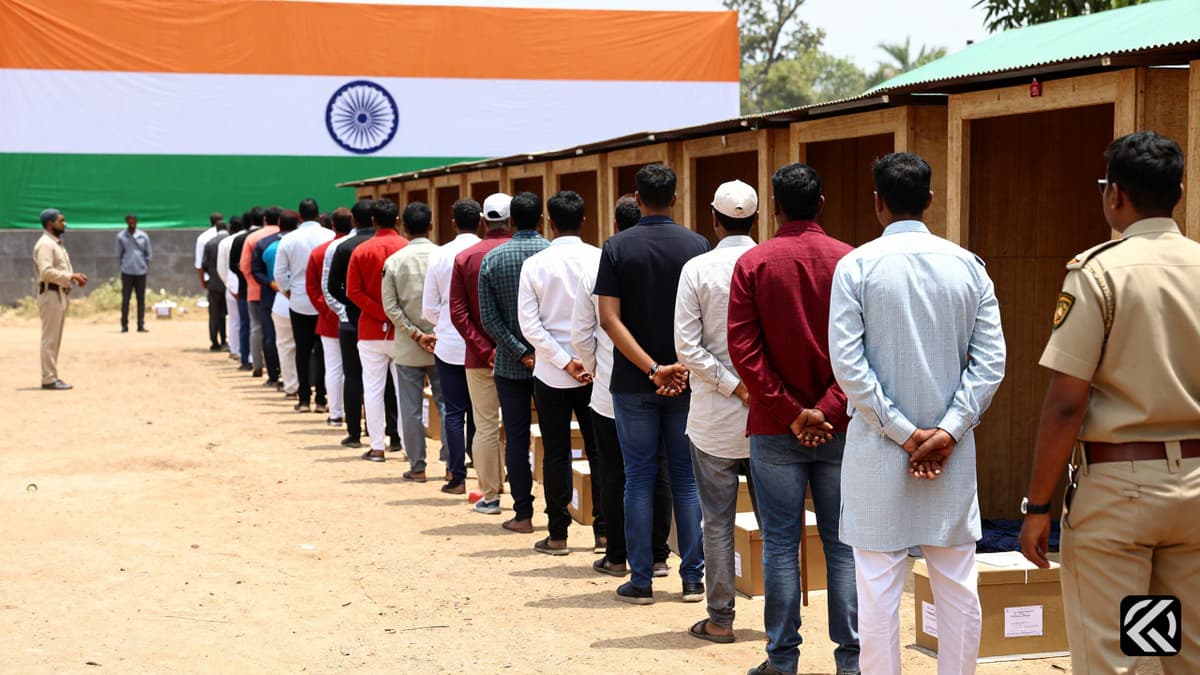
In the northeastern states, the electoral process faced distinct challenges. The Nagaland bypoll in the Koridang constituency witnessed nearly 20% of 22,382 electors casting their votes in the first two hours. Security had been significantly tightened across the constituency following violence on April 5 and 6 that resulted in one death and damaged several vehicles. The bypoll was triggered by the demise of BJP MLA Imkong L. Imchen in November 2025. Officials confirmed that voting remained peaceful, though the atmosphere was tense due to the recent unrest.
Meanwhile, in Assam, the stakes were framed as a decisive moment for the state's future. Assam Congress chief Gaurav Gogoi cast his vote alongside his mother and pledged that a "powerful, fearless, confident and new Assam" would emerge. BJP national president Nitin Nabin echoed this sentiment, urging the electorate to vote for "land, daughters, and livelihood" security. He warned that the votes would determine whether the state remains free from infiltration and instability, framing the election as a "grand festival of democracy" essential for the journey toward a 'Viksit Assam'.
In the south, Kerala Assembly 2026 introduced a novel approach to election monitoring. The state deployed AI surveillance systems to provide real-time alerts tracking queues and crowds at polling stations. This technological integration aimed to enhance the voter experience and manage logistics during the April 9 elections. KPCC president Sunny Joseph, after casting his vote in Peravur, confidently predicted a major victory for the UDF, highlighting the competitive nature of the state's political landscape.
Tamil Nadu saw its share of on-ground friction and high-profile campaigning. A minor clash erupted between BJP and Congress workers near a polling station in Mannadipet, requiring police intervention with mild caning to disperse the crowd. Leaders like Edappadi K. Palaniswami focused the AIADMK campaign on law and order, inflation, and government employee issues. In contrast, the DMK campaign, led by Udhayanidhi Stalin and criticized by opponents for false accusations against EPS, sought to energize voters on development and democratic rights.
The role of young voters was also a focal point, with thousands of Gen Z voters stepping out to shape their future. They emphasized voting as a responsibility to counter "communal politics and propaganda," rejecting apathy and the NOTA option as insufficient tools for holding forces accountable. In Karnataka, bypolls in Bagalkot and Davanagere South saw early turnout figures of 11.87% and 9.01% respectively, with the BJP aiming to capitalize on the internal power struggles within the ruling Congress party.
The convergence of tragic events, strategic withdrawals, and technological integration defines the current electoral phase. As the polls continue through the day, the immediate impact will be the formation of new mandates in states like Nagaland, Assam, and Kerala, where specific issues like security, development, and infrastructure are paramount. The long-term implication suggests a continued trend of heightened security measures in volatile regions and a greater reliance on technology for election management in southern states. The call for youth engagement indicates a demographic shift where the next generation will play a critical role in holding political forces accountable, potentially reshaping the narrative of governance and political stability in the coming years.
Jun 8, 2026 02:17 UTC
Magnitude 7.8 Quake Shakes Philippines, Urging Immediate Evacuations
Jun 8, 2026 00:51 UTC
Trump Claims Iran Nuclear Deal Imminent Despite Diplomatic Fractures
Jun 8, 2026 00:47 UTC
Iran Fires Missiles at Israel After Beirut Strike
Jun 7, 2026 22:00 UTC
US, Iran Peace Hops Fade 100 Days Into War
Jun 8, 2026 04:15 UTC
Trump Urges Netanyahu to Halt Iran Strike for Peace