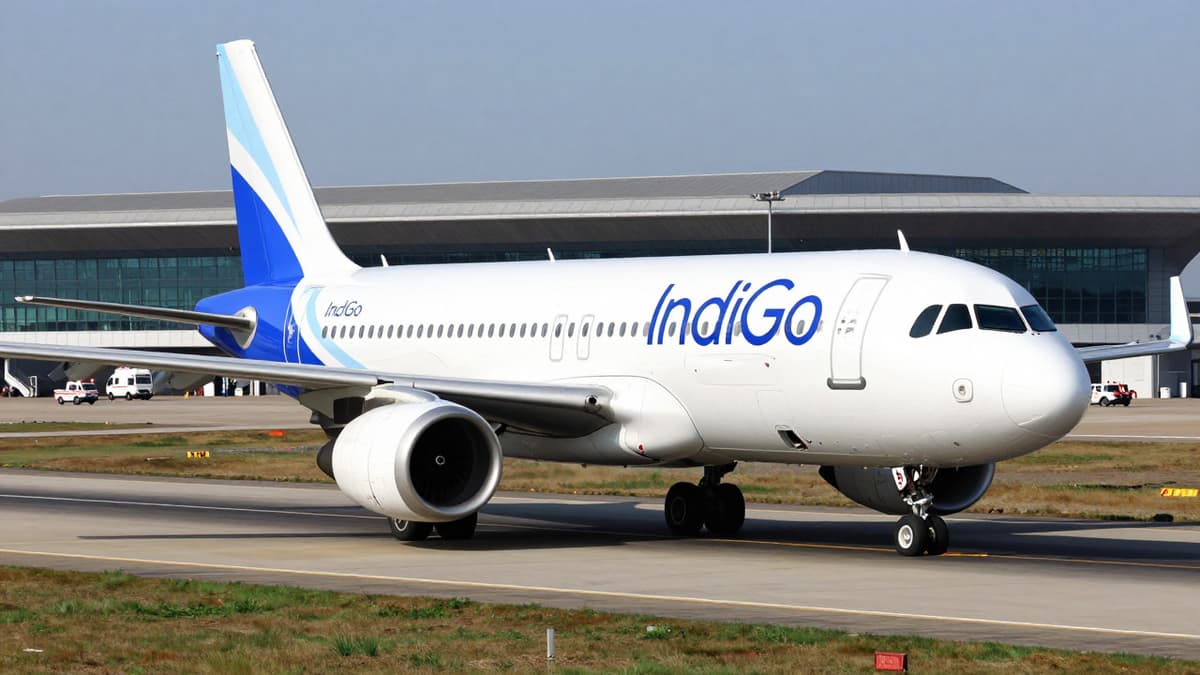
A critical engine failure forced pilots to declare an emergency, resulting in a safe landing for over 170 passengers on board IndiGo's flight 6E 579.
A 15-year-old Boeing 737 operating IndiGo flight 6E 579 executed a safe emergency landing at Indira Gandhi International Airport (IGIA) in Delhi on Saturday morning. The aircraft, carrying approximately 170 people, had been flying from Vizag to Delhi when it suffered a critical mechanical issue shortly before landing. While approaching the capital city, the plane experienced an uncommanded inflight shutdown of its number one engine. This event triggered an immediate response from the flight crew, who declared an emergency at 10:39 am. The Delhi International Airport Limited (DIAL) authorities promptly initiated all necessary emergency arrangements according to established protocols. Following the declaration, the pilots managed to land the aircraft safely on its remaining functional engine at 10:54 am on runway 28.
The specific cause of the incident involved a CFM-56 engine that failed due to high vibrations shortly before the landing sequence began. The aircraft involved, identified as registration TC-CON, is not owned by IndiGo but was wet leased from the Turkish airline Corendon Airlines. A wet lease involves hiring an aircraft along with its operating crew, a common practice in the aviation industry to manage fleet capacity and maintenance schedules. Despite the severity of the situation, the outcome was positive for all on board. An IndiGo spokesperson issued a statement confirming that a technical snag was detected shortly before landing. The spokesperson emphasized that the pilots requested a priority landing as a precautionary step in accordance with standard operating procedures.
The aircraft successfully touched down at the Indira Gandhi International Airport, Delhi, ensuring the safety of the 170 passengers and crew members. Upon arrival, all relevant authorities were promptly informed of the situation, and the aircraft is now undergoing necessary checks and maintenance. The airline reaffirmed that the safety of its customers and crew remains their top priority. This incident highlights the critical nature of pre-flight and in-flight monitoring systems, which detected the high vibrations leading to the uncommanded shutdown. The pilots' decision to declare an emergency and request priority landing ensured a controlled environment for the emergency landing at the busy Delhi airport.
The successful resolution of this aviation incident underscores the robustness of safety protocols within the Indian aviation sector. The timeline from the initial detection of the technical snag to the final landing spanned only minutes, demonstrating the efficiency of the pilots and ground support teams. The use of the single remaining engine to land the heavy Boeing 737 required precise handling, particularly given the proximity to the terminal and the safety of the 170 individuals on board. The fact that the aircraft was wet leased from a foreign carrier adds a layer of complexity to the maintenance and operational checks that must now be conducted.
IndiGo's response highlights their commitment to transparency and safety. By stating that the aircraft is undergoing necessary checks and maintenance, the airline acknowledges the potential need for further investigation into the CFM-56 engine's failure. The high vibrations that led to the shutdown serve as a critical data point for aviation safety analysts. The engine failure was not an isolated occurrence but a mechanical anomaly that required immediate action. The priority landing granted by the airport authorities allowed the pilots to land the aircraft before the situation could deteriorate further, showcasing the effectiveness of the coordination between the cockpit and the control tower.
The involvement of Corendon Airlines of Turkey is a notable detail, as it reflects the interconnected nature of global aviation leasing arrangements. The registration TC-CON identifies the specific airframe involved in this incident, which will likely undergo a thorough inspection. The airline's spokesperson noted that the technical snag was detected shortly before landing, suggesting that modern diagnostic tools played a vital role in identifying the issue before it became catastrophic. This proactive approach aligns with the global aviation industry's push towards predictive maintenance and real-time monitoring of aircraft health.
The narrative of this day serves as a testament to the training and readiness of flight crews under pressure. The declaration of an emergency at 10:39 am initiated a cascade of coordinated actions across the airport. The IndiGo flight 6E 579 landing safely on a single engine is a rare but well-documented occurrence in aviation history, where the skill of the pilots and the efficiency of the ground crew converge to ensure a positive outcome. The airport's runway 28, used for this landing, was cleared and prepared to receive the aircraft, ensuring no further delays or complications arose from the incident.
The immediate aftermath of the engine failure has set the stage for a comprehensive review of the aircraft's maintenance history and the wet-lease arrangement. The focus now shifts to the rigorous checks and maintenance procedures being conducted by IndiGo and the relevant authorities. The airline's statement that all relevant authorities were informed and that the aircraft is under inspection indicates a full-scale investigation is underway. This incident will likely prompt a re-evaluation of the inspection intervals for the specific CFM-56 engine model involved, particularly in the context of the aircraft's age and the conditions under which it operates.
While the immediate outcome was a safe landing, the long-term implications for the airline and the wet-leased aircraft from Corendon Airlines are significant. The airline's commitment to safety suggests that future flights involving this aircraft type or similar leased assets may undergo enhanced scrutiny. The high vibrations that precipitated the engine failure may have been a warning sign that was caught in time, highlighting the importance of continuous monitoring in aviation safety. The successful management of the crisis demonstrates that even in the face of mechanical failure, the established safety frameworks can effectively protect passengers and crew. The future of the IndiGo fleet, particularly the wet-leased assets, will likely see increased attention to ensure such incidents are prevented through improved maintenance and diagnostic strategies.
The safe emergency landing of flight 6E 579 confirms that existing safety protocols functioned effectively during a critical mechanical failure. Based on the source material, the detection of high vibrations and the subsequent declaration of an emergency allowed for a controlled landing, preventing a potential disaster. The ongoing checks and maintenance indicate a proactive approach to aircraft safety. Future operations may see intensified scrutiny on wet-leased assets and the specific engine models involved, ensuring that similar vibration issues are identified and addressed before they compromise flight safety. The airline's priority on customer and crew safety remains the driving force behind these rigorous follow-up actions.
A 15-year-old Boeing 737 operating IndiGo flight 6E 579 executed a safe emergency landing at Indira Gandhi International Airport (IGIA) in Delhi on Saturday morning. The aircraft, carrying approximately 170 people, had been flying from Vizag to Delhi when it suffered a critical mechanical issue shortly before landing. While approaching the capital city, the plane experienced an uncommanded inflight shutdown of its number one engine. This event triggered an immediate response from the flight crew, who declared an emergency at 10:39 am. The Delhi International Airport Limited (DIAL) authorities promptly initiated all necessary emergency arrangements according to established protocols. Following the declaration, the pilots managed to land the aircraft safely on its remaining functional engine at 10:54 am on runway 28.
The specific cause of the incident involved a CFM-56 engine that failed due to high vibrations shortly before the landing sequence began. The aircraft involved, identified as registration TC-CON, is not owned by IndiGo but was wet leased from the Turkish airline Corendon Airlines. A wet lease involves hiring an aircraft along with its operating crew, a common practice in the aviation industry to manage fleet capacity and maintenance schedules. Despite the severity of the situation, the outcome was positive for all on board. An IndiGo spokesperson issued a statement confirming that a technical snag was detected shortly before landing. The spokesperson emphasized that the pilots requested a priority landing as a precautionary step in accordance with standard operating procedures.
The aircraft successfully touched down at the Indira Gandhi International Airport, Delhi, ensuring the safety of the 170 passengers and crew members. Upon arrival, all relevant authorities were promptly informed of the situation, and the aircraft is now undergoing necessary checks and maintenance. The airline reaffirmed that the safety of its customers and crew remains their top priority. This incident highlights the critical nature of pre-flight and in-flight monitoring systems, which detected the high vibrations leading to the uncommanded shutdown. The pilots' decision to declare an emergency and request priority landing ensured a controlled environment for the emergency landing at the busy Delhi airport.
The successful resolution of this aviation incident underscores the robustness of safety protocols within the Indian aviation sector. The timeline from the initial detection of the technical snag to the final landing spanned only minutes, demonstrating the efficiency of the pilots and ground support teams. The use of the single remaining engine to land the heavy Boeing 737 required precise handling, particularly given the proximity to the terminal and the safety of the 170 individuals on board. The fact that the aircraft was wet leased from a foreign carrier adds a layer of complexity to the maintenance and operational checks that must now be conducted.
IndiGo's response highlights their commitment to transparency and safety. By stating that the aircraft is undergoing necessary checks and maintenance, the airline acknowledges the potential need for further investigation into the CFM-56 engine's failure. The high vibrations that led to the shutdown serve as a critical data point for aviation safety analysts. The engine failure was not an isolated occurrence but a mechanical anomaly that required immediate action. The priority landing granted by the airport authorities allowed the pilots to land the aircraft before the situation could deteriorate further, showcasing the effectiveness of the coordination between the cockpit and the control tower.
The involvement of Corendon Airlines of Turkey is a notable detail, as it reflects the interconnected nature of global aviation leasing arrangements. The registration TC-CON identifies the specific airframe involved in this incident, which will likely undergo a thorough inspection. The airline's spokesperson noted that the technical snag was detected shortly before landing, suggesting that modern diagnostic tools played a vital role in identifying the issue before it became catastrophic. This proactive approach aligns with the global aviation industry's push towards predictive maintenance and real-time monitoring of aircraft health.
The narrative of this day serves as a testament to the training and readiness of flight crews under pressure. The declaration of an emergency at 10:39 am initiated a cascade of coordinated actions across the airport. The IndiGo flight 6E 579 landing safely on a single engine is a rare but well-documented occurrence in aviation history, where the skill of the pilots and the efficiency of the ground crew converge to ensure a positive outcome. The airport's runway 28, used for this landing, was cleared and prepared to receive the aircraft, ensuring no further delays or complications arose from the incident.
The immediate aftermath of the engine failure has set the stage for a comprehensive review of the aircraft's maintenance history and the wet-lease arrangement. The focus now shifts to the rigorous checks and maintenance procedures being conducted by IndiGo and the relevant authorities. The airline's statement that all relevant authorities were informed and that the aircraft is under inspection indicates a full-scale investigation is underway. This incident will likely prompt a re-evaluation of the inspection intervals for the specific CFM-56 engine model involved, particularly in the context of the aircraft's age and the conditions under which it operates.
While the immediate outcome was a safe landing, the long-term implications for the airline and the wet-leased aircraft from Corendon Airlines are significant. The airline's commitment to safety suggests that future flights involving this aircraft type or similar leased assets may undergo enhanced scrutiny. The high vibrations that precipitated the engine failure may have been a warning sign that was caught in time, highlighting the importance of continuous monitoring in aviation safety. The successful management of the crisis demonstrates that even in the face of mechanical failure, the established safety frameworks can effectively protect passengers and crew. The future of the IndiGo fleet, particularly the wet-leased assets, will likely see increased attention to ensure such incidents are prevented through improved maintenance and diagnostic strategies.
The safe emergency landing of flight 6E 579 confirms that existing safety protocols functioned effectively during a critical mechanical failure. Based on the source material, the detection of high vibrations and the subsequent declaration of an emergency allowed for a controlled landing, preventing a potential disaster. The ongoing checks and maintenance indicate a proactive approach to aircraft safety. Future operations may see intensified scrutiny on wet-leased assets and the specific engine models involved, ensuring that similar vibration issues are identified and addressed before they compromise flight safety. The airline's priority on customer and crew safety remains the driving force behind these rigorous follow-up actions.
Jun 8, 2026 02:17 UTC
Magnitude 7.8 Quake Shakes Philippines, Urging Immediate Evacuations
Join 50,000+ readers getting the global briefing every morning.
No spam. Unsubscribe anytime.
Jun 8, 2026 02:17 UTC
Magnitude 7.8 Quake Shakes Philippines, Urging Immediate Evacuations
Jun 8, 2026 00:51 UTC
Trump Claims Iran Nuclear Deal Imminent Despite Diplomatic Fractures
Jun 8, 2026 00:47 UTC
Iran Fires Missiles at Israel After Beirut Strike
Jun 7, 2026 22:38 UTC
Congress Party Claims Unity for INDIA Bloc Delhi Meeting


