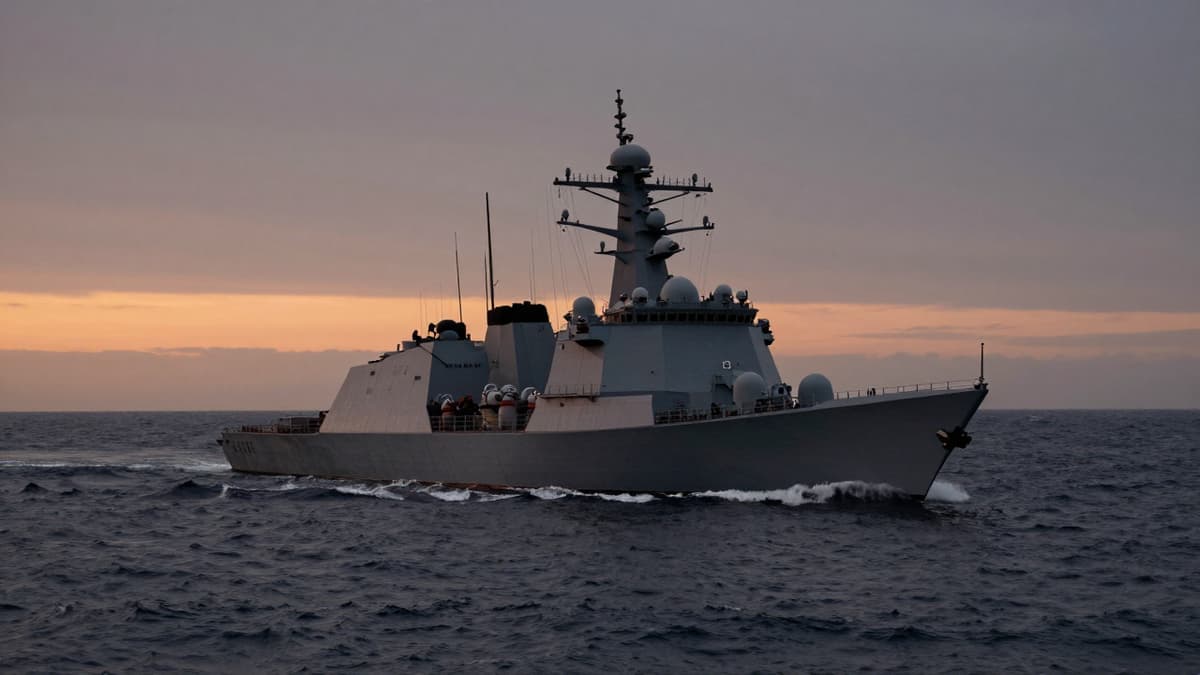
During Operation Sindoor, the Indian Navy stood mere minutes away from a sea-based strike before Islamabad requested a halt. Admiral Tripathi details this critical moment and the evolving maritime threats.
The Indian Navy was just minutes away from striking Pakistan from the sea during the recent Operation Sindoor, when the Pakistani capital requested an immediate cessation of kinetic actions. This revelation came on Wednesday, April 1, 2026, from Navy Chief Admiral Dinesh K. Tripathi during the naval investiture ceremony. The high-stakes revelation underscores the intensity of the deployment following the Pahalgam terror attack, where the naval force maintained a highly aggressive posture.
Admiral Tripathi was addressing the ceremony to award Yudh Seva Medals to two top naval officers for their distinguished service during the operation conducted last year. He stated that the Operation Sindoor mission demonstrated exemplary readiness and resolve. The units undertook swift deployment and maintained a highly aggressive stance throughout the duration of the crisis, reinforcing the nation's confidence in the armed forces' capabilities.
"It is not a hidden fact anymore that we were just minutes away from striking Pakistan from the sea, when they requested stoppage of kinetic actions," Admiral Tripathi said, clarifying the Navy's role in the operation. He emphasized that through swift and resolute actions, the force not only secured a strategic advantage but also solidified the trust of the nation in its military strength.
Beyond the specifics of the recent conflict, Admiral Tripathi highlighted the breadth of the Indian Navy's operational capabilities. He noted that the service was proud to showcase this depth to the Prime Minister during a historic 17-hour overnight embarkation on the western seaboard. This demonstration was part of a relentless operational tempo that continued through the entire year, reflecting a service constantly prepared for varied contingencies.
The Chief also addressed the widening implications of the West Asia conflict. He noted that since the war involving the United States, Israel, and Iran began, the region has seen significant disruption. More than 20 merchant vessels have been attacked in the area, creating a hazardous environment for global commerce. Nearly 1,900 vessels currently remain stranded amid these hostilities, illustrating the scale of the disruption.
The impact on maritime traffic has been drastic. The daily traffic through the Strait of Hormuz has fallen sharply to between six and seven transits daily, a stark contrast to the pre-conflict average of about 130 transits. This reduction signifies a major bottleneck in global energy and trade routes, affecting the wider economic landscape.
"At a time when the global order is marked by increasing fragmentation and friction, the seas are no longer secondary theatres where continental conflicts spill over. Instead, they are becoming the first arena where strategic intent is signalled and contested, often with disproportionate consequences," the Navy chief explained. This shift indicates a fundamental change in how modern warfare and strategic deterrence are projected, moving the primary battlegrounds from land borders to the oceans.
Admiral Tripathi further observed that evolving technology and tactics have reshaped how conflicts are planned, initiated, and sustained. These advancements have made non-traditional challenges more complex and less predictable to counter. Consequently, the prevailing maritime environment demands a careful alignment of functional agility and farsightedness at the organizational level, alongside combat readiness and operational effectiveness at the unit level.
As a result of these evolving dynamics, professional excellence anchored in boldness and judgment at the individual level is now more critical than ever. The Chief emphasized that the Indian Navy upholds the country's commitment as a first responder in the region. This role is evidenced through various Humanitarian Assistance and Disaster Relief (HADR) missions undertaken at short notice and in challenging conditions. Examples include Operation Brahma in Myanmar and Operation Sagar Bandhu in Sri Lanka, showcasing a dual focus on combat readiness and humanitarian aid.
The narrative of Operation Sindoor and the subsequent global maritime shifts suggests a future where naval power projection will be central to national security strategies. As the seas become the primary theater for signaling strategic intent, the ability to maintain a high operational tempo while managing complex global conflicts will define the next era of naval warfare. The Indian Navy's readiness to engage in both kinetic operations and HADR missions positions it as a pivotal force in maintaining regional stability and ensuring the flow of global trade through critical choke points like the Strait of Hormuz.
The revelations regarding the Operation Sindoor and the strategic shifts in the Strait of Hormuz indicate a permanent transformation in global naval strategy. As the seas transition from secondary theaters to the primary arena for contested strategic intent, future conflicts will likely rely heavily on rapid naval deployment and technological agility. The sharp decline in vessel traffic and the increase in attacks suggest that maritime security will remain a volatile and critical concern, demanding continuous organizational farsightedness and operational excellence from naval forces worldwide.
Jun 8, 2026 02:17 UTC
Magnitude 7.8 Quake Shakes Philippines, Urging Immediate Evacuations
Join 50,000+ readers getting the global briefing every morning.
No spam. Unsubscribe anytime.
Jun 8, 2026 02:17 UTC
Magnitude 7.8 Quake Shakes Philippines, Urging Immediate Evacuations
Jun 8, 2026 00:51 UTC
Trump Claims Iran Nuclear Deal Imminent Despite Diplomatic Fractures
Jun 8, 2026 00:47 UTC
Iran Fires Missiles at Israel After Beirut Strike
Jun 7, 2026 22:38 UTC
Congress Party Claims Unity for INDIA Bloc Delhi Meeting


