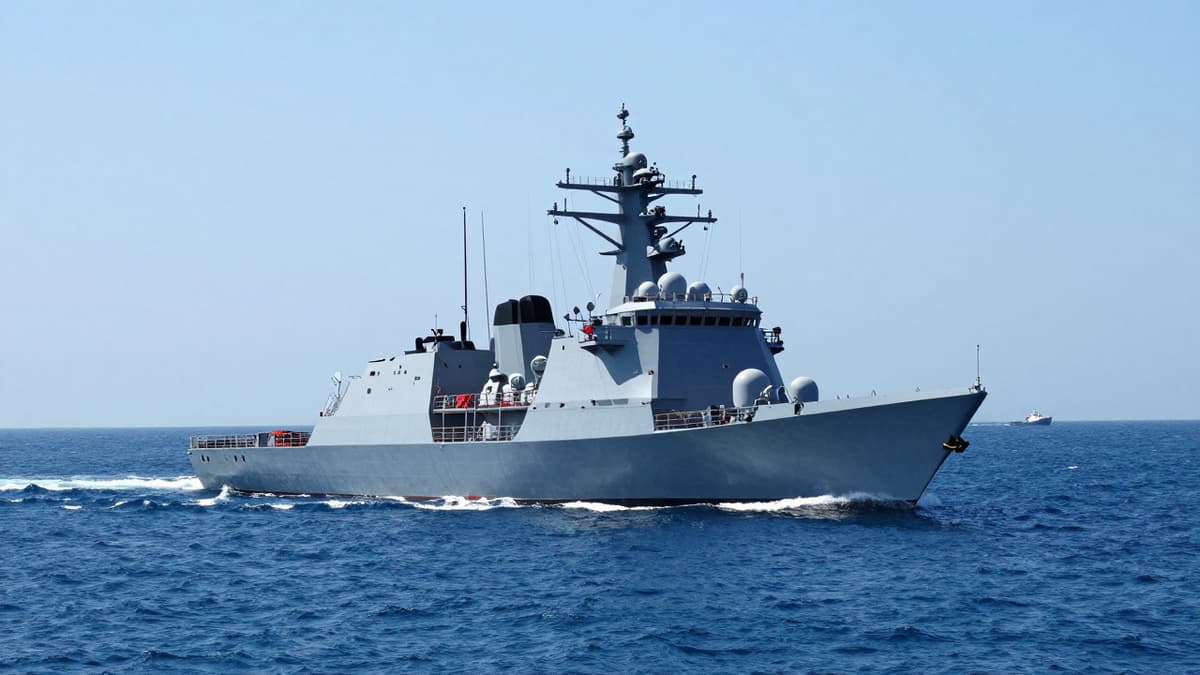
Rising tensions in West Asia prompt the Indian Navy to deploy warships for escorting critical energy shipments, ensuring uninterrupted supply of vital resources through the Persian Gulf.
Amid escalating tensions in West Asia, the Indian Navy has officially launched a specialized naval mission named Operation Urja Suraksha to safeguard the nation's critical energy lifelines. This high-stakes initiative focuses on escorting, guiding, and protecting India-bound energy shipments as they navigate the strategically vital Strait of Hormuz, which has currently been blockaded by Iran. The operation aims to guarantee the uninterrupted and secure movement of Indian-flagged vessels carrying essential fuel resources.
The operation, designated as Urja Suraksha, is being executed with calibrated precision and maintained under minimal publicity to prevent any potential escalation while ensuring the safety of maritime traffic. Senior officials have confirmed that all India-bound ships transporting liquefied natural gas (LNG), liquefied petroleum gas (LPG), and crude oil have been specifically identified for this protected transit. This comprehensive approach goes beyond simple escort duties, as warships are actively providing route-specific guidance and navigational support to crews. This additional support is crucial for helping ships safely traverse the narrow and sensitive waters of the Persian Gulf and the Strait of Hormuz.
"We are escorting and to some extent helping ships in navigation for smooth movement through the Persian Gulf and Strait of Hormuz, till the Arabian Sea," a senior official stated, highlighting the depth of the naval involvement. The mission involves deploying destroyers and frigates to extend protection beyond the immediate blockade area, ensuring layered maritime security until vessels reach the relative safety of the Arabian Sea and beyond. This extended protection is a critical component of maintaining maritime stability in a region that serves as a critical artery for global oil and gas flows.
Earlier this week, the Navy successfully demonstrated the efficacy of this new strategy by safely escorting the LPG carriers Pine Gas and Jag Vasant. These two vessels were transporting a cumulative load of nearly 92,000 tonnes of cooking gas, representing a significant portion of India's immediate energy needs. The vessels are expected to reach their destination at Indian ports between March 26 and 27, 2026. The successful transit of these carriers marks a significant milestone in the early implementation of the operation, proving the capability of the naval fleet to operate in high-tension environments.
In addition to the Pine Gas and Jag Vasant, other ships have already been escorted under this mandate. These include the LPG carriers Shivalik and Nanda Devi, alongside the crude oil tanker Jag Laadki. The inclusion of both gas and crude oil carriers underscores the breadth of the threat and the necessity of a robust defense mechanism for diverse energy commodities. The Strait of Hormuz, known for its geographical bottleneck status, becomes even more critical when its passage is restricted by a blockade, necessitating a direct and forceful naval response to ensure national energy security.
The operation underscores India's commitment to securing its energy supply chains and maintaining maritime stability in a region critical to global oil and gas flows. By proactively addressing the blockade, the Indian Navy is not only protecting national assets but also contributing to the broader stability of international shipping lanes. The calibrated nature of the operation, characterized by minimal publicity, suggests a strategic intent to resolve the immediate logistical challenges without inflaming the broader geopolitical situation.
The successful execution of Operation Urja Suraksha relies heavily on the synergy between naval coordination and commercial shipping. As long as the Strait of Hormuz remains blocked, the Strait of Hormuz will continue to be a focal point for naval activity. The provision of navigational support by warships is a unique aspect of this operation, indicating that commercial crews may require specialized assistance due to the heightened risks of the blockade. If the blockade persists, the frequency of these escort missions will likely increase, necessitating a sustained naval presence. The immediate impact is the assurance of fuel availability for India, but the long-term implication involves setting a precedent for how India manages energy security during future regional conflicts. The layered security approach ensures that even if the immediate threat of the blockade is not fully lifted, the flow of essential energy resources will remain uninterrupted, securing the nation's energy future against regional instability.
Jun 8, 2026 00:51 UTC
Trump Claims Iran Nuclear Deal Imminent Despite Diplomatic Fractures
Jun 8, 2026 00:47 UTC
Iran Fires Missiles at Israel After Beirut Strike
Jun 7, 2026 22:00 UTC
US, Iran Peace Hops Fade 100 Days Into War
Jun 7, 2026 20:57 UTC
Iran Strikes Israel: IRGC Promises Week of Continuous Offensive
Jun 8, 2026 02:28 UTC
Trump Walks Out of Meet the Press After Rejecting Evidence Demands


