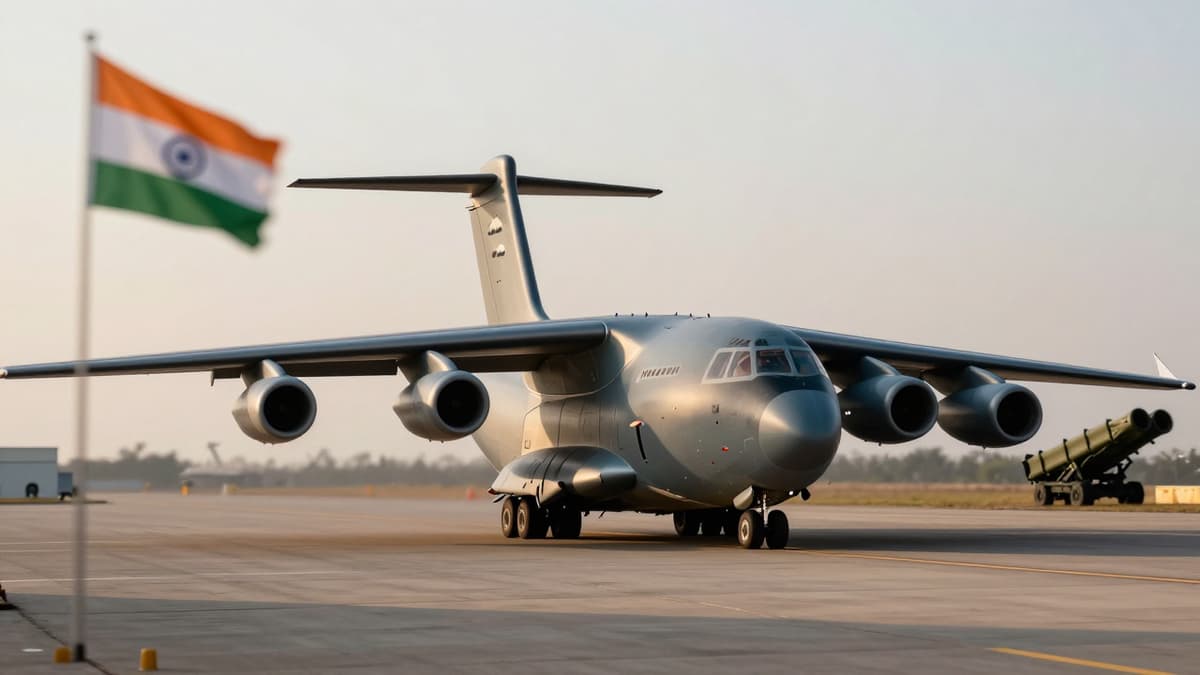
India's defence capabilities receive a massive boost as the Defence Acquisition Council approves over Rs 2.38 lakh crore in deals, securing S-400 systems and new aircraft.
In a significant stride for national security, the Defence Acquisition Council (DAC) chaired by Defence Minister Rajnath Singh has granted Acceptance of Necessity for procurements valued at Rs 2.38 lakh crore. This comprehensive approval covers essential upgrades for the Indian Armed Forces, including advanced missile systems and critical transport capabilities.
The decision marks a pivotal moment for the Indian Air Force (IAF), which will soon see a doubling of its S-400 missile system fleet. The council cleared the procurement of five additional squadrons of these battle-tested Surface to Air Missile units. These systems, capable of engaging targets up to 400 kilometers away, previously saw combat during Operation Sindoor, where they achieved a world record by downing a Pakistani aircraft at a distance of 300 kilometers. Currently, the IAF operates three squadrons, with two more scheduled for delivery within the current year. Alongside the missile upgrades, the council has also cleared the acquisition of 300 additional units of the indigenously manufactured Dhanush artillery gun, expanding the army's existing inventory of 114 units.
A critical component of this overhaul is the procurement of a new fleet of Medium Transport Aircraft (MTA) designed to modernize the IAF's logistics. The current fleet relies heavily on the aging An-32 workhorse, which these new planes are set to replace. The new aircraft are expected to handle payloads ranging between 18 and 30 tonnes, effectively bridging the capability gap between the existing An-32s and the larger Il-76 aircraft. The competition for this massive contract is fierce, with frontrunners including the Brazilian Embraer C-390, which offers a 26-tonne payload, and the European Airbus A400M, boasting a 37-tonne capacity. Lockheed Martin's C-130J, already a staple in the IAF fleet, also remains a contender.
Regarding the manufacturing landscape, the deal structure reflects India's push for domestic production. Out of the total aircraft ordered, 12 will be acquired in a fly-away condition, while the remainder will be manufactured within India. Embraer has already established a partnership with Mahindra Aerospace to facilitate this production, whereas Airbus has yet to announce a domestic partner. In total, the DAC has cleared the Acceptance of Necessity for a diverse array of defence assets. Beyond the aircraft and missiles, the council has approved the acquisition of armoured piercing ammunition for tanks, various types of drones, and heavy-duty hovercrafts for the Coast Guard. Additionally, provisions have been made for the overhaul of Al-31 jet engines essential for the Su-30 MKI fleet.
All these acquisitions will adhere to the stringent protocols outlined in the Defence Acquisition Procedure 2020. The process is rigorous, beginning with a Request for Proposal (RFP) followed by a series of technical, field, and stall trials and evaluations. Only after successful trials will price negotiations take place. The final step requires clearance from the Cabinet Committee on Security, chaired by the Prime Minister, before the contracts are officially signed. This entire cycle is a lengthy affair that can stretch over several years.
Statistical context for this approval highlights the government's aggressive procurement schedule. In the current financial year, which concludes on March 31st, the DAC has already accorded the Acceptance of Necessity for 55 proposals totaling Rs 6.73 lakh crore. Furthermore, capital procurement contracts have been signed for over 500 proposals, amounting to Rs 2.28 lakh crore. The approval of the Rs 2.38 lakh crore deal represents a substantial portion of this year's activity, signaling a robust commitment to enhancing the operational readiness of India's defence forces.
The approval of these high-value defence assets signals a definitive shift towards self-reliance and operational superiority for the Indian Armed Forces. The immediate doubling of the S-400 missile system capacity will significantly enhance India's aerial defence perimeter, leveraging proven combat data from recent conflicts to deter potential threats. Concurrently, the introduction of the new Medium Transport Aircraft will resolve long-standing logistical bottlenecks, ensuring faster and more capable transport of troops and matériel across difficult terrains. As the production of these aircraft shifts towards domestic manufacturing, the defence sector is poised for a surge in industrial activity, with partnerships like Embraer-Mahindra Aerospace setting a precedent for future procurement. While the procurement process under the Defence Acquisition Procedure 2020 involves years of trials and negotiations, the initial clearance by the Defence Acquisition Council establishes a strong trajectory for the modernization of India's strategic assets, ensuring the nation's defence capabilities remain on par with global standards in the coming decade.
Jun 8, 2026 00:51 UTC
Trump Claims Iran Nuclear Deal Imminent Despite Diplomatic Fractures
Jun 8, 2026 00:47 UTC
Iran Fires Missiles at Israel After Beirut Strike
Jun 7, 2026 22:00 UTC
US, Iran Peace Hops Fade 100 Days Into War
Jun 7, 2026 20:57 UTC
Iran Strikes Israel: IRGC Promises Week of Continuous Offensive
Jun 8, 2026 02:28 UTC
Trump Walks Out of Meet the Press After Rejecting Evidence Demands


