India has launched the world's largest census, marking a historic shift with the first caste enumeration in nearly a century amidst debates over political representation.
India has officially begun its massive population count, initiating the world's largest census exercise which includes a groundbreaking inclusion of caste data. This $1.24bn initiative involves over three million officials surveying approximately 1.4 billion people across the nation's 28 states and eight union territories. The effort, now the eighth census since independence, replaces outdated data from 2011 due to the five-year delay caused by the pandemic and administrative issues.
The launch marks a significant shift in how the country records its demographics, utilizing digital tools for the first time. Registrar General and Census Commissioner Mritunjay Kumar Narayan announced at a press conference in New Delhi that the first phase, focusing on household listing and basic amenities, begins this Wednesday and runs through September. This modernization aims to capture household composition and living conditions with unprecedented precision using mobile applications.
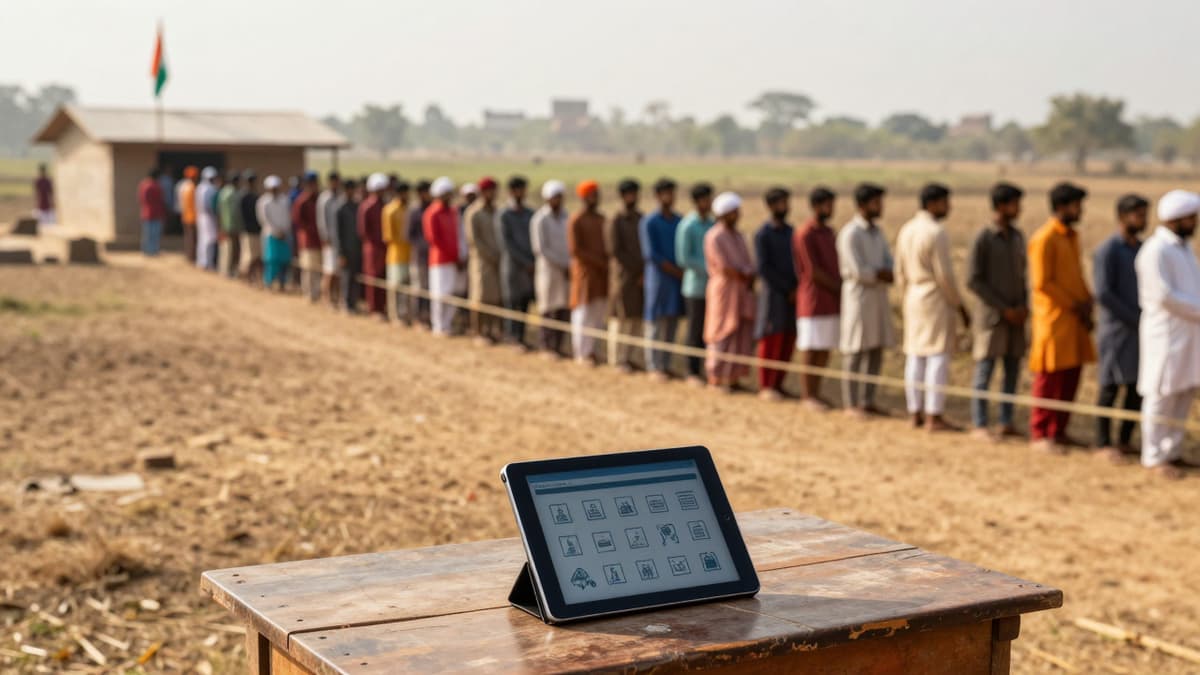
The logistical scale of the operation is immense, with 30 million enumerators tasked with asking 33 questions across more than 7,000 towns and 640,000 villages. For the first time, the process is fully digital, allowing individuals to self-enumerate via an online portal and receive a unique digital ID. The census is structured in two distinct phases. The current phase gathers data on fuel, water, electricity, and internet access, while the second phase in February will collect socioeconomic details, migration patterns, and fertility statistics.
It is in this second phase that the most significant controversy arises. The census will include caste enumeration, a practice suspended since 1951 when the government halted it to prevent social divisions. While limited data on Scheduled Castes and Scheduled Tribes was collected via other surveys, this year marks the first systematic, population-wide count of specific castes since 1931. Every individual will be asked to specify their caste, a move that was initially resisted by the central government but implemented after pressure from campaigners and caste groups.
The implications of this data extend beyond mere statistics. Development economist Dipa Sinha notes that census data is critical for determining the distribution between rural and urban areas and for allocating resources under antipoverty programs. The delay in conducting this count has left significant gaps, with experts warning that current surveys rely on a sampling frame that no longer reflects the population, introducing systematic errors into policy planning.
The political ramifications are immediate and contentious. The census data will serve as the foundation for a electoral delimitation exercise, which involves redrawing the boundaries of electoral constituencies. Politicians in southern India, where population growth has stalled, have raised alarms that relying solely on population numbers for delimitation could result in northern states, where the bulk of the population resides, gaining outsized political representation. This potential shift in the balance of power has fueled existing north-south tensions.
Furthermore, the new data will trigger the implementation of a women's reservation bill passed last year, mandating one-third of parliamentary seats be reserved for women once delimitation is complete. This makes the census a pivotal moment for the country's democratic structure. Historically, the census has evolved from a colonial tool focused on religion and English proficiency to a modern instrument assessing socioeconomic status and living conditions. Questions now include couples' relationship status, counting stable live-in unions as married for census purposes.
Prime Minister Narendra Modi's government had historically opposed the inclusion of caste questions, with Modi describing demands for a caste census as akin to thinking like "urban Naxals." However, the administration reversed its stance following intense pressure, acknowledging the necessity of the data. Economists like Ashwini Deshpande argue that this is a highly political exercise, as the information will be used to determine future political representation and policy allocations at a time of rapid economic and social change.
The launch of this India population census concludes a long period of uncertainty where demographic data has been outdated for over a decade. As the second phase approaches in February, the nation awaits the results that will determine the new map of electoral power and the allocation of resources for the coming years. The inclusion of detailed caste data promises to reshape policy discussions regarding marginalized communities, while the digital transformation of the survey aims to improve the accuracy of future governance. The ultimate impact of this exercise will be measured by how the resulting data influences the delicate balance of power between regions and the implementation of gender quotas in the parliament.
The completion of this census will fundamentally alter the political map of India by feeding directly into the upcoming electoral delimitation process. With the government committed to a one-third reservation for women in parliament, the new demographic reality will dictate the distribution of parliamentary seats. The shift in population dynamics, particularly the growth disparity between northern and southern regions, suggests that the political center of gravity may shift further north. This outcome could intensify regional tensions, making the accuracy of this census critical for maintaining national unity and ensuring fair representation for all Indian states in the years to come.
Jun 8, 2026 02:17 UTC
Magnitude 7.8 Quake Shakes Philippines, Urging Immediate Evacuations
Join 50,000+ readers getting the global briefing every morning.
No spam. Unsubscribe anytime.
Jun 8, 2026 02:17 UTC
Magnitude 7.8 Quake Shakes Philippines, Urging Immediate Evacuations
Jun 8, 2026 00:51 UTC
Trump Claims Iran Nuclear Deal Imminent Despite Diplomatic Fractures
Jun 8, 2026 00:47 UTC
Iran Fires Missiles at Israel After Beirut Strike
Jun 7, 2026 22:38 UTC
Congress Party Claims Unity for INDIA Bloc Delhi Meeting