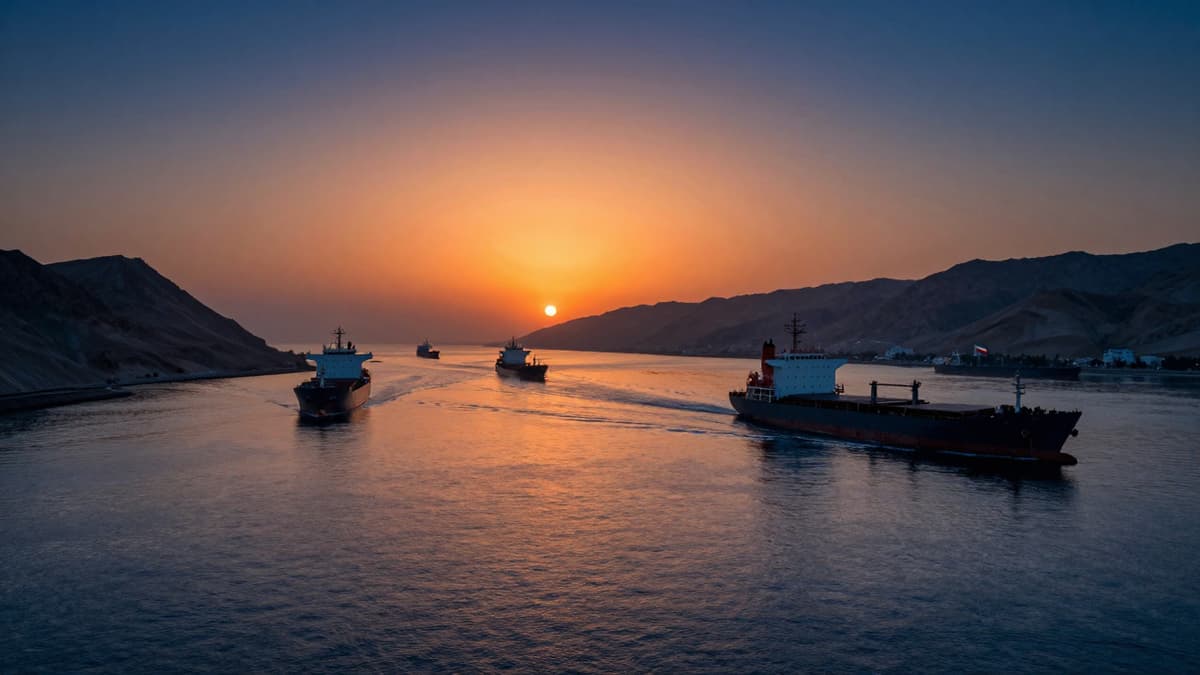
India joins China and Russia in safe passage as Iran reclaims control of the waterway following the IRIS Dena sinking and US attack.
Iran's Foreign Minister Abbas Araghchi confirmed that India and four other "friendly nations" have been granted permission to move their ships through the strategic waterway. Speaking on March 25, 2026, Araghchi declared that Strait of Hormuz sovereignty is firmly established by Tehran. This announcement comes amidst the ongoing Iran-US war, which saw a dramatic drop in traffic since the conflict began.
The decision follows a period of severe disruption where daily shipping fell from over a hundred vessels to single digits. Araghchi explicitly listed China, Russia, India, Iraq, and Pakistan among the nations permitted passage. He emphasized that the waterway, connecting the Persian Gulf and the Gulf of Oman, sits within the territorial waters of both Iran and Oman. This clarification serves as a direct assertion of national control after the region became a focal point of international tension.
A significant factor in this diplomatic shift is the incident involving the Iranian frigate IRIS Dena. The vessel was attacked and sunk by a US Navy submarine on March 4 off the coast of Sri Lanka while returning from exercises in Visakhapatnam. The attack resulted in the deaths of at least 87 sailors. In the wake of this tragedy, the Iranian government expressed gratitude to India and Sri Lanka for their "significant help" in relocating two other ships, the IRIS Lavan and IRIS Bushehr, to safe locations in Kochi and Trincomalee respectively. This humanitarian aid reportedly influenced the decision to grant passage to "friendly nations."
Amidst these developments, the diplomatic landscape remains tense. Araghchi, who previously served as Iran's chief negotiator with the US, stated firmly that there are no direct negotiations taking place with Washington. He noted that while the American side has begun sending messages through intermediaries, the Iranian stance remains one of resistance and defense. "I state firmly that there has been no negotiation with the US," Araghchi said. He described the current exchanges as merely an exchange of positions through friends, not formal talks.
This stance was reinforced by Iran's dismissal of a US proposal to end the war. State media reported that Tehran laid out a five-point plan instead, which includes security guarantees against future aggression, war reparations, and a new framework to operate the Strait of Hormuz. The US, under President Donald Trump, has demanded unconditional surrender, a demand Trump reiterated in a previous social media post. However, recent comments from the White House suggest a shift, with Trump threatening further strikes on power infrastructure but ultimately postponing the action. Trump later warned that Iran must "get serious soon" in talks, noting that "once that happens, there is no turning back."
Meanwhile, Pakistan's Deputy Prime Minister and Foreign Minister Ishaq Dar suggested that indirect talks are occurring. He claimed the US has shared 15 points for Iran to deliberate and that countries like Turkey and Egypt are supporting the initiative. Despite these reports of mediation, Iran's official position remains that a ceasefire without guarantees is a "vicious cycle." Araghchi questioned the logic of US mobilization, asking, "Didn't they say unconditional surrender? So why are they now mobilising their highest officials to negotiate?" He characterized the American talk of negotiations as an "admission of failure."
The economic and strategic implications of the conflict remain severe. The Strait of Hormuz, a critical choke point for global energy, has seen its traffic plunge since the US and Israel launched their war on Iran on February 28. While at least four India-flagged ships-Jag Vasant, Pine Gas, Shivalik, and Nanda Devi-have managed to transit the strait since the war began, the overall environment remains hostile. The new arrangements for passing through the strait, promised by Araghchi after the war, suggest a potential restructuring of this vital global artery under new geopolitical realities.
Iran's firm rejection of unconditional surrender and its proposal for security guarantees signal a prolonged standoff. If the US continues to mobilize troops for a potential ground offensive as reported by American media, the situation could escalate beyond maritime incidents. The reliance on "indirect talks" and intermediaries like Pakistan highlights the fragility of current diplomatic channels. Without a formal agreement addressing war reparations and future security, the strategic control of the Strait of Hormuz may remain a contentious flashpoint, potentially altering global shipping routes for years to come.
Jun 8, 2026 02:17 UTC
Magnitude 7.8 Quake Shakes Philippines, Urging Immediate Evacuations
Join 50,000+ readers getting the global briefing every morning.
No spam. Unsubscribe anytime.
Jun 8, 2026 02:17 UTC
Magnitude 7.8 Quake Shakes Philippines, Urging Immediate Evacuations
Jun 8, 2026 00:51 UTC
Trump Claims Iran Nuclear Deal Imminent Despite Diplomatic Fractures
Jun 8, 2026 00:47 UTC
Iran Fires Missiles at Israel After Beirut Strike
Jun 7, 2026 22:38 UTC
Congress Party Claims Unity for INDIA Bloc Delhi Meeting


