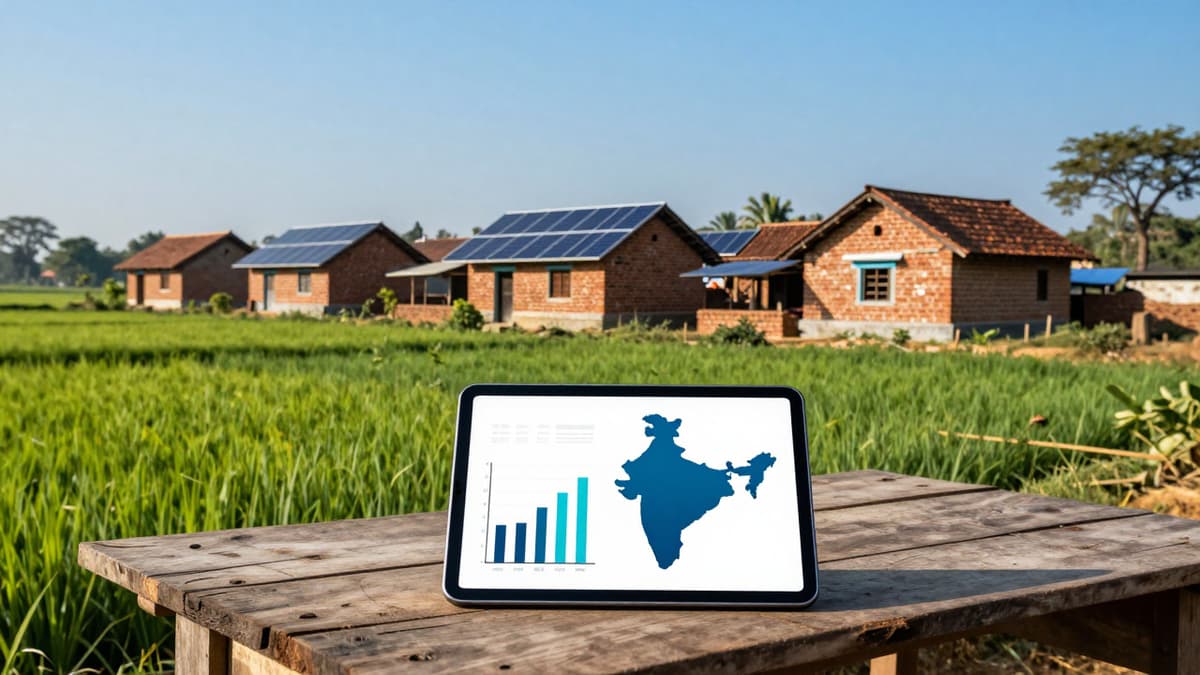
India has launched its massive $1.24bn population count, marking a historic shift with digital tools and the return of caste enumeration after a long hiatus.
India has officially commenced its largest-ever population count, a monumental $1.24bn exercise involving more than three million officials surveying approximately 1.4 billion citizens. This comprehensive India census marks a pivotal moment as it introduces caste enumeration for the first time in nearly a century, aiming to update critical data on demographics, housing, and welfare amenities that has been outdated since 2011.
The undertaking faces scrutiny over its five-year delay, initially attributed to the pandemic and later to administrative challenges, which experts warn has created significant data gaps. According to the Press Information Bureau, while the first modern census occurred between 1865 and 1872, it was only in 1881 that India conducted a coordinated count. Since independence in 1947, this 2026 operation is the eighth such census, spanning over 7,000 towns and 640,000 villages across the nation's 28 states and eight union territories.
To execute this gargantuan task, the government has adopted a fully digital approach. Approximately 30 million enumerators will utilize mobile applications and smartphones to collect data through 33 questions. Citizens also possess the option to self-enumerate via an online portal to receive a unique digital ID. The process is structured in two distinct phases: the initial House Listing and Housing Census running from now until September, followed by the population enumeration phase in February, which focuses on socioeconomic details and the contentious issue of caste data.
The inclusion of caste enumeration represents a stark departure from previous decades. Comprehensive caste data has not been collected since 1931, as the post-colonial government halted such inquiries in 1951 to prevent social divisions. While limited information on Scheduled Castes and Scheduled Tribes was recorded through the National Sample Survey, the new phase will ask every individual their specific caste rather than simply recording broad categories. This shift follows intense pressure from campaigners and caste groups, overturning the long-standing opposition from Prime Minister Narendra Modi's Bharatiya Janata Party, which had previously warned that such a count could fracture society.
Experts note that this year's caste enumeration constitutes the first systematic, population-wide count of jati since 1931. The move has sparked immediate debate regarding the political implications of the results. Dipa Sinha, a development economist, explains that census data informs demographic trends, including the distribution between rural and urban areas, and serves as the foundation for antipoverty programmes and policy planning. However, the data's political weight extends beyond social welfare.
The timing of this census coincides with a planned delimitation exercise, a process to redraw electoral constituency boundaries based on population figures. Politicians in southern India have raised concerns that a strict population-based redrawing of lines could grant northern India, which currently holds the bulk of parliamentary representation, an outsized political advantage. With population growth stalling in the south but remaining robust in the north, the resulting data could significantly alter the balance of power in the Indian Parliament. Furthermore, the implementation of a women's reservation bill, which mandates a one-third reservation for women once the new census and delimitation are complete, adds another layer of complexity to the findings.
The delay in the census has exacerbated the urgency of these updates. Ashwini Deshpande, an economist at Ashoka University, warns that the lack of a current master list for survey sampling frames introduces systematic errors into all data relied upon by policymakers. With the last census over a decade old, every major survey conducted in the interim has been working from an outdated foundation. This makes the current data not just a matter of administrative efficiency, but a critical prerequisite for accurate national planning.
The digital transformation of the India census introduces new methodologies for data collection. In the first phase, enumerators will query households on ownership, fuel, water, electricity, internet, and transport access. In the second phase, the focus shifts to education, migration, fertility, and the specific caste of every individual. Notably, the survey now includes questions on relationship status, categorizing couples in live-in arrangements as married if they view their union as stable.
The convergence of this new data with the upcoming delimitation process and the women's reservation bill suggests a landscape of significant political realignment. As the census concludes on March 31 of the following year, the results will likely serve as the definitive benchmark for the nation's future political and social trajectory. The introduction of precise caste data, combined with updated population figures, will force a re-evaluation of resource allocation and political representation across the diverse regions of the country.
The completion of this historic count will fundamentally reshape the understanding of India's demographic and political landscape. By integrating caste enumeration into the official record, the government acknowledges the critical need to address social stratification, a move that was previously deemed divisive. As the data flows in, the subsequent delimitation exercise will likely trigger intense political negotiations, particularly between the north and south, regarding the distribution of parliamentary seats. The accuracy of these findings will also dictate the efficacy of antipoverty programs and the implementation of the women's reservation bill, setting the stage for a new era of governance where data-driven representation becomes the central pillar of Indian democracy.
Jun 8, 2026 02:17 UTC
Magnitude 7.8 Quake Shakes Philippines, Urging Immediate Evacuations
Join 50,000+ readers getting the global briefing every morning.
No spam. Unsubscribe anytime.
Jun 8, 2026 02:17 UTC
Magnitude 7.8 Quake Shakes Philippines, Urging Immediate Evacuations
Jun 8, 2026 00:51 UTC
Trump Claims Iran Nuclear Deal Imminent Despite Diplomatic Fractures
Jun 8, 2026 00:47 UTC
Iran Fires Missiles at Israel After Beirut Strike
Jun 7, 2026 22:38 UTC
Congress Party Claims Unity for INDIA Bloc Delhi Meeting


