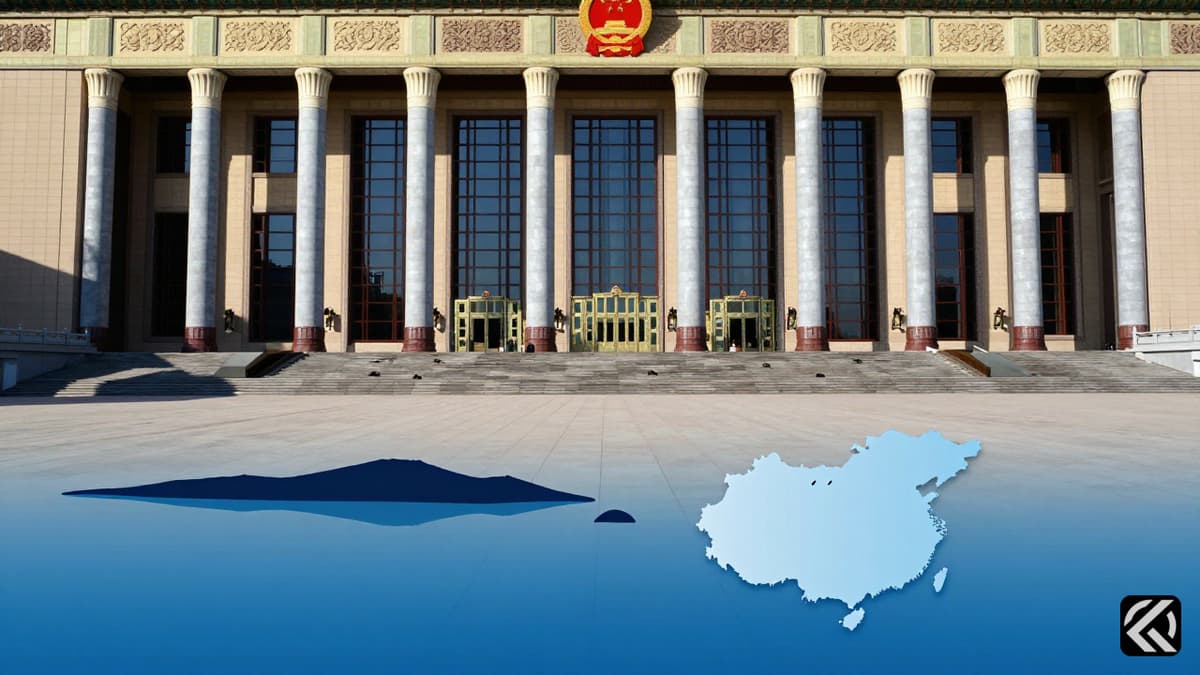
In a historic meeting, opposition leader Cheng Li-wun and President Xi Jinping discussed peace and reconciliation in Beijing, marking the highest-level cross-strait encounter in years.
In a significant development for cross-strait relations, Taiwan opposition leader Cheng Li-wun and Chinese President Xi Jinping met in Beijing to discuss a peaceful resolution to the ongoing dispute. During the closed-door session and subsequent public remarks, both leaders expressed a shared opposition to Taiwan independence and called for an end to mutual hostility.
The meeting, held at the Great Hall of the People, marks the highest-ranking engagement between Taiwanese and Chinese leaders since the 2015 Singapore summit. While President Ma Ying-jeou met Xi in 2015 as president and again in 2023 as a private citizen, Cheng's visit represents a renewed push for dialogue. During their open-door interaction, the two parties posed for photos and exchanged public remarks, with Cheng emphasizing the need to move beyond political confrontation.
Cheng, representing the conservative-leaning Kuomintang, stressed that the Taiwan Strait should serve as a connector of family ties and civilization rather than a flashpoint. Her remarks echoed Chinese Communist Party narratives, highlighting the eradication of absolute poverty and the goal of national rejuvenation. Xi Jinping reinforced this by stating that all sons and daughters of China share the same roots and spirit, emphasizing that these ties cannot be erased.
Both leaders addressed the issue of foreign interference, specifically referencing US involvement. During the meeting, Cheng suggested slowing Taiwan's military build-up, a sentiment analyzed by Atlantic Council fellow Wen-ti Sung as a signal to reduce the focus on defense and deterrence. Sung noted that Cheng's mention of an "institutional arrangement for war prevention" implies a shift away from the current defense-oriented approach under her leadership.
However, the proposal has sparked intense debate within Taiwan's legislature. The KMT has recently blocked a $40bn special budget intended for acquiring US weapons, deeming it too large and vague. The party has instead offered a smaller $12bn alternative. This legislative maneuvering occurred as Taiwan's ruling Democratic Progressive Party (DPP) government pushed forward with defense plans.
President Lai Ching-te responded to the meeting on Facebook, accusing the KMT of deliberately avoiding cross-party negotiations and delaying the defense budget. Lai characterized the calls for reconciliation as "unrealistic fantasies," citing China's steady increase in military presence around Taiwan. Since 2022, Chinese armed forces have conducted six rounds of multi-day live-fire drills in the Taiwan Strait, a 180-kilometer-wide waterway dividing the island from mainland Asia.
Lai argued that historical compromises with authoritarian regimes have consistently sacrificed sovereignty and democracy without delivering freedom or peace. He pointed out that despite Xi's promises of peace, the military environment has deteriorated. The ruling DPP, which advocates for a distinct Taiwanese identity and a higher global profile for the island, has faced accusations from Beijing of pursuing a separatist agenda. Formal contact between the two governments was severed in 2016 when the DPP came to power, though communication continued through intermediaries like the KMT.
The skepticism surrounding Cheng's visit is compounded by a profound shift in Taiwanese public opinion. The Mainland Affairs Council has criticized the notion of "one family" as mischaracterizing the sovereignty dispute, which Taiwan views as a conflict between two governments rather than an internal disagreement. Since the democratization of Taiwan in the 1990s, the island has undergone a cultural and political sea change accompanied by a rise in nationalism.
Data from a 2025 national identity survey by National Chengchi University underscores this transformation. The percentage of respondents identifying as "Taiwanese" rose to 62 percent in 2025, a dramatic increase from 17.6 percent in 1992. Conversely, the identification as "Taiwanese and Chinese" dropped from 46.4 percent to 31.7 percent, while those identifying solely as "Chinese" plummeted from 25.5 percent to just 2.5 percent. This demographic shift complicates the narrative of shared heritage that both Cheng and Xi are trying to leverage.
The historical friction between the KMT and the Chinese Communist Party also cannot be ignored. The two parties fought a bloody civil war from the 1920s to the 1940s, pausing only to fight the Japanese during World War II. The KMT-led government retreated to Taiwan in the late 1940s, vowing to return, but the conflict was never fully resolved. Beijing continues to claim Taiwan as a province and remains committed to its eventual annexation, peacefully or by force.
While Cheng sidestepped questions regarding unification, focusing instead on "reconciliation" based on shared history, the underlying structural tensions remain. The CCP's stance on annexation clashes with the DPP's agenda and the growing Taiwanese national identity. As the KMT seeks to slow military buildup and reduce reliance on US arms, the ruling DPP continues to view these moves as concessions to an authoritarian regime that has already demonstrated its willingness to use force.
Cheng Li-wun's visit to Beijing with Xi Jinping highlights the persistent divide between cross-strait diplomatic aspirations and on-the-ground realities. While the KMT advocates for reduced military tensions and shared cultural heritage, the ruling DPP and a majority of Taiwanese citizens increasingly view sovereignty as a distinct priority. The disparity in public identity, combined with ongoing Chinese military drills and US arms sales, suggests that reconciliation will remain a difficult path. As the island's national consciousness solidifies, any future diplomatic efforts will face significant hurdles in aligning the divergent political and social trajectories of the two sides.
Jun 8, 2026 02:17 UTC
Magnitude 7.8 Quake Shakes Philippines, Urging Immediate Evacuations
Join 50,000+ readers getting the global briefing every morning.
No spam. Unsubscribe anytime.
Jun 8, 2026 02:17 UTC
Magnitude 7.8 Quake Shakes Philippines, Urging Immediate Evacuations
Jun 8, 2026 00:51 UTC
Trump Claims Iran Nuclear Deal Imminent Despite Diplomatic Fractures
Jun 8, 2026 00:47 UTC
Iran Fires Missiles at Israel After Beirut Strike
Jun 7, 2026 22:38 UTC
Congress Party Claims Unity for INDIA Bloc Delhi Meeting


