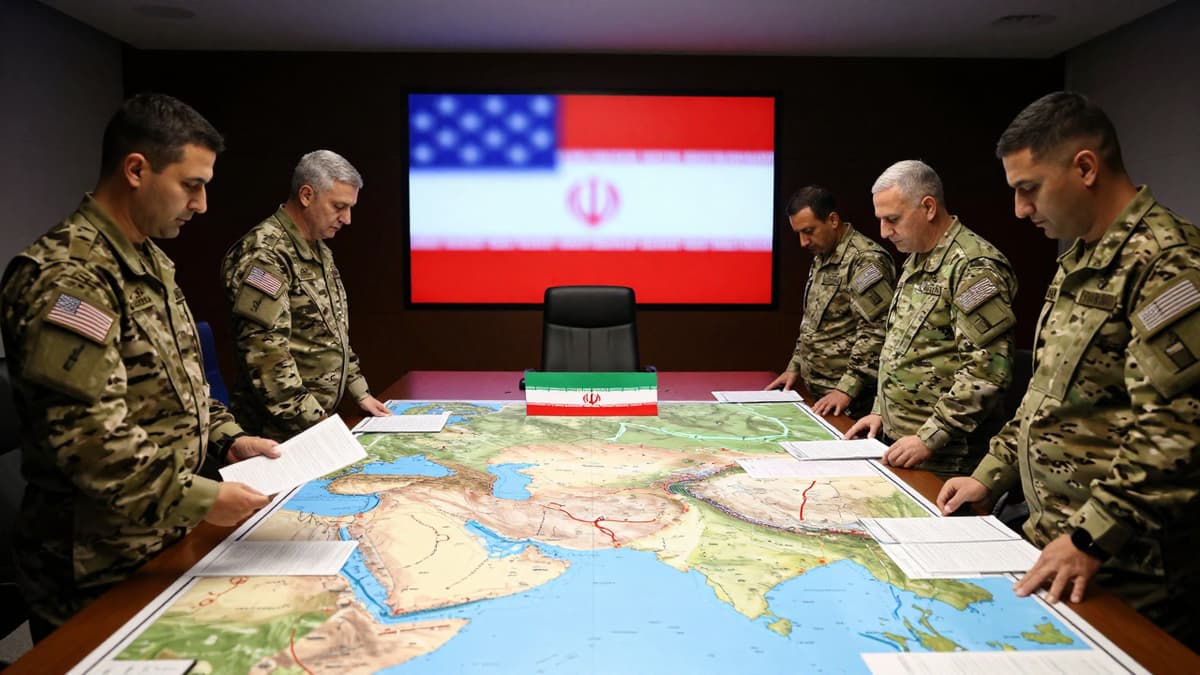
Defense Secretary Pete Hegseth validated President Trump's decision to strike Iran, serving as the primary voice for the Pentagon while downplaying the severe risks of conflict.
In the lead-up to military action against Iran, Defense Secretary Pete Hegseth played a pivotal role alongside President Donald Trump. Before the first bombs were dropped last month, Hegseth validated the president's decision to launch a campaign with Israel, diverging from previous defense secretaries who typically warned of downsides.
Sources indicate that while prior officials would highlight the severe economic fallout of a Strait of Hormuz closure or the limits of air campaigns, Hegseth instead downplayed the risks of the conflict spiraling out of control. Unlike other advisers who emphasized potential dangers, Hegseth served as one of the biggest cheerleaders once the president made the final decision to proceed.
Hegseth has been unerringly enthusiastic about the war's execution, acting as the primary communicator for the administration. Most military planning and strategy, however, originate from Joint Chiefs Chairman Gen. Dan Caine, with Hegseth largely vocalizing confidence in military might rather than crafting the strategy itself. This dynamic allowed Trump to rely on Hegseth to carry a positive assessment to the public, serving as a key face of the campaign in a series of press briefings.
During these briefings, Hegseth has leaned into a combative posture with reporters, repeatedly declaring military successes while criticizing coverage that suggests planners were surprised. He has gone so far as to argue that reporting on service members killed in action was primarily intended to make the president look bad. One month into the war, Hegseth's critical role has been to effectively serve in the job Trump hired him to do: be the face of the Pentagon.
White House press secretary Karoline Leavitt confirmed this dynamic to CNN, stating that if reports describe Hegseth as a cheerleader for the US military, that is accurate, just as Trump is proud as commander in chief. This approach was intentional; Trump selected Hegseth in part for his looks and television composure, despite his lack of military leadership experience, which surprised many in his orbit. The administration wanted the Pentagon to serve as the primary communicator, leveraging Hegseth's credentials as a former Fox News anchor and his bombastic demeanor to defend the president's actions.
A senior White House official emphasized that the president wants Hegseth to be "combative, patriotic and outspoken," a style that has defined his tenure. Alongside the more reserved Gen. Caine, Hegseth has delivered a consistent message to American taxpayers, attacking press outlets and touting progress in destroying Iran's military hardware. While Hegseth has remained involved in military aspects alongside Caine, he has been less vocal than others in advocating for specific policy, preferring to maintain the narrative of success.
Despite his initial stance as a staunch critic of foreign wars, Hegseth has evolved into a promoter of the Iran campaign, a shift that peaked just before US bombs began falling. Sources describe him as "trigger happy," believing that aggressive action is the best way to secure his position, though a senior White House official pushed back, stating the president is very pleased with him regardless of the conflict.
The difficulty in justifying the conflict has grown, as the US military campaign now faces a critical crossroads. Iran has effectively shut off the Strait of Hormuz, putting global energy markets on the verge of a crisis according to a senior oil shipping broker. President Trump continues to weigh the use of ground troops to pressure the regime or secure highly enriched uranium, despite the risk of significant US casualties and the potential for a long-term war in the Middle East. Diplomatic talks to end military operations remain in their infancy.
Hegseth's tenure has seen a transformation from a "back bench" Cabinet member to the central figure of the war effort. Since the start of the conflict, he has held more press briefings at the Pentagon than in his entire previous tenure, performing for an audience of one: the administration's narrative. This role has bolstered his standing despite several self-inflicted missteps, including his use of Signal to discuss war plans, which created persistent headaches for the White House.
While Hegseth presents a self-assured style in public and with Trump, his approach to lawmakers differs significantly. During classified briefings on Capitol Hill, he has largely stuck to a prepared script, avoiding deviation. In contrast, other officials like Secretary of State Marco Rubio and CIA Director John Ratcliffe have more directly addressed lawmakers' questions about the administration's intentions and objectives.
In public, Hegseth declines to discuss specific war plans, citing operational security, but consistently delivers the message Trump repeats: the US is winning decisively. On March 19, he told the press, "To the patriotic members of the press, nobody can deliver perfection in wartime... We're winning decisively and on our terms." Yet, even with this public triumphalism, Trump himself has hinted at Hegseth's reluctance to see the war end. During an Oval Office event, Trump noted that both Hegseth and Gen. Caine seemed disappointed when he suggested the conflict would be settled soon, with Hegseth wanting the action to continue.
The evolving role of Defense Secretary Pete Hegseth signals a potential prolongation of the Iran conflict as the administration faces a narrowing window before energy markets collapse. With Hegseth acting as a primary advocate for military action and showing a preference for continued engagement, the administration may struggle to pivot toward diplomatic solutions. The combination of a shut down Strait of Hormuz and the lack of ground troop deployment decisions suggests the crisis could deepen, forcing a choice between risking heavy casualties for regime change or accepting a prolonged economic standoff. As Hegseth continues to frame the war as a decisive victory, the path to de-escalation remains uncertain, with the administration prioritizing a combative public narrative over immediate resolution.
Jun 8, 2026 02:17 UTC
Magnitude 7.8 Quake Shakes Philippines, Urging Immediate Evacuations
Join 50,000+ readers getting the global briefing every morning.
No spam. Unsubscribe anytime.
Jun 8, 2026 02:17 UTC
Magnitude 7.8 Quake Shakes Philippines, Urging Immediate Evacuations
Jun 8, 2026 00:51 UTC
Trump Claims Iran Nuclear Deal Imminent Despite Diplomatic Fractures
Jun 8, 2026 00:47 UTC
Iran Fires Missiles at Israel After Beirut Strike
Jun 7, 2026 22:38 UTC
Congress Party Claims Unity for INDIA Bloc Delhi Meeting


