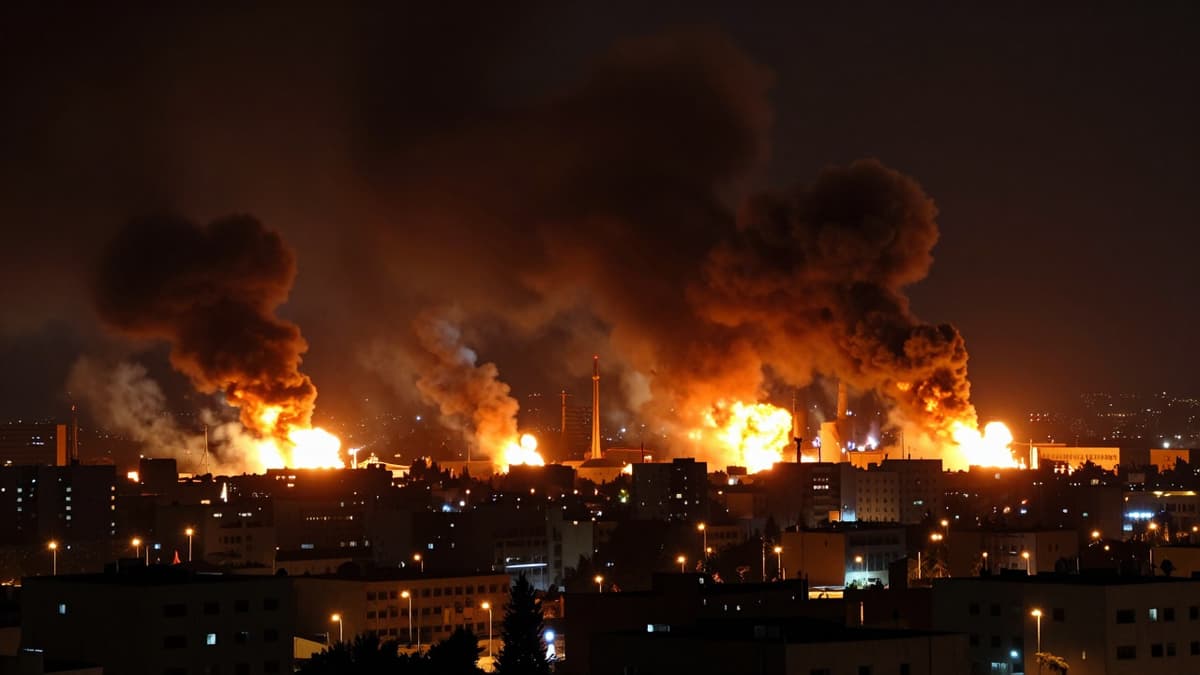
Heavy strikes rock Tehran as Iran accuses Israel and the US of hitting nuclear sites, even as Washington signals a potential breakthrough in diplomatic efforts this week.
Recent overnight developments in the Iranian capital have confirmed that heavy strikes were launched across the city, with local sources confirming explosions were heard as air defenses were activated. These events mark a critical escalation in the Iran US Israel conflict, occurring just hours before the US special envoy expressed hope for renewed diplomatic talks. The timing creates a stark contrast between the on-ground violence and the potential for a negotiated settlement.
Sources told the BBC that the explosions were felt just after 05:30 local time in Tehran, indicating a sudden and significant breach of the city's air defense systems. This surge in violence coincides with a period where US President Donald Trump had recently announced a pause on attacks against Iranian energy infrastructure for ten days. The discrepancy between the announced pause and the reports of ongoing strikes has led to immediate and sharp accusations from Tehran's leadership.
Iranian Foreign Minister Abbas Araghchi has explicitly blamed the US and Israel for what he termed "continued illegal attacks." According to state media, Araghchi stated that civilian targets, including schools, hospitals, and historical buildings, are being struck. The Foreign Minister emphasized that the country will continue to defend the nation resolutely against these actions.
While the situation on the ground remains volatile, the political front in Washington suggests a different trajectory. Steve Witkoff, President Trump's special envoy, stated that the US is hopeful for meetings with Iran "this week." Speaking at the F11 Priority event in Miami, Witkoff noted that ships passing through the region is a "very very good sign." He reiterated that the administration is currently discussing a 15-point deal that has been on the table for some time, expressing an expectation that Iran will soon provide an answer.
These comments were echoed by US Secretary of State Marco Rubio, who spoke outside a G7 meeting in France. Rubio indicated that the US is confident it is on the verge of achieving its objectives without deploying ground troops. When pressed on the timeline of the operation, he suggested that the conflict could be resolved in "weeks, not months."
However, these diplomatic overtures face a challenging backdrop. Iran's Foreign Minister has stated that Israel has struck two of the country's largest steel factories, a power plant, and civilian nuclear sites. Araghchi noted on the platform X that Israel claims to have acted in coordination with the US, arguing that these attacks contradict the President's extended deadline for diplomacy. He warned that Iran will exact a "heavy price" in response.
The military strikes have been specific and targeted. The Israeli military confirmed hitting the Arak heavy water plant in central Iran, and verified images show a massive ball of fire and smoke rising near the reactor. Iran's Atomic Energy Organisation confirmed the facility was targeted twice, though they reported no casualties or contamination from the event. Additionally, the Bushehr nuclear power plant has reportedly been attacked for the third time this month, according to Iranian state media.
The conflict has immediate and tangible repercussions beyond the military front, particularly regarding global trade routes. The interruption of oil and gas supplies through the Hormuz Strait closure has dramatically pushed up global energy prices. With petrol costs already rising, domestic heating bills in the UK are expected to follow suit.
Beyond energy, the closure of the strait threatens a host of other vital goods. BBC Verify found that the number of ships passing through the Hormuz Strait has plummeted from over 100 a day to just a handful. This drastic reduction in traffic means that international supply chains for food, smartphones, and medicines are at risk of disruption. The reliance on this narrow waterway for such a diverse array of essential commodities highlights the fragility of the global economy in the face of regional warfare.
The violence has also extended to allied nations in the region. Several Gulf nations reported fresh strikes and interceptions. The UAE confirmed that its air defenses engaged ballistic missiles and drones launched from Iran. In a tragic development, ten American soldiers have been injured in an Iranian strike on Saudi Arabia's Prince Sultan Airbase.
The current state of affairs presents a complex scenario where military actions on the ground appear to contradict diplomatic signals from Washington. The US envoy's optimism regarding a meeting this week clashes with the Foreign Minister's assertions that the attacks violate the diplomatic timeline. The confirmation of strikes on nuclear facilities, including the Arak and Bushehr plants, suggests that Iran views these specific locations as critical national assets, making the stakes of any potential escalation significantly higher.
The involvement of the Hormuz Strait adds a layer of economic urgency. As the number of vessels navigating the strait drops to a fraction of its normal capacity, the bottleneck effect threatens to exacerbate inflationary pressures globally. The potential for these disruptions to ripple through supply chains for essential goods like medicine and food underscores the interconnected nature of the crisis.
Furthermore, the injury of ten US soldiers in Saudi Arabia indicates that the conflict has spilled over into territories traditionally considered safe havens for American forces. This development complicates the diplomatic narrative, suggesting that the "weeks, not months" timeline for resolution may face significant unforeseen hurdles. As the international community watches, the tension between the US administration's push for a peace deal and the realities of the ongoing strikes creates a precarious balance. The world awaits Iran's response to the 15-point deal, with the heavy price threatened by Tehran serving as a stark warning of the potential consequences of further escalation.
The convergence of active military strikes on critical infrastructure and high-level diplomatic negotiations creates a volatile environment where miscalculations could lead to prolonged regional conflict. If Iran's threat to exact a "heavy price" translates into a coordinated retaliation against US or allied interests, the timeline for de-escalation projected by US officials could be significantly extended. The continued disruption of the Hormuz Strait closure suggests that even if diplomatic channels eventually reopen, the economic scars of this specific escalation period will be felt globally for an extended period, potentially altering trade dynamics and energy markets for years to come.
Jun 8, 2026 00:51 UTC
Trump Claims Iran Nuclear Deal Imminent Despite Diplomatic Fractures
Jun 8, 2026 00:47 UTC
Iran Fires Missiles at Israel After Beirut Strike
Jun 7, 2026 22:00 UTC
US, Iran Peace Hops Fade 100 Days Into War
Jun 7, 2026 20:57 UTC
Iran Strikes Israel: IRGC Promises Week of Continuous Offensive
Jun 8, 2026 02:28 UTC
Trump Walks Out of Meet the Press After Rejecting Evidence Demands


