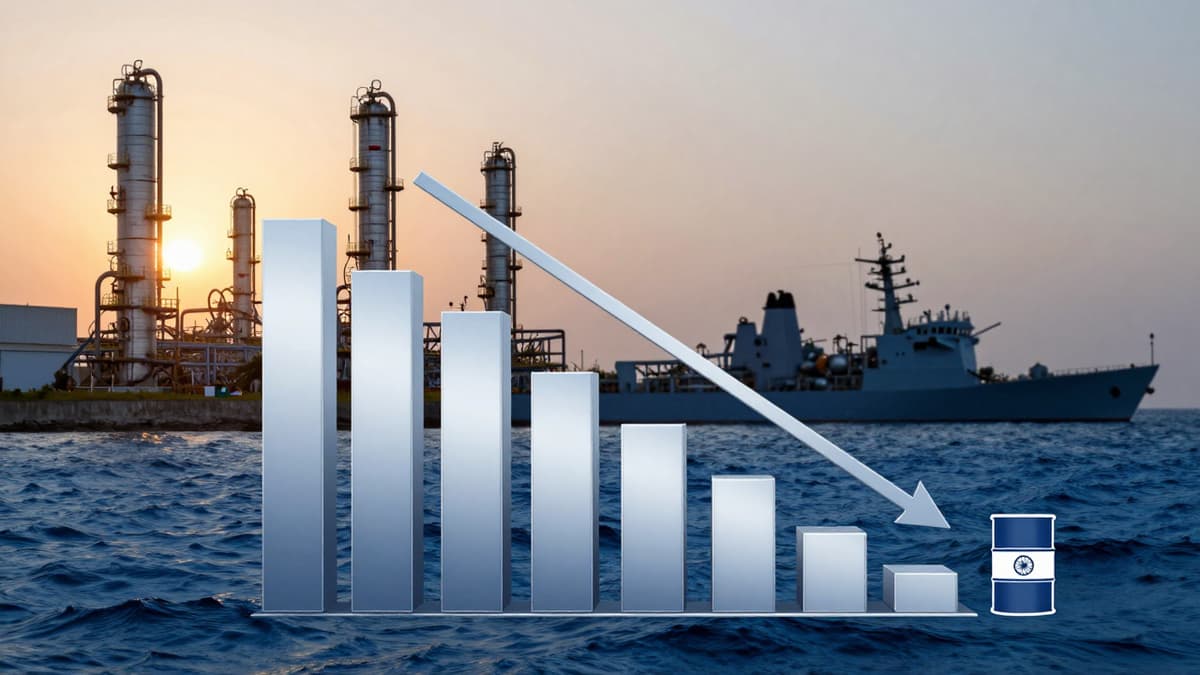
Amidst the escalating West Asia oil war, the Indian government slashes fuel taxes to shield Oil Marketing Companies from record international price hikes.
Seeking to cushion oil-marketing companies (OMCs) from the fiscal impact of skyrocketing benchmark oil prices amidst the escalating war in West Asia, the government, in an order dated March 26 (Thursday), reduced the Special Additional Excise Duty on petrol and diesel by ₹10 per litre each. This decisive move has effectively brought down the duty on petrol to ₹3 and on diesel to nil.
However, this petrol price reduction will not immediately translate into lower prices for consumers, as the initiative is primarily aimed at providing fiscal breathing room for the industry. Consequently, these companies will continue selling fuel at existing prices, but they will now have to pay significantly less tax to the government. Underlining the rationale of the move, Union Petroleum Minister Hardeep Singh Puri wrote on his social media that the government has taken a huge hit on taxation revenues through this reduction.
"Government has taken a huge hit on its taxation revenues to ensure very high losses of oil companies (approximately ₹24/litre for petrol and ₹30/litre for diesel) at this time of sky-high international prices, are reduced," he stated. At the same time, export tax has been levied as international prices of petrol and diesel have skyrocketed, and any refinery exporting to foreign nations will have to pay export tax. In a separate post, Finance Minister Nirmala Sitharaman wrote that duties on the export of diesel have been set at ₹21.5 per litre, and on aviation turbine fuel at ₹29.5 per litre.
Escalating tensions in West Asia and their impact on seaborne energy trade have had an impact across the globe, resulting in energy prices spiralling upwards. At the time of writing (10:10 a.m. IST), brent crude futures (for May 2026) were trading more than 5% higher at $107.34 for every barrel and have been consistently above the $100/barrel mark since the war in Iran broke out. This geopolitical instability drives the necessity for the government's intervention.
While public sector OMCs are currently holding fuel prices level, some private ones are beginning to pass on their higher input costs to consumers. On Thursday (March 26, 2026), privately-owned refiner Nayara Energy increased the prices of petrol by ₹3 per litre, and by ₹5 per litre of diesel. In a statement, they cited "unprecedented challenges in the industry, impacting several aspects of fuel disruption and availability." The divergence between public and private sector strategies highlights the urgency of the diesel excise duty cut to maintain stability across the market.
Further addressing ongoing speculations about a potential lockdown amidst the fuel crisis, Mr. Puri stated the rumours are "completely false." "Let me state this clearly, there is no such proposal under consideration by the Govt of India," he wrote, quelling fears of severe supply restrictions.
The government's decision to cut the special additional excise duty represents a strategic pivot to absorb the shock of the West Asia oil war on the domestic economy. By reducing the duty on petrol to ₹3 and on diesel to nil, the administration is directly subsidizing the operational costs of Oil Marketing Companies, which are facing massive losses due to global price spikes. With brent crude futures trading above $107.34 and consistently surpassing the $100/barrel mark since the conflict in Iran began, the fiscal pressure on OMCs has become unsustainable without state intervention.
The immediate effect of this policy is a transfer of the tax burden from the companies to the government, rather than a pass-through to the consumer in the form of lower retail prices. This approach acknowledges that while consumers face the brunt of high prices, the survival of the OMCs is critical to maintaining national energy security. Finance Minister Nirmala Sitharaman's introduction of export taxes on diesel (₹21.5 per litre) and aviation turbine fuel (₹29.5 per litre) further underscores the government's dual strategy: shielding domestic supply while capturing revenue from exports to offset the revenue loss from the excise cuts.
The response from private players like Nayara Energy, who have already raised prices, suggests that without such government measures, the entire sector might face similar price hikes, exacerbating inflation. The minister's firm denial of any lockdown proposals serves as a crucial confidence booster for the public, ensuring that the market remains stable despite the external shocks from the Middle East. As the war continues to drive international prices higher, this fiscal breathing room is essential for preventing a total supply chain collapse in the energy sector.
Jun 8, 2026 02:17 UTC
Magnitude 7.8 Quake Shakes Philippines, Urging Immediate Evacuations
Join 50,000+ readers getting the global briefing every morning.
No spam. Unsubscribe anytime.
Jun 8, 2026 02:17 UTC
Magnitude 7.8 Quake Shakes Philippines, Urging Immediate Evacuations
Jun 8, 2026 00:51 UTC
Trump Claims Iran Nuclear Deal Imminent Despite Diplomatic Fractures
Jun 8, 2026 00:47 UTC
Iran Fires Missiles at Israel After Beirut Strike
Jun 7, 2026 22:38 UTC
Congress Party Claims Unity for INDIA Bloc Delhi Meeting


