Section
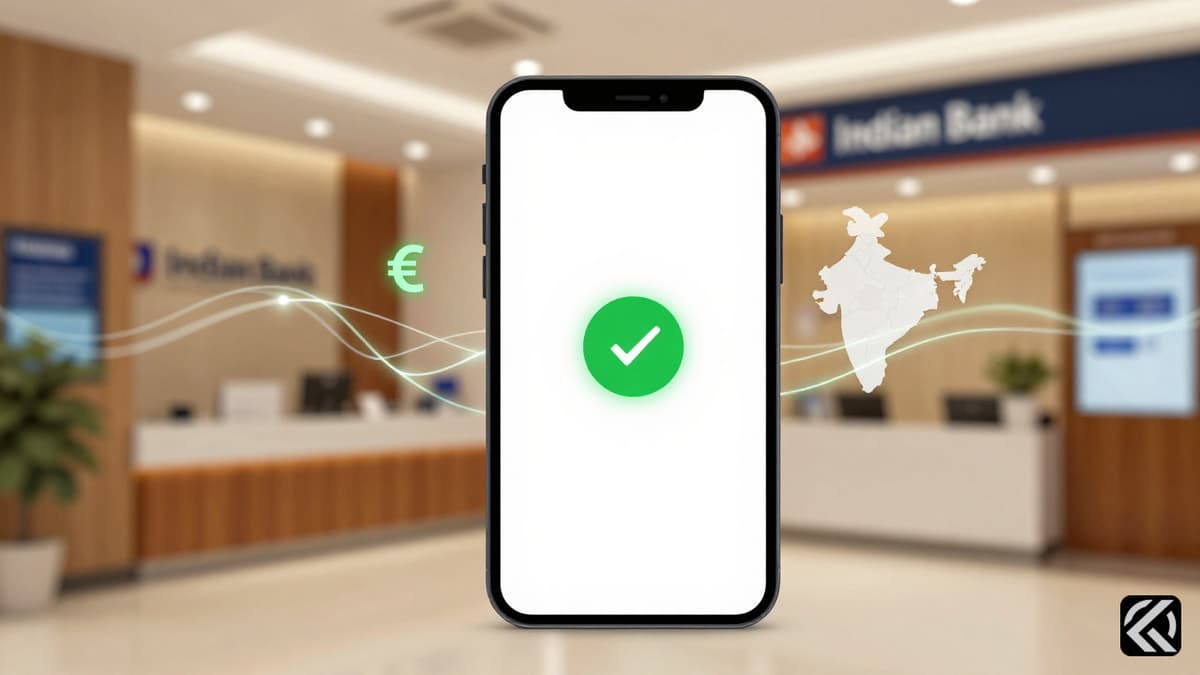
India’s digital payment landscape shifts as the government halts fees on small UPI and RuPay transactions, leaving the future of merchant discount rates for larger sums uncertain.
The government has issued a decisive directive prohibiting banks and payment system providers from levying any charges on Unified Payments Interface (UPI) transactions amounting to ₹2,000 or less. This mandate also extends to payments processed through RuPay debit cards, ensuring that consumers engaging in low-value digital commerce face no additional financial friction. The move aims to protect micro-transactions and maintain the momentum of India's digital adoption, keeping the primary mode of payment accessible and free for everyday users.
This regulatory clarity arrives via a gazette notification dated September 14, which explicitly states that no institution can impose fees, whether directly or indirectly, on these specified transaction sizes. However, the notification leaves a significant gap regarding the financial ecosystem of higher-value commerce. The government has not yet specified whether charges will be applicable to transactions above ₹2,000, leaving merchants and providers in a state of anticipation. Historically, UPI transactions have operated without any charges regardless of the amount, but this new framework signals a potential shift in the long-standing zero-fee model for larger sums.
The legal foundation for this potential change lies in the recent amendment to Section 10A of the Payment and Settlement Systems Act, 2007. This amendment provides an enabling framework for imposing a Merchant Discount Rate on UPI and other notified electronic payment modes. The Amendment Bill was passed by Parliament during the Monsoon Session, which concluded on August 13, 2026. This legislative step was crucial as it empowered the government to structure a revenue model that could support the ecosystem's growing complexity. Following the passage of the Bill, the government announced that the UPI and Services Steering Committee, headed by the National Payments Corporation of India (NPCI), would be responsible for deciding on the specific MDR rates.
Explaining the rationale behind the potential introduction of charges, the government has highlighted the immense scale of the current payment infrastructure. In a recent statement, the government noted that with exponential transaction volumes, the system requires significant and continuous upgrades in cybersecurity, fraud prevention, and core infrastructure. The sheer volume of money moving through digital channels demands robust protection mechanisms that cannot be sustained without a dedicated revenue stream. The government emphasized that charges are necessary for market expansion and to ensure the self-sustainability of the payment network.
The argument for a structured fee model is rooted in the need to increase competition within the digital payment sector. The government stated that encouraging more companies to expand their operations requires a self-sustaining revenue model. Relying on subsidies alone is no longer viable for the next wave of growth, according to official assessments. The government added that a balanced framework is required to ensure that UPI remains robust, inclusive, and future-ready. This balance seeks to prevent any single entity from dominating the market while ensuring that the critical infrastructure supporting millions of daily transactions remains secure and operational.
UPI, which is operated by the National Payments Corporation of India (NPCI), an initiative of the Reserve Bank of India (RBI) and the Indian Banks’ Association, has become the backbone of India’s digital economy. The platform enables real-time payments between individuals and allows customers to make payments directly to merchants during purchases. Its reach has expanded significantly, transforming the financial landscape from its launch on August 25, 2016. The growth statistics are staggering, with transaction values surging from ₹0.07 lakh crore in FY17 to around ₹314 lakh crore in FY26. This represents a more than 4,000-fold increase over the decade, underscoring the critical need for a sustainable financial model to support such massive volume growth.
The international expansion of UPI further complicates the fee structure debate. UPI is now accepted in 11 countries, demonstrating its global viability. Uzbekistan was the latest entry into this network, highlighting the continuous expansion of India's digital export. The other countries where UPI is accepted include Singapore, the United Arab Emirates, France, Mauritius, Nepal, Bhutan, Qatar, Sri Lanka, Cambodia, and Greece. As the platform continues to gain global traction, the domestic decision on MDR will likely influence international pricing strategies and partnerships.
The distinction between small and large transactions is becoming increasingly important for merchants. While the current exemption up to ₹2,000 protects daily necessities and small business transactions, the lack of clarity for amounts above this threshold creates uncertainty. Merchants who rely on high-value sales cannot yet plan their cost structures accurately. The government’s decision to defer the MDR decision to the NPCI-led committee suggests a nuanced approach, balancing the need for infrastructure funding with the goal of keeping digital payments attractive and widely adopted.
The eventual determination of the Merchant Discount Rate will define the next phase of India's digital payment evolution. If fees are introduced for larger transactions, it may lead to a bifurcation in the market, where small merchants stick to free UPI while larger businesses explore alternative payment gateways with different cost structures. The self-sustainability argument suggests that without a viable revenue model, the infrastructure cannot keep pace with the 4,000-fold growth witnessed in the last decade. Consequently, the industry must prepare for a new normal where digital payments are a commercial service requiring investment, rather than a purely subsidized public utility. This shift could reshape the competitive dynamics among banks, fintech companies, and payment aggregators as they vie for market share in a monetized landscape.
Oct 3, 2026 04:08 UTC
FlyDubai Co-Pilot Banned in Oman Over Extremism Concerns
Oct 3, 2026 00:50 UTC
Israel-Mumbai Campaign Honors Captain Smit After Flydubai Incident
Oct 2, 2026 18:13 UTC
Captain Smit Machchhar’s Courage Saves Flydubai Flight FZ1073 From Disaster
Oct 2, 2026 16:45 UTC
Captain Smit Machchhar Saves Plane Mid-Fall
Sep 20, 2026 04:35 UTC
Trump’s Control Drives Kennedy Center to Financial Ruin