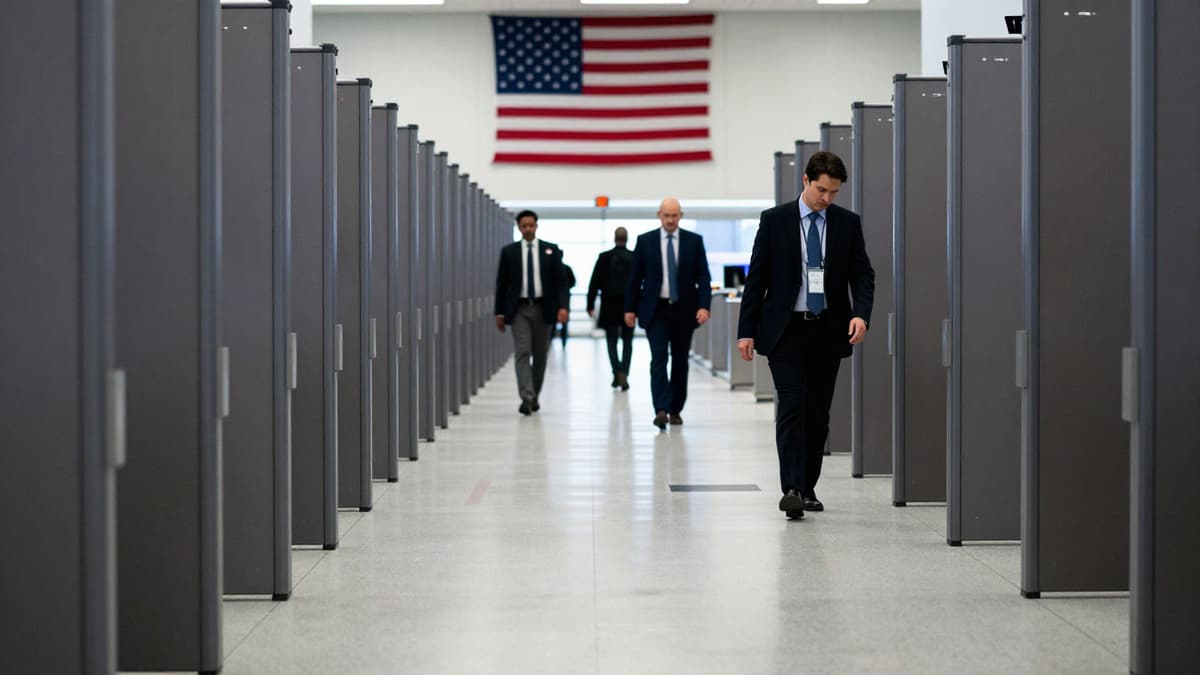
New directives aim to fund TSA workers, yet hours-long lines persist as employees face financial crises without guaranteed pay during the ongoing shutdown.
President Donald Trump has directed his Department of Homeland Security chief to swiftly process payments for Transportation Security Administration agents, yet travelers will not see an immediate return to normal operations. Despite the new directive, frontline workers and hours-long security lines at US airports are unlikely to resolve overnight due to the lingering government shutdown impact.
The partial shutdown, which began on February 14, saw weeks of legislative stalemate with few proposals passed, leading to significant absenteeism as workers quit or stayed home. On Thursday evening, Trump issued an order for the immediate payment of TSA agents, a move echoed hours later by the Senate, which unanimously moved to fund most of the DHS. However, this legislation excludes Immigration and Customs Enforcement and parts of Customs and Border Protection, leaving uncertainty about which mechanism will first secure funds for the workers. While the White House and DHS have been contacted regarding the speed of implementation, House Republican leaders currently lack a plan to pass the Senate bill.
Union leaders warn that even in the best-case scenario, it will take days, if not weeks, for airport security checkpoints to return to full staffing levels. Roughly 61,000 TSA employees have been working without pay since the shutdown began, facing the prospect of missing their second full paycheck following a partial payment at the end of February and a non-payment in mid-March. Consequently, financial-strapped TSA workers have been calling out at higher rates, resulting in hours-long waits for travelers at multiple airports nationwide.
The human cost of the funding lapse is profound. Johnny Jones, secretary-treasurer of the American Federation of Government Employees' TSA Council 100, noted that employees cannot afford childcare or gas without deposits. The situation has escalated rapidly; by Friday, the agency faced over $1 billion in missing paychecks. Ha Nguyen McNeill testified at a House hearing that many workers have missed bill payments, received eviction notices, had cars repossessed, and lost child care or retirement savings. Some employees have resorted to selling blood, taking second jobs, or sleeping in their cars while performing duties at the highest level.
Aaron Barker, president of AFGE Local 554, emphasized that lines will not clear immediately. "Until that paycheck hits that account, you can expect the same," Barker stated. The disruption has severely degraded aviation security staffing. Prior to the shutdown, call-out rates were a manageable 4%, but recent reports from McNeill indicate that 40-50% of workers are not showing up at some airports. Additionally, assaults on officers have increased by over 500%, and nearly 500 workers have quit during the funding lapse. McNeill warned that as the shutdown drags on, the agency risks losing talented and experienced employees to other sectors offering steady pay.
The salaries for these positions vary by location, starting around $40,000 in places like Ithaca, New York, and rising to approximately $75,000 for remote locations like Nome, Alaska. These rates were increased in 2024 to match other federal workers and improve retention. Throughout the shutdown, aviation officials have urged Congress to fund the DHS or find a solution for worker pay. Last year, during the longest shutdown in American history, bills like the Shutdown Fairness Act and the Keep America Flying Act were introduced to address such lapses. However, no such legislation has moved forward since last fall, despite bipartisan support.
Experts argue that paying critical workers during shutdowns should be a bipartisan agreement. Sheldon Jacobson, a founder professor in engineering at the University of Illinois, stated, "The TSA, air traffic control, they're critical. Then why are we not paying them?" Max Stier, CEO of the Partnership for Public Service, added that the administration should support legislation ensuring all government workers get paid, noting that presidents and lawmakers are paid during funding lapses. Stier insisted that federal employees should be guaranteed payment regardless of political gridlock.
As the immediate directive to pay agents is processed, the immediate TSA officers pay issue remains the primary catalyst for the current staffing crisis. With over half the workforce absent and hundreds of quits recorded, the infrastructure cannot simply flip back to normal immediately. Even if the funding order is executed rapidly, the physical reality of hiring and training new officers to replace those who have left or are recovering from financial hardship suggests a prolonged period of reduced capacity. Without new legislation to guarantee pay during future funding lapses, the cycle of disruption is likely to repeat, leaving air travel vulnerable to repeated staffing shortages and financial distress for the federal workforce responsible for passenger safety.
Jun 8, 2026 00:51 UTC
Trump Claims Iran Nuclear Deal Imminent Despite Diplomatic Fractures
Jun 8, 2026 00:47 UTC
Iran Fires Missiles at Israel After Beirut Strike
Jun 7, 2026 22:00 UTC
US, Iran Peace Hops Fade 100 Days Into War
Jun 7, 2026 20:57 UTC
Iran Strikes Israel: IRGC Promises Week of Continuous Offensive
Jun 8, 2026 02:28 UTC
Trump Walks Out of Meet the Press After Rejecting Evidence Demands


