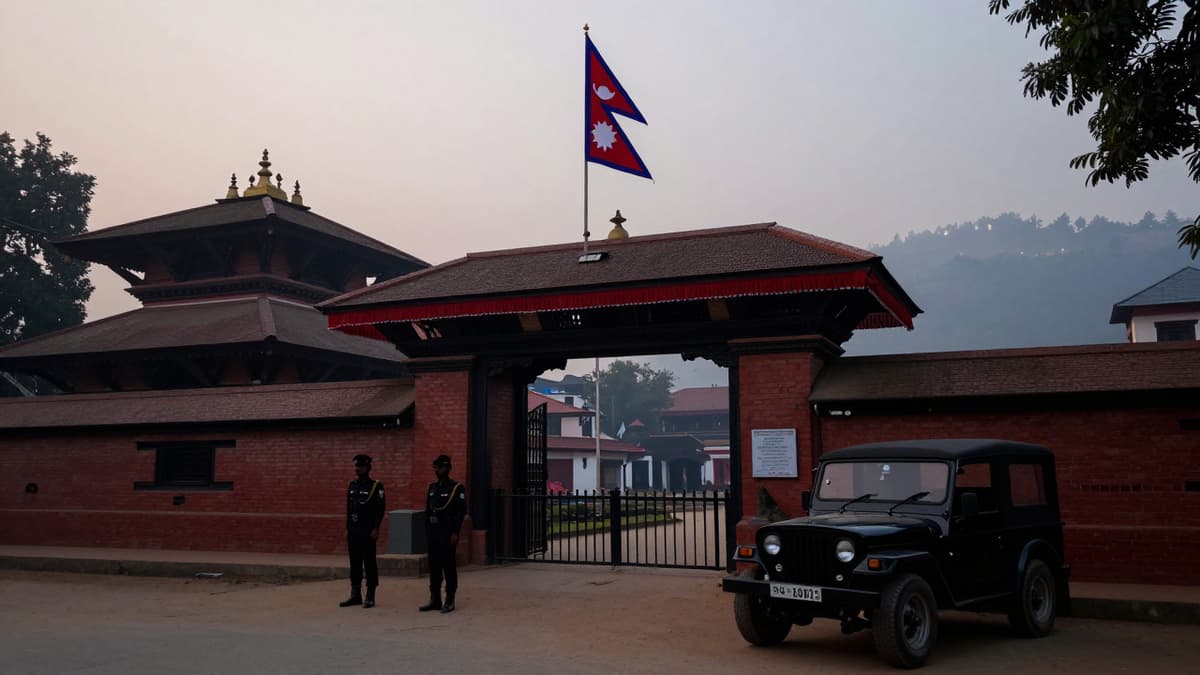
In a dramatic legal turn, former Prime Minister KP Sharma Oli and former Home Minister Ramesh Lekhak have been arrested for their alleged roles in the deadly Gen Z protests.
Following a sudden legal crackdown, Police have taken into custody former Nepal Prime Minister KP Sharma Oli and former Home Minister Ramesh Lekhak on serious charges of negligent killings. This high-profile action occurred on Saturday morning, just one day after the inauguration of a new government led by Balendra Shah of the Rastriya Swatantra Party. The arrests target the officials for their alleged roles in the deadly crackdown during the September Gen Z protests, which resulted in 76 deaths and sparked a political upheaval.
The detention was executed as a direct implementation of a probe commission's findings, triggered by formal complaints filed by the Home Ministry. Mr. Oli was apprehended from his residence in Gundu, while Mr. Lekhak was taken into custody in Suryabinayak, Bhaktapur, a district bordering Kathmandu. These arrests follow the recommendations of a commission established to investigate the violent incidents of September 8 and 9, which specifically identified both men as failing to prevent lethal police firing. The commission, which submitted its report to the outgoing government led by Sushila Karki on March 8, had recommended prosecution for both officials.
The timing of these events coincides with a significant political shift in the Himalayan nation. The probe commission's report was leaked to the media on Wednesday, just two days before Prime Minister Shah was sworn in following a landslide victory for his party in the March 5 polls. Upon taking the oath of office, Mr. Shah quickly appointed Sudhan Gurung, a key figure during the Gen Z protests, as the new Home Minister. It was Mr. Gurung who filed the formal complaint against Mr. Oli and Mr. Lekhak in October, setting the legal wheels in motion for their eventual detention.
At its first meeting on Friday evening, March 27, 2026, the Shah Cabinet made the decisive move to act on the commission's report. Sasmit Pokharel, the newly appointed Education Minister and government spokesperson, confirmed to journalists that relevant agencies had been directed to enforce the commission's recommendations immediately. Home Minister Gurung held extensive consultations with the chiefs of the Nepal Police and the Armed Police Force late into the Friday night, ensuring the operational readiness for the arrests on Saturday morning. The KP Sharma Oli arrested status marks a pivotal moment in the post-protest legal landscape.
The gravity of the allegations cannot be overstated. The commission's investigation concluded that both Oli and Lekhak were criminally liable for negligent killings due to their failure to stop the police actions that killed dozens. Alongside the former top leadership, the report also recommended the prosecution of Chandra Kuber Khapung, who served as the chief of Nepal Police during the height of the unrest. If found guilty, all three individuals, including the former Prime Minister and Minister, could face jail terms of up to 10 years. This recommendation stems directly from the commission's determination that the leadership failed in their duty to prevent the lethal force used on September 8, where 19 people died in police firing alone.
The sudden public release of the probe commission's report had already raised concerns among legal experts and political observers about potential retaliatory actions or overreach by the new administration. While the commission's findings were based on the specific dates of September 8 and 9, the implications for the outgoing leadership of the Oli government are severe. The Gen Z protests, which eventually led to the overthrow of the Oli government, were the catalyst for the entire judicial process. Mr. Lekhak, serving as Home Minister under the Oli cabinet which included Nepali Congress leadership, is implicated alongside the Prime Minister in these charges of Gen Z protests negligence.
The immediate political reaction from the ousted party was swift and volatile. On Friday night, sister wings of Oli's CPN-UML party issued a stern warning, declaring that there would be "consequences" if their leader was arrested. This indicates a tense atmosphere as the new Balendra Shah new government begins its tenure with a major judicial action against its predecessor. The arrests were not merely symbolic; they represent a concrete enforcement of the commission's mandate, which had been sitting on the desk of the outgoing administration before the political transition.
The operational execution of the warrants involved coordination between the new Home Minister and the security forces. The late-night consultations between Gurung and the chiefs of the Nepal Police and Armed Police Force underscored the seriousness with which the new administration views the mandate to bring accountability. The arrests were carried out the very next morning, demonstrating a streamlined process from cabinet decision to police action. This rapid response highlights the political will of the new leadership to address the demands of the Gen Z movement, which had originally demanded accountability for the deaths that occurred during the crackdown.
The immediate execution of the arrest warrants sets a significant legal precedent for Nepal, as the new government moves swiftly to address the legacy of the September crackdown. While the source material indicates that the commission recommended prosecution for the negligence of both Oli and Lekhak, the potential for a 10-year jail sentence suggests a rigorous judicial process ahead. The fact that the commission's report was leaked just days before the new government took power implies a transparency that the outgoing administration may have attempted to suppress, yet the leak facilitated the rapid action taken by Prime Minister Shah. As the legal proceedings unfold, the political landscape of Nepal will likely remain volatile, with the CPN-UML's warnings of consequences hinting at potential civil unrest or further political maneuvering in response to the detention of their former leader. The ultimate outcome of these cases will define the accountability standards for future governments regarding the use of force against civilian protesters.
Jun 8, 2026 00:51 UTC
Trump Claims Iran Nuclear Deal Imminent Despite Diplomatic Fractures
Jun 8, 2026 00:47 UTC
Iran Fires Missiles at Israel After Beirut Strike
Jun 7, 2026 22:00 UTC
US, Iran Peace Hops Fade 100 Days Into War
Jun 7, 2026 20:57 UTC
Iran Strikes Israel: IRGC Promises Week of Continuous Offensive
Jun 8, 2026 02:28 UTC
Trump Walks Out of Meet the Press After Rejecting Evidence Demands


