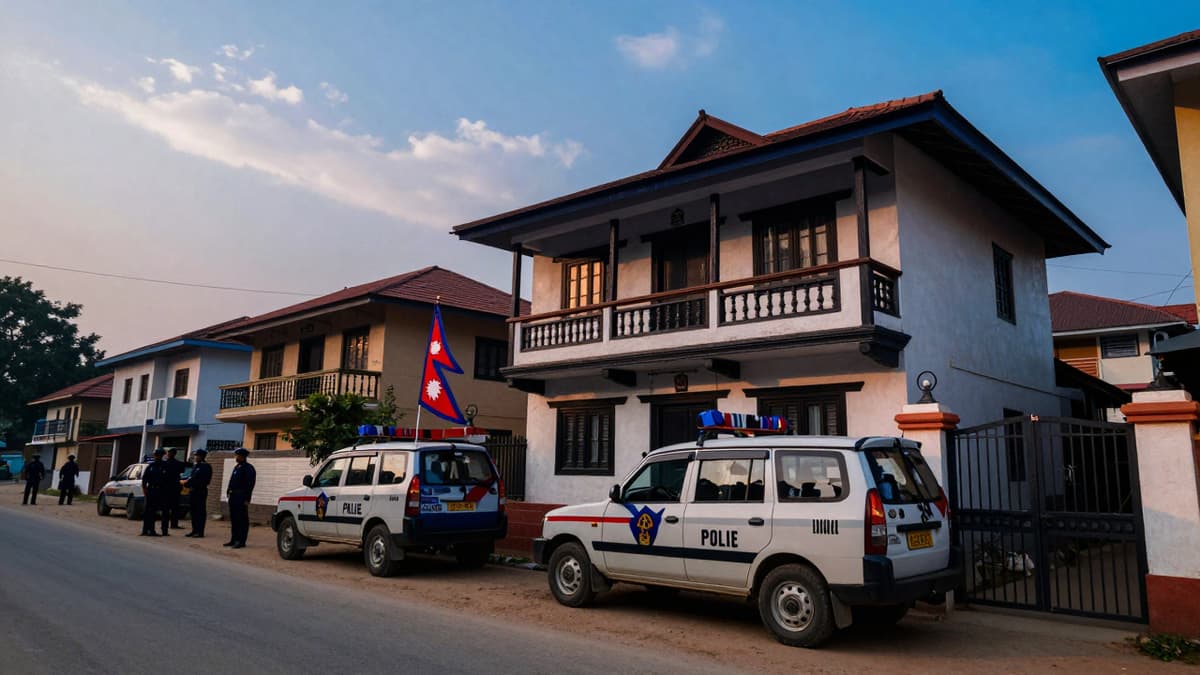
Just days after taking office, Nepal's new government moves to enforce justice by arresting former leaders linked to the deadly September crackdown.
Just days after being sworn in, the new administration in Nepal has initiated a dramatic legal action against former top leaders. Police arrested former Prime Minister KP Sharma Oli and former Home Minister Ramesh Lekhak on Saturday morning, following accusations of negligent killings. This significant move comes six months after the Gen Z protests resulted in the deaths of 76 people, including 19 victims of police firing on September 8. The arrests mark a swift shift in accountability, occurring just one day after the inauguration of a government led by Balendra Shah of the Rastriya Swatantra Party.
The timing of these arrests suggests a direct response to a leaked report and a formal complaint filed by the new Home Minister. The police action was triggered by formal complaints filed by the Home Ministry, which led to the issuance of arrest warrants. Both men were taken into custody from their respective locations; Oli was detained from his residence in Gundu, while Lekhak was arrested in Suryabinayak, a district adjoining Kathmandu. These actions were executed by Nepal Police and the Armed Police Force, whose chiefs were consulted by Home Minister Sudhan Gurung late into Friday night.
Gurung, a key figure during the Gen Z protests, filed the initial complaint against Oli and Lekhak in October. This followed the appointment of Gurung by Prime Minister Shah, signaling a direct alignment between the protest leadership and the new investigative push. The arrests were specifically made to implement the recommendations of a probe commission that investigated the violent incidents during the uprising. The commission, which submitted its report to the outgoing government on March 8, stated that both Oli and Lekhak failed to prevent lethal police firing and recommended their prosecution for negligent killings.
The Nepal Gen Z probe commission was formed to investigate the specific incidents of September 8 and 9. Although the report was officially submitted to the outgoing government led by Sushila Karki, it was leaked to the media on a Wednesday, two days before Shah's inauguration. The leak preceded the March 5 polls, where the RSP secured a landslide victory. The timing of the leak and the subsequent rapid action by the new cabinet suggests a concerted effort to address the demands of the protesters who had previously forced the ouster of Oli's government.
The commission's findings were unequivocal. It recommended the prosecution of three individuals: former Prime Minister KP Sharma Oli, former Home Minister Ramesh Lekhak, and Chandra Kuber Khapung, who served as the chief of Nepal Police during the protests. If found guilty of the charges, all three officials face jail terms of up to 10 years. This severe potential penalty underscores the gravity of the accusations regarding the failure to prevent lethal force during the demonstrations.
Sasmit Pokharel, the newly appointed Education Minister and government spokesperson, confirmed the administration's stance shortly after the arrests. Pokharel told journalists that relevant agencies had been directed to act immediately on the commission's recommendations. This directive was solidified during the first meeting of the Shah Cabinet on Friday, March 27, 2026, where officials decided to implement the report without delay. The speed of the operation indicates a high priority on delivering justice for the victims of the crackdown.
However, the sudden release of the report and the immediate arrests have raised concerns. Legal experts have urged caution regarding the process. Tensions also remain high within the political landscape, as sister wings of Oli's CPN-UML party warned of "consequences" if their leader was arrested. This warning highlights the potential for political backlash and instability as the new government navigates the implementation of the commission's strict recommendations against high-profile figures from the previous administration.
The implementation of the Nepal Gen Z probe recommendations by the Shah cabinet signifies a pivotal moment for the nation's accountability mechanisms. The swift transition from the leaking of the report to the arrests of former leaders demonstrates a clear determination to address the grievances that fueled the recent political upheaval. With three key figures potentially facing a decade in prison, the political landscape in Nepal is poised for significant shifts. The actions taken by Home Minister Sudhan Gurung and the new administration suggest that the legacy of the September crackdown will heavily influence the tenure of the new government. As legal proceedings commence, the nation watches closely to see how the judiciary handles these historic cases involving former heads of state and law enforcement chiefs.
Jun 8, 2026 00:51 UTC
Trump Claims Iran Nuclear Deal Imminent Despite Diplomatic Fractures
Jun 8, 2026 00:47 UTC
Iran Fires Missiles at Israel After Beirut Strike
Jun 7, 2026 22:00 UTC
US, Iran Peace Hops Fade 100 Days Into War
Jun 7, 2026 20:57 UTC
Iran Strikes Israel: IRGC Promises Week of Continuous Offensive
Jun 8, 2026 02:28 UTC
Trump Walks Out of Meet the Press After Rejecting Evidence Demands


