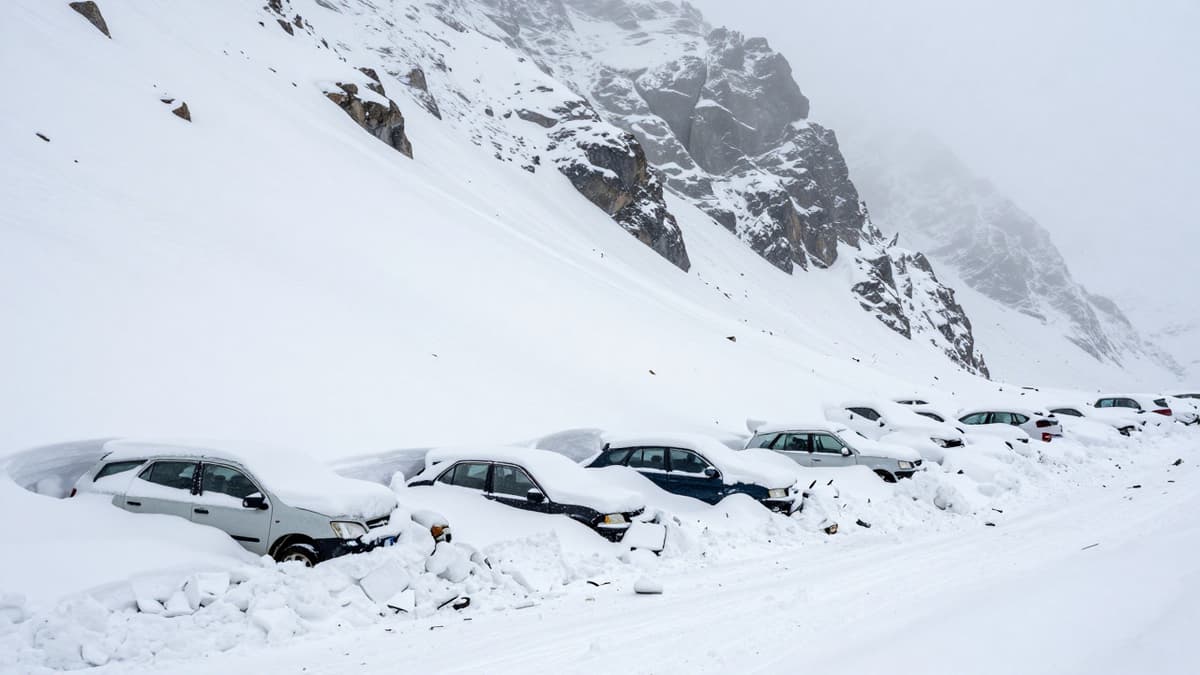
A sudden snow disaster on the Zojila Pass has claimed five lives and left two feared trapped. Read the full details on the rescue operations and official responses.
The high-altitude Zojila Pass, the vital link between the Kashmir Valley and Ladakh, was the scene of a tragic disaster on Friday afternoon. A sudden Zojila Pass avalanche struck the road, resulting in the deaths of five persons and leaving another five injured. Eyewitnesses described a massive volume of snow crashing down and burying several vehicles at an altitude of 3,580 meters. Initially, reports suggested that one vehicle was thrown off the road, with others stranded in the snow. However, casualty reports indicate that the tragedy affected three to four vehicles that were completely engulfed by the falling snow.
The incident appears to have been triggered by bright sunlight hitting the snow-laden road just as a train of passenger vehicles was navigating the treacherous terrain near Zero Point. Two additional persons are currently feared trapped in the debris. In response to the catastrophe, Ladakh Lieutenant-Governor Vinai Kumar Saxena has issued immediate directives. He ordered the Deputy Commissioner and Senior Superintendent of Police of Kargil to visit the spot without delay to mobilize relief and rescue operations. Saxena confirmed that all government agencies, including disaster relief forces and the Border Road Organisation, have been placed on high alert. He emphasized that he is personally monitoring the developing situation as the highway remains closed to all traffic.
Political leaders from across the region have expressed their grief over the loss of life. Union Minister Jitendra Singh stated he was saddened by the incident, offering sincere condolences to the bereaved families and noting that all required assistance is being provided to the injured. The Chief Minister of Jammu and Kashmir also voiced deep sorrow, extending heartfelt condolences and praying for the speedy recovery of those hurt. Meanwhile, Khalil Ahmad Poswal, the Senior Superintendent of Police in Ganderbal, confirmed that rescue operations are actively continuing at the site. He reiterated that two more persons are feared trapped, highlighting the urgency of the ongoing efforts to reach those buried beneath the snow.
The impact of this disaster extends beyond the immediate casualties, threatening the connectivity of one of India's most strategic and difficult routes. The closure of this section of the Srinagar-Leh highway isolates the area, complicating the delivery of supplies and emergency services. The severity of the event, with snow burying multiple vehicles simultaneously, underscores the inherent dangers of high-altitude travel in the Himalayas. The involvement of the Border Road Organisation and the personal oversight by the Lieutenant-Governor signals a high-priority mobilization of resources to address the crisis and manage the aftermath.
As the sun sets over the snow-covered peaks, the focus remains entirely on locating the trapped individuals. The harsh conditions at 3,580 meters make rescue efforts perilous, yet the deployment of specialized disaster relief forces indicates a comprehensive approach to the tragedy. The coordination between local police administration and central agencies represents a critical test of the region's disaster management capabilities. With the highway closed, alternative routes or delays are inevitable, but the immediate priority remains the extraction of survivors and the recovery of the deceased. The situation demands continuous monitoring and rapid response as weather conditions in the Himalayas can change precipitously, potentially hindering rescue efforts further.
The swift expression of grief and support from top government officials underscores the gravity of the incident for the region's leadership. From the Union Minister to the state Chief Minister and the Lieutenant-Governor, the chain of command has activated emergency protocols. This unified response aims to reassure the public and support the families affected by the loss. The ongoing efforts by the Deputy Commissioner and the Senior Superintendent of Police in Kargil are crucial on the ground, serving as the eyes and hands of the administration at the disaster site.
The closure of the Srinagar-Leh highway will likely persist for the duration of the rescue operation and subsequent clearance efforts. This critical supply route connects two major union territories, making its disruption a matter of significant national and regional concern. The high-altitude nature of the pass, combined with the seasonal avalanche risks, means that such closures may become more frequent or prolonged as weather patterns shift. The event serves as a stark reminder of the fragility of infrastructure in the Himalayan region and the need for robust contingency planning. The continued monitoring by the Lieutenant-Governor suggests that the situation will remain a top priority for the administration until all trapped persons are accounted for and the road is deemed safe for reopening.
Jun 8, 2026 00:51 UTC
Trump Claims Iran Nuclear Deal Imminent Despite Diplomatic Fractures
Jun 8, 2026 00:47 UTC
Iran Fires Missiles at Israel After Beirut Strike
Jun 7, 2026 22:00 UTC
US, Iran Peace Hops Fade 100 Days Into War
Jun 7, 2026 20:57 UTC
Iran Strikes Israel: IRGC Promises Week of Continuous Offensive
Jun 8, 2026 02:28 UTC
Trump Walks Out of Meet the Press After Rejecting Evidence Demands


