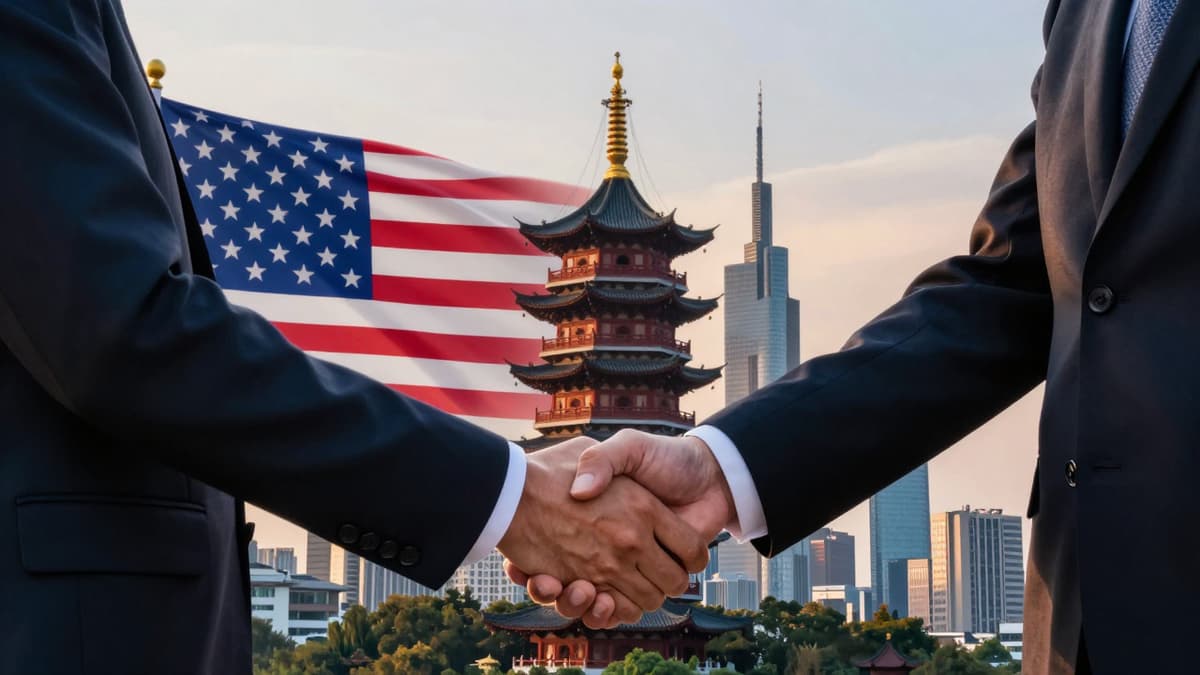
President Trump confirms a historic May meeting with Xi Jinping in China, the first US presidential visit in nearly a decade, following a delay caused by the ongoing conflict with Iran.
US President Donald Trump has officially announced a landmark meeting with Chinese President Xi Jinping scheduled for May 14 and 15 in China. This visit, which marks the first time a US president has traveled to China in nearly ten years, follows a significant delay triggered by the escalating conflict between the United States, Israel, and Iran. Speaking on Wednesday via his social media platform, Truth Social, Trump detailed the rescheduled dates and confirmed that preparations are currently being finalized for these historic visits, which also include a reciprocal trip where Xi Jinping is set to host the US president in Washington DC later this year.
The decision to postpone the original March 31 itinerary was driven by urgent geopolitical developments following the US and Israel's wide-ranging military strikes on Iran. These operations resulted in the death of the Iranian supreme leader, prompting immediate retaliation from Tehran against Israel and US-allied states in the Gulf. The conflict effectively shut down the Strait of Hormuz, a critical waterway for global oil and liquefied natural gas exports, precipitating a global fuel crisis. In response, Trump has actively urged allies to assist in unblocking the strait and has issued threats of attacks on Iranian energy infrastructure if full access is not restored. White House Press Secretary Karoline Leavitt confirmed that President Xi understood the necessity of the delay, stating that the Chinese leader recognized the critical need for the US president to remain in the United States throughout these ongoing combat operations.
When pressed on the timeline for the resolution of the Iran war, Leavitt indicated that officials had estimated a duration of approximately four to six weeks for the conflict to wind down, suggesting the timing of the visit is strategically aligned with a potential de-escalation. While Beijing has not explicitly confirmed the specific May dates listed by Trump, the Chinese foreign ministry has acknowledged that both sides are maintaining communication regarding the upcoming visit. Chinese foreign ministry spokesperson Lin Jian told reporters on Thursday that discussions are ongoing, though the Chinese government typically does not reveal schedules for President Xi so far in advance. This diplomatic maneuvering highlights the delicate balance of US-China diplomacy amidst a backdrop of intense regional tension.
The historical context of this visit is significant, as the last time a US president visited China was in November 2017, during Trump's first term. Since then, ties between the two global powers have been strained by longstanding friction points, including trade disputes, intense competition in the technology sector, and broader geopolitical tensions. The most recent meeting between Trump and Xi took place last October in South Korea, where they met on the sidelines of the Apec summit. The upcoming May engagement will be closely scrutinized by international observers and policymakers alike, who are looking for any indications that the two leaders might find common ground to ease the current strains in their relationship.
The rescheduling of this summit represents a critical pivot point in international relations, driven by the immediate necessity of managing a volatile conflict in the Middle East. The fact that President Xi accepted the request to delay the visit, despite the usual protocol of advanced scheduling, demonstrates a high level of strategic patience and an understanding of the immediate pressures facing the US administration. With the Strait of Hormuz closed and global energy markets in turmoil, the stability of the US-China relationship is not merely a bilateral issue but a global imperative. The upcoming visit in May serves as a potential catalyst for stabilizing regional dynamics, as any easing of tensions between Washington and Beijing could have ripple effects throughout the Middle East.
Looking ahead, the success of this meeting will likely depend on the status of the Iran conflict by mid-May. If the conflict has indeed wound down as Leavitt suggested, the two leaders may be in a position to discuss the next phase of their economic and geopolitical relationship. However, the underlying issues of trade friction and tech competition remain unresolved, and the visit will be a test of whether the two nations can separate the immediate crisis from long-standing structural rivalries. The reciprocal nature of the visits, with the second meeting in Washington DC, suggests a commitment to restoring a robust dialogue between the two superpowers. As the world watches the developments in the Gulf, the outcome of these US-China diplomacy efforts in May will be a defining moment for the remainder of 2026 and beyond.
May 9, 2026 21:40 UTC
Russia Cuts Heavy Armor From Victory Day Parade Amid War
Join 50,000+ readers getting the global briefing every morning.
No spam. Unsubscribe anytime.
May 10, 2026 11:15 UTC
Sean Duffy Reality TV Series Ignites Ethics Debate
May 10, 2026 09:36 UTC
TVK's Vijay Sworn In as Tamil Nadu Chief Minister
May 10, 2026 07:57 UTC
Celebrate 2026 Mom with Heartfelt Tributes and Humor
May 10, 2026 05:52 UTC
Celebrate Mother's Day 2026 With These Essential Wishes


