Section
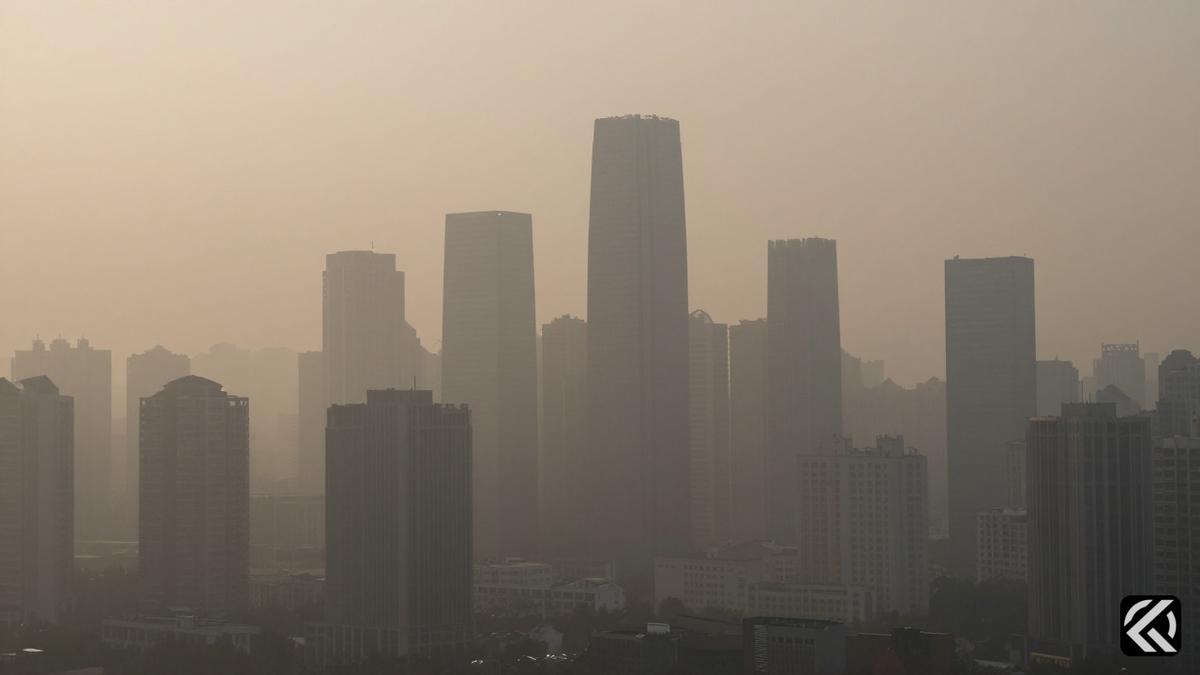
Despite shifting political strategies from odd-even norms to cloud seeding, Delhi's toxic air crisis persists. As AQI hits 'very poor' levels, experts warn that emergency fixes offer only temporary relief for a city facing severe health emergencies.
National Capital witnesses a recurring health emergency as winter air turns toxic. Despite changing governments and revamped action plans, the capital continues to battle hazardous air, with residents bearing the health costs of a crisis that refuses to go away. At the time of publishing this article on Saturday (7pm IST), Delhi's average Delhi Air Quality Index (AQI) stood at 367, in the ‘very poor’ category, which had breached the ‘severe’ level on Friday. The latest spike came days after Delhi recorded its most polluted Diwali in five years, highlighting the failure of successive strategies to manage the smog effectively.
Both the Aam Aadmi Party (AAP) and Bharatiya Janata Party (BJP) governments introduced separate action plans during their tenures, yet both failed to solve the recurring crisis. Under AAP, the 2024 Winter Action Plan focused on emergency interventions, including drone surveillance, dust suppression, and the odd-even vehicle scheme. The BJP government, following its victory in February 2025, introduced a 25-point Air Pollution Mitigation Plan and a Winter Action Plan in October 2026. Their strategy emphasized enforcement, deploying 86 mechanical road sweepers, 300 water sprinklers, and 362 anti-smog guns, while also attempting cloud seeding in October 2025.
However, environmental experts argue that these emergency measures have limited impact. Sunil Dahiya, founder and lead analyst at EnviroCatalysts, explains that cloud seeding cannot be a reliable solution because it requires moisture-laden clouds, which are largely absent during the smog season. "You can't seed clouds that aren't there," Dahiya stated, adding that even if artificial rain is induced, the relief may last only a few hours. He noted that two cloud seeding trials in October 2025 failed due to insufficient moisture, and a subsequent trial was called off due to unfavorable atmospheric conditions. Furthermore, pollution moves across administrative boundaries, returning quickly due to emissions from the wider Delhi-NCR airshed.
On the contribution of vehicles to PM2.5, Dahiya said they remain among the biggest local sources. Citing IITM's real-time data, he said vehicular emissions accounted for 31% of PM2.5 on November 13, making them the largest single direct source. However, he cautioned against relying solely on restrictions without improving public transport. "You can't ban your way out if people have no alternative," he said, pointing out that around 6,400 buses with GPS were tracked on Delhi's roads on November 13, below the city's long-standing target.
Dahiya also questioned the effectiveness of smog guns and water sprinklers in reducing city-wide Smog levels, saying they mainly settle coarse dust over limited areas. He described spraying water into the air as "visible action, not effective action," noting that winter pollution is largely driven by fine combustion particles and secondary pollutants. He called for dust control through paving, covering construction materials, and mechanized sweeping, rather than just spraying water.
Prolonged exposure to toxic air has severe health implications beyond seasonal coughing. Doctors warn that prolonged exposure can affect lung development in children and increase the risk of respiratory and cardiovascular problems. Dr Nikhil Rajvanshi, Consultant - Pediatric Pulmonologist at Rainbow Children's Hospital, Delhi, explains that children inhale more air relative to their body weight than adults, making them particularly vulnerable. He warns that children exposed to high pollution levels over several years may experience reduced lung growth and lower lung function as adults.
Dr Vikas Mittal, Director - Pulmonology at CK Birla Hospital, Delhi, says PM2.5 particles can penetrate deep into the lungs and enter the bloodstream, triggering inflammation across the body. Repeated exposure can worsen asthma and COPD, impair lung function, and increase cardiovascular risks, including hypertension, heart attacks, and strokes. He also warns that prolonged exposure can cause lasting changes to lung tissue, even among otherwise healthy individuals. "Some changes may improve when exposure is reduced, but prolonged injury and remodelling of lung tissue may not be completely reversible," he says.
With the crisis extending beyond Delhi's borders, responsibility cannot rest with one government or agency. It requires coordination between the Centre, Delhi, and neighboring states, along with measurable targets. Dahiya noted that stubble burning accounts for less than 5% of Delhi's PM2.5 over a full year, while only around 30% of the city's pollution originates within its boundaries. This makes a regional approach essential. Dr Mittal emphasizes that the priority must be controlling pollution at its source through stricter checks on vehicular emissions, industrial pollution, construction dust, and crop-residue burning. Unless action moves beyond seasonal restrictions to year-round emission-reduction targets, Delhi's residents will continue to face severe health risks and environmental degradation, with no clear end in sight for this ongoing crisis.
Nov 17, 2026 16:45 UTC
US Intel Warns of Iran Dirty Bomb Plot in DC
Nov 17, 2026 12:48 UTC
Quad Summit Manila: Modi, Trump Focus on Indo-Pacific Security
Nov 17, 2026 10:43 UTC
Ukraine Strike Collapses Crimean Bridge Ahead of Diplomatic Talks
Nov 16, 2026 16:25 UTC
Beijing Claims Historic Significance for Trilateral Talks in Shenzhen
Nov 16, 2026 18:23 UTC
Cyclone Akvan: Storm System Intensifies Toward Andhra Pradesh