Section
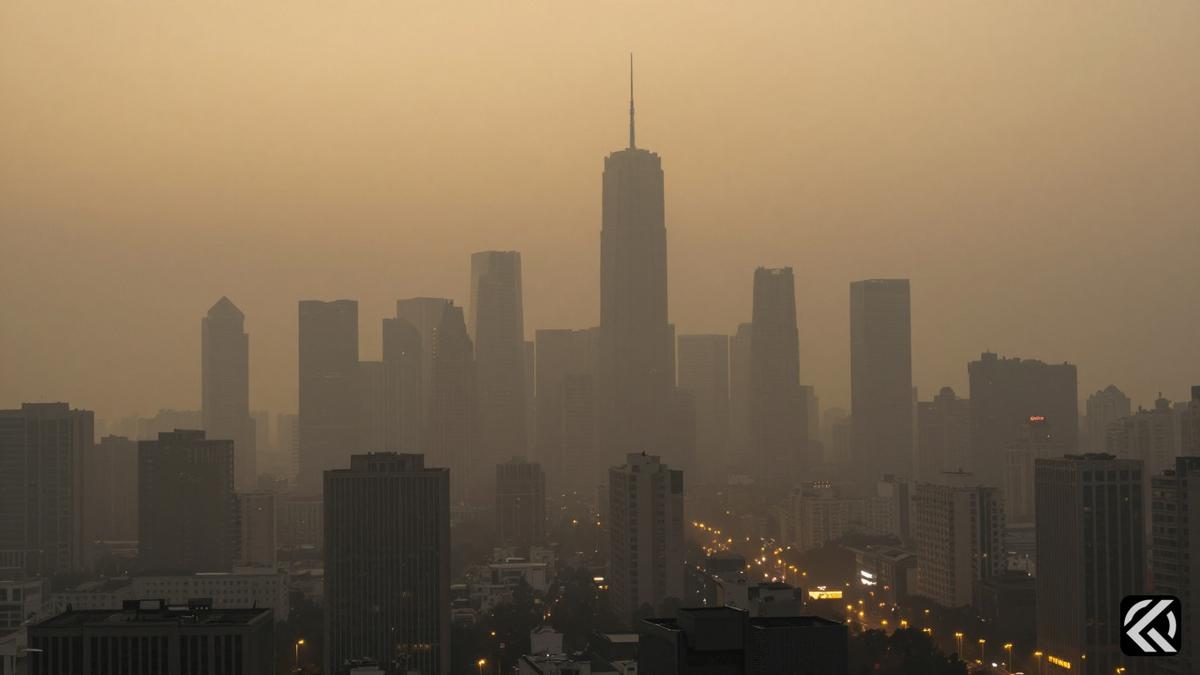
Delhi has surpassed Lahore to become the world's most polluted city, with hazardous air quality levels and dense smog severely impacting visibility and public health in the capital.
On Friday, November 13, 2026, India’s capital city of Delhi officially overtook Lahore, Pakistan, to claim the title of the world's most polluted major city. This shift in global pollution rankings occurred as air quality in the sprawling metropolis of 20 million people dropped to hazardous levels. A thick layer of smog completely blanketed the city, drastically reducing visibility and creating a oppressive atmosphere for residents and commuters alike. The event marks a significant milestone in the ongoing environmental challenges faced by South Asia during the winter months.
The deterioration of air quality was quantified by data from Swiss environmental monitoring group IQAir, which reported an Air Quality Index (AQI) of 334 for Delhi. This reading firmly places the city in the "hazardous" category, making it the most polluted major city globally according to their metrics. In contrast, India’s official Central Pollution Control Board reported a higher AQI of 403, rating the condition as "severe." The discrepancy between the Swiss and Indian readings stems from the different methodologies and scales each organization uses to calculate and classify air pollution levels. Both, however, agree that the air is dangerously unsafe for exposure.
To understand the severity, an AQI reading of up to 50 is considered good, posing little to no health risk. The current readings of 334 and 403 are exponentially higher than the safe threshold. This drastic drop in air quality is not an isolated incident but a seasonal problem prevalent in many parts of northern India and neighboring Pakistan. The cold, heavy air typical of the winter season acts as a lid, trapping vehicle emissions, dust from construction sites, and smoke resulting from agricultural burning in the lower atmosphere. This meteorological phenomenon exacerbates the concentration of toxins, turning the city's skyline into a hazy, obscured vision.
Visual documentation provided by news agency ANI captured the immediate impact of this environmental crisis. Videos from the ground showed cars and motorcycles cautiously emerging from the dense smog, their forms barely distinguishable against the grey backdrop. The pollution was so thick that it appeared to obscure street lights on the city’s main roads, creating dangerous conditions for night-time travel and daily commutes. The visual narrative of a city lost in its own emissions underscores the urgency of the situation for the 20 million people residing in the capital.
The issue of air quality in Delhi has become increasingly acute, with recent spikes in pollution linked to specific events such as Deepavali. Questions regarding how such pollution spikes affect lung function and respiratory health have become central to public discourse. While the immediate cause of this specific Friday's spike involves the general winter trapping of pollutants, the cumulative effect of seasonal events continues to strain the city's environmental resilience. The comparison with Lahore highlights that this is a regional crisis, not just a national one, affecting the broader geopolitical area of South Asia.
As the winter season progresses, the potential for further deterioration remains high. The combination of cold air and persistent sources of pollution, including traffic and industry, suggests that these hazardous levels may persist for weeks. Residents are advised to take immediate precautions to protect their health, given the clear data indicating that the air is currently beyond the threshold of safety. The overtaking of Lahore signifies a grim reality for global environmental monitoring, placing immense pressure on local authorities to address the root causes of emissions.
The classification of Delhi as the world's most polluted city highlights a critical juncture for urban environmental management in South Asia. With AQI levels firmly entrenched in the hazardous and severe ranges, the implications for public health are immediate and severe. As winter continues to trap emissions from vehicles, construction, and agricultural activities, it is likely that these dangerous air quality levels will persist throughout the season. Long-term impacts could include increased respiratory illnesses and a pressing need for more robust, sustained policy interventions to mitigate the seasonal smog that defines the region's winter climate. Without significant changes to emission sources, the cycle of hazardous pollution is poised to repeat, further endangering the well-being of millions in the capital and neighboring regions.
Nov 17, 2026 16:45 UTC
US Intel Warns of Iran Dirty Bomb Plot in DC
Nov 17, 2026 12:48 UTC
Quad Summit Manila: Modi, Trump Focus on Indo-Pacific Security
Nov 17, 2026 10:43 UTC
Ukraine Strike Collapses Crimean Bridge Ahead of Diplomatic Talks
Nov 16, 2026 16:25 UTC
Beijing Claims Historic Significance for Trilateral Talks in Shenzhen
Nov 16, 2026 18:23 UTC
Cyclone Akvan: Storm System Intensifies Toward Andhra Pradesh