Section
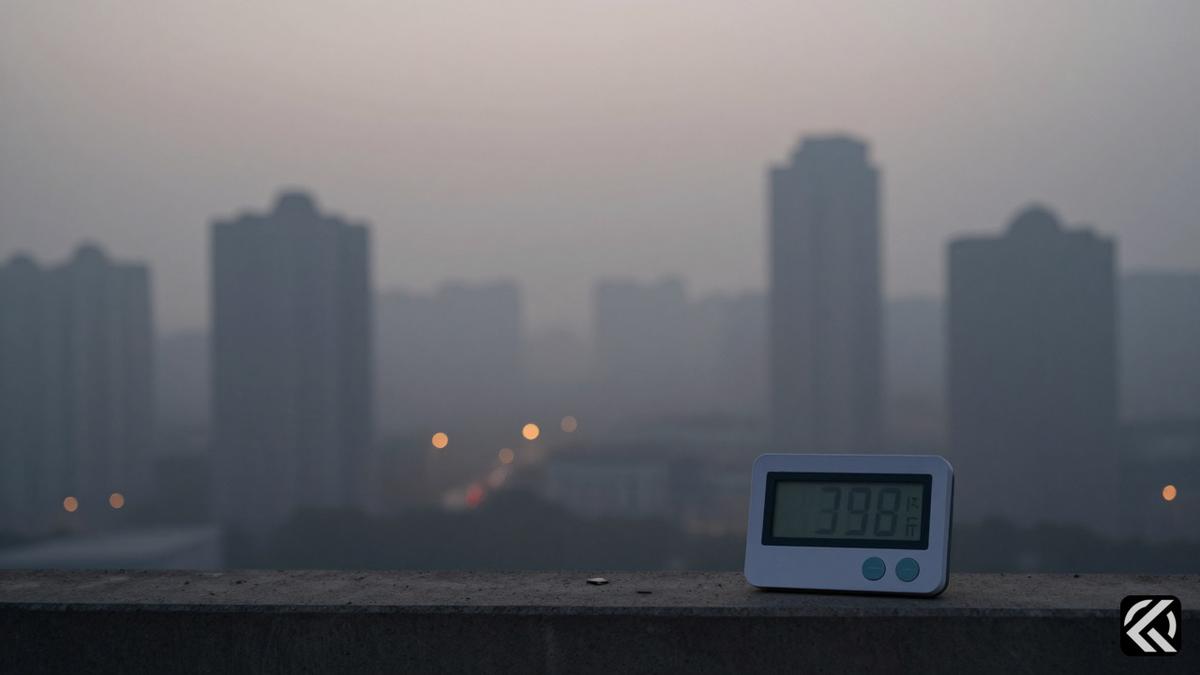
Investigation reveals official Delhi pollution metrics may hide dangerous Diwali firework spikes, as high PM2.5 readings were systematically excluded from government reports.
BBC Verify has uncovered substantial discrepancies in how India reported air quality during Diwali, revealing that official figures may have obscured the severity of the crisis. The investigation highlights a method where extreme pollution levels were filtered out, potentially misleading the public about the true extent of environmental hazards.
As fireworks illuminated Delhi’s skies on November 8, monitoring stations captured alarming spikes in PM2.5, a fine particulate matter linked to severe respiratory and cardiovascular damage. However, a significant portion of this extreme data was omitted from the primary metrics released to the public and media. The Central Pollution Control Board (CPCB), which provides the widely cited Air Quality Index (AQI), stated that any hourly reading exceeding 1,000 micrograms per cubic meter falls outside the calibration range of its detection equipment. Consequently, these hours were treated as missing data and excluded from the 24-hour averages that define daily air quality status.
This exclusion policy has dramatic statistical effects. During the peak celebration hours on the night of Diwali, between 21:00 on November 8 and 07:00 on November 9, 217 hourly PM2.5 observations vanished from CPCB records across 59 monitoring stations. While the Delhi Pollution Control Commission (DPCC) recorded 116 readings above 1,000 micrograms from its 30 stations, none of these extreme values appeared in the CPCB’s published feeds. The impact on calculated averages is stark: across 30 stations over 24 hours, CPCB data averaged 240 micrograms per cubic meter, less than half the 551 average found in DPCC data.
One specific station in RK Puram, south Delhi, illustrates the distortion. Pollution there peaked near 2,500 micrograms. BBC Verify’s analysis of this station’s hourly data showed a 24-hour average of roughly 945 micrograms after 17:00 on November 8. In contrast, the CPCB’s published data for the same location and time yielded an average of just 299 micrograms. Because CPCB methodology requires at least 16 hours of valid data to calculate a daily average, stations with too many missing or invalid readings do not contribute to official calculations, effectively removing the worst pollution hours from the record.
Government critics and opposition parties have accused authorities of deliberately under-reporting pollution to present a more favorable image during the festival. The CPCB rejected these allegations, asserting in a statement that it remains "committed to transparent, scientific and reliable reporting." The board clarified that while extreme episodes like firecracker bursts are occasional, the resulting data gaps at specific stations are a technical limitation rather than intentional omission. They argued that treating these hours as "outside" the detection range prevents the inclusion of potentially erroneous or uncalibrated data points.
However, experts argue that this technical justification fails to account for public health realities. Dr. Manoj Kumar, a researcher at the Centre for Research on Energy and Clean Air (CREA), warned that excluding high readings risks misrepresenting actual pollution levels and eroding public trust in official statistics. He noted that when people cannot see the true severity of the air, confidence in the data diminishes.
The health implications of such data gaps are severe. Dr. Sierra Clark, an environmental epidemiologist at City St George’s, University of London, emphasized that classifying high pollution readings as missing omits the days that contribute most to short-term health events, such as asthma attacks and heart attacks. "The latter would give a sense of typical pollution levels that are more representative of people's day-to-day experience. But it is also important to show the impact of those few days and what they contribute," Dr. Clark explained. The exclusion of extreme events essentially sanitizes the health risk profile, making the air appear safer than it was during critical hours.
Despite sharp overnight rises in pollution at many sites, the CPCB reported Delhi’s AQI at 344 at 16:00 on November 9, a decrease from 376 the previous day. This downward trend in the official index masks the localized, extreme spikes that occurred in the hours prior. The discrepancy underscores a broader issue in how air quality is managed in one of the world’s most polluted cities. Pollution in Delhi stems from vehicle emissions, construction dust, farm fires, and atmospheric conditions, with firecrackers acting as a potent exacerbating factor during winter.
The revelation that extreme PM2.5 readings were systematically excluded from official records suggests a structural flaw in how crisis-level pollution is monitored. If high-concentration data is consistently treated as "invalid," the public receives a sanitized view of air quality that fails to capture the true intensity of hazardous days. This practice likely underestimates the immediate health burden on residents, particularly those with pre-existing conditions who rely on accurate alerts to take protective measures. Moving forward, if monitoring equipment cannot capture peaks above 1,000 micrograms without calibration errors, it indicates a need for hardware upgrades rather than data exclusion. Failure to address this gap may continue to obscure the true cost of festivals like Diwali on public health, potentially leading to delayed emergency responses and a persistent disconnect between official statistics and the lived experience of Delhi’s citizens.
Nov 17, 2026 16:45 UTC
US Intel Warns of Iran Dirty Bomb Plot in DC
Nov 17, 2026 12:48 UTC
Quad Summit Manila: Modi, Trump Focus on Indo-Pacific Security
Nov 17, 2026 10:43 UTC
Ukraine Strike Collapses Crimean Bridge Ahead of Diplomatic Talks
Nov 16, 2026 16:25 UTC
Beijing Claims Historic Significance for Trilateral Talks in Shenzhen
Nov 16, 2026 18:23 UTC
Cyclone Akvan: Storm System Intensifies Toward Andhra Pradesh