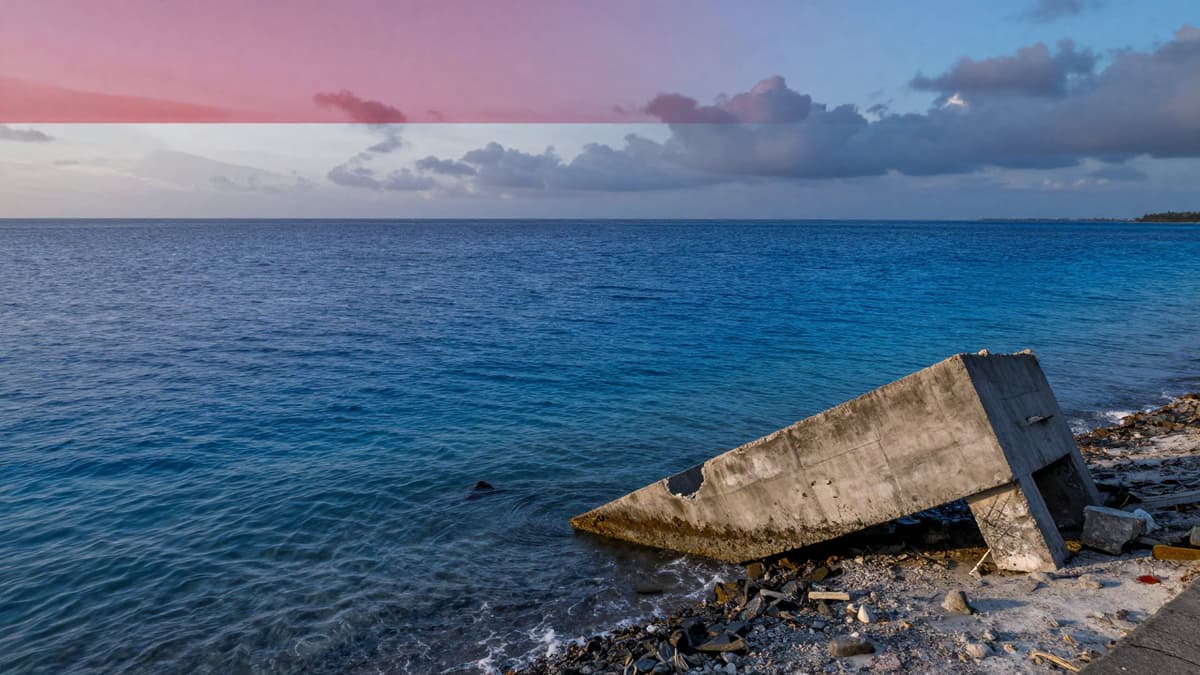
A powerful 7.4 magnitude tremor struck Indonesia, claiming a life and sparking a brief tsunami alert. Authorities confirmed the threat has passed, though damage was reported.
A magnitude 7.4 earthquake struck the Northern Molucca Sea off the coast of Ternate, Indonesia, on Thursday. The powerful tremor resulted in at least one fatality and triggered a temporary tsunami warning that was subsequently lifted. This seismic event highlights the region's constant vulnerability to natural disasters.
The United States Geological Survey (USGS) confirmed the initial magnitude was recorded at 7.8 before being adjusted to 7.4. The quake struck at a depth of 35km, a figure significantly greater than the early estimate of 10km. Local authorities in Ternate and Tidore immediately urged citizens to prepare for evacuation. News channel Metro TV broadcast visual evidence of damaged buildings in the wake of the shaking. While there were no immediate reports of widespread injuries, the situation remained critical.
One person was confirmed killed when a building collapsed in the city of Manado, located in North Sulawesi province. George Leo Mercy Randang, a local search and rescue official, reported to AFP news agency that the victim was buried under rubble. Randang stated the individual had suffered a leg injury before dying. He noted the tremor was felt strongly around Manado. The Pacific Tsunami Warning Center (PTWC), based in Hawaii, initially stated that hazardous tsunami waves were possible within 1,000 kilometers of the epicenter. This threat zone extended along the coasts of Indonesia, the Philippines, and Malaysia.
Within half an hour of the initial tremor, Indonesia's BMKG geological agency recorded wave activity in the north of Sulawesi island. Waves reaching up to 75 centimeters were logged in North Minahasa, while 20 centimeter waves were recorded in Bitung. The northern province of North Maluku also logged 30-centimeter waves. These measurements confirmed the potential for dangerous water surges initially feared by international monitoring centers.
The tsunami warning issued by the PTWC was lifted just over two hours after the tremor occurred. The center declared that the tsunami threat "has now passed," signaling a reduction in immediate danger for the coastal populations. This rapid de-escalation follows a pattern of swift response from seismic monitoring agencies that track activity across the Pacific basin. The quick lifting of the alert suggests that the waves did not grow to catastrophic levels despite the initial high-magnitude readings.
The region where the quake occurred is part of the Pacific Ring of Fire, an area of high seismic activity where tectonic plates meet. Indonesia straddles this zone, making earthquakes a frequent occurrence in the archipelago. The epicenter of this specific event was located about 120km (75 miles) from Ternate, within the North Maluku province. The depth of the quake, adjusted to 35km, played a significant role in the intensity of the shaking felt in nearby cities like Manado. The initial confusion regarding the depth, shifting from a shallow 10km to a deeper 35km, underscores the complexity of real-time seismic data analysis.
The collapse of the building in Manado serves as a stark reminder of the structural vulnerabilities in earthquake-prone areas. The fatality and the injury sustained by the victim illustrate the human cost of such sudden geological shifts. Local search and rescue teams were immediately deployed to the scene of the collapse. The broadcast of damaged buildings by Metro TV indicates that infrastructure damage was visible and widespread enough to warrant immediate visual documentation by media outlets. This visual evidence likely contributed to the urgency of the evacuation orders issued by local authorities in cities like Ternate and Tidore.
The immediate aftermath of this magnitude 7.4 event confirms the persistent danger of the Pacific Ring of Fire for the Indonesian archipelago. While the tsunami warning was lifted after two hours, the recorded wave heights of up to 75 centimeters demonstrate that significant energy was transferred to the ocean. Given Indonesia's location on the Pacific Ring of Fire, the recurrence of such high-magnitude quakes is statistically probable. Future seismic events in this region will likely require continued vigilance from both local authorities and international bodies like the USGS. The rapid adjustment of magnitude and depth data highlights the need for precise monitoring systems to mitigate future casualties.
Jun 8, 2026 00:51 UTC
Trump Claims Iran Nuclear Deal Imminent Despite Diplomatic Fractures
Jun 8, 2026 00:47 UTC
Iran Fires Missiles at Israel After Beirut Strike
Jun 7, 2026 22:00 UTC
US, Iran Peace Hops Fade 100 Days Into War
Jun 7, 2026 20:57 UTC
Iran Strikes Israel: IRGC Promises Week of Continuous Offensive
Jun 8, 2026 02:28 UTC
Trump Walks Out of Meet the Press After Rejecting Evidence Demands


