As the Supreme Court convenes for a landmark ruling, Trump's top litigator faces a daunting challenge to overturn birthright citizenship laws.
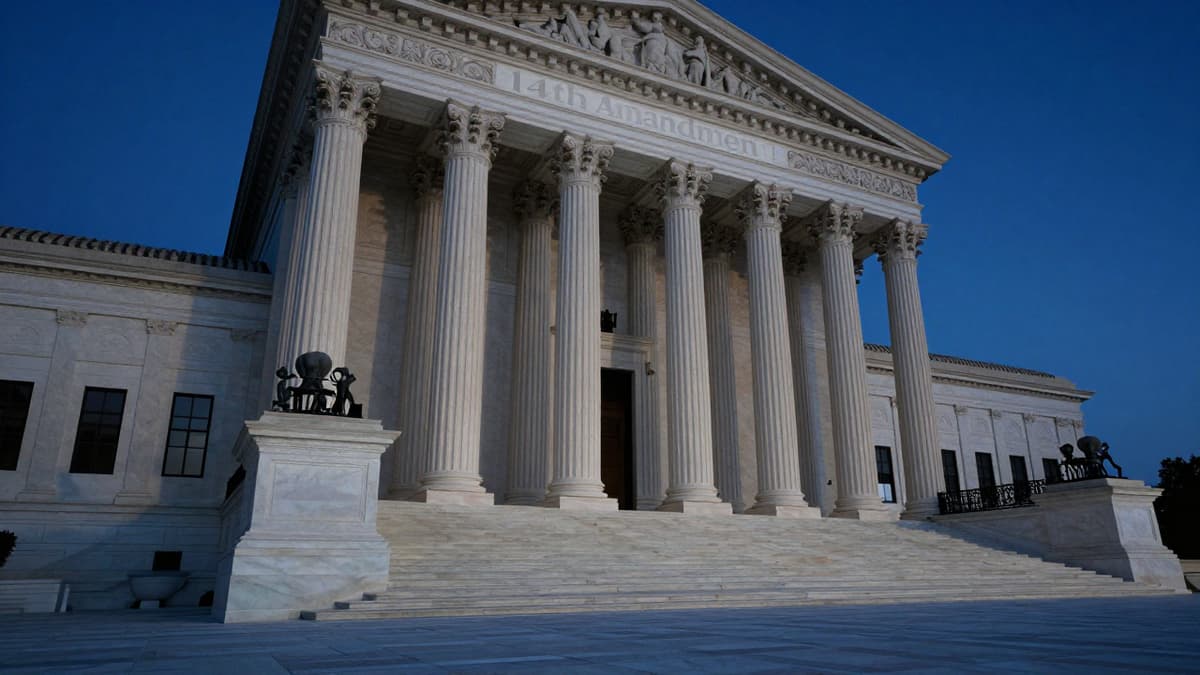
The Supreme Court is set to hear its most significant case of the term on Wednesday, centering on whether President Donald Trump's executive order to limit birthright citizenship is constitutional. This high-stakes litigation will be presented by Solicitor General D. John Sauer, a lawyer who has recently secured historic victories for the administration. However, this specific case represents a formidable challenge that could overturn more than a century of established constitutional law.
A ruling favoring the executive order would upend a long-standing tenant of constitutional law and potentially create new documentation hurdles for US citizens regarding their newborns. The difficulty of the task is underscored by internal administration admissions that the justices may not be willing to overturn precedent older than 125 years, raising the specter of a significant legal defeat. Sauer's previous successes, including arguments establishing presidential immunity, have made him Trump's preferred litigator, yet the current legal landscape suggests a more complex path to victory.
Legal analysts emphasize the steep climb Sauer faces. Steve Vladeck, a Supreme Court analyst and Georgetown Law professor, described the case as "remarkably weak." Vladeck noted that the Supreme Court addressed this issue 128 years ago and that Congress subsequently codified that answer into federal law in both 1940 and 1952. "Sauer has to persuade the justices not only that they've been wrong for more than 125 years, but that Congress didn't do what it clearly did twice," Vladeck explained. This statutory history adds a layer of difficulty to the argument that goes beyond mere judicial interpretation.
Sauer's legal strategy will focus heavily on the interpretation of the 14th Amendment, which currently states that "all persons born ... in the United States, and subject to the jurisdiction thereof, are citizens of the United States." According to a senior Justice Department official, the Solicitor General's argument seeks to redefine the phrase "subject to the jurisdiction thereof." The official stated, "You are talking about people who have the requisite relationship, are part of our political community and have something akin to the sort of complete and thorough allegiance that US citizens have."
Under this proposed definition, Sauer will argue that individuals who have entered the country illegally or overstayed their visas do not meet the requirement for birthright citizenship because they lack the necessary allegiance. Furthermore, the argument extends to children born to parents who are currently in the US as tourists, contending that they do not qualify for citizenship under the new interpretation. The official added, "They also don't have the requisite relationship of allegiance to the United States. They're not subject to jurisdiction ... and therefore, their children are not citizens."
The stakes for Sauer are high, particularly given his status as a potential future nominee for the Supreme Court. Trump has publicly voiced strong support for Sauer, stating outside legal adviser Mike Davis, "John Sauer has been so effective for President Trump, both as his defense attorney and as a solicitor general. He is certainly at the top of my short list for the Supreme Court." This support follows a pattern of Trump defending Sauer publicly, such as when the President blamed the justices directly for a loss regarding tariff policy rather than holding his lawyer accountable.
Despite this backing, the case is viewed by some as an "away game" for the administration. Vladeck observed that while Sauer has successfully played "home games" for the court previously, this specific case was brought to the Supreme Court by the court itself after it agreed to limit nationwide injunctions. This structural shift means the government is the nominal petitioner, but the court drove the decision to address the merits. "He's been able to play a bunch of home games with the court to this point," Vladeck noted, highlighting the unique pressure of the current proceedings.
Mike Davis, the Trump legal adviser, acknowledged the uncertainty of the outcome but suggested that any loss would stem from the justices' decision-making rather than Sauer's legal ability. "If the justices follow the law ... this is an easy decision. If the justices embrace politics, then it's a messy decision," Davis said. Allies are already preparing to shift blame to the justices should the court rule against the administration, aiming to protect Sauer's standing.
Sauer's legal background includes clerkships for the late Justice Antonin Scalia and experience as a Missouri solicitor general, where he successfully defended the state's lethal injection protocol. He was hired by Trump in 2024 after the president's challenge to criminal charges by special counsel Jack Smith reached the high court. In that historic argument, which marked Sauer's second appearance before the justices, he convinced a 6-3 court that presidents possess absolute immunity for actions taken within their core duties.
"This historic argument was Sauer's second time arguing before the justices," and his work in establishing presidential immunity has silenced critics. Davis remarked, "People mocked John Sauer when he raised presidential immunity. They're not laughing anymore." Within Trump's legal circles, Sauer is also distinguished by his personal reputation, described by Davis as having "impeccable legal credentials" mixed with "Midwestern sensibilities and modesty."
Despite the overwhelming odds described by experts, Sauer's track record suggests his defeat is not guaranteed. Vladeck concluded, "You can never say never with this court, especially when it comes to President Trump." However, the combination of a century-old precedent, explicit congressional statutes, and the specific nature of the 14th Amendment arguments creates a uniquely difficult environment for the Solicitor General. The upcoming decision will not only determine the citizenship status of future generations but also test the limits of judicial deference to executive authority regarding the interpretation of the Constitution.
The coming weeks will reveal whether the Supreme Court prioritizes recent executive actions or adheres to established constitutional interpretations. If the court rules against the executive order, it will likely reaffirm the status quo of birthright citizenship, leaving Trump's policy ambitions unfulfilled and potentially stinging for the Solicitor General. Conversely, a victory would mark a seismic shift in American law, fundamentally altering the definition of citizenship and potentially leading to widespread legal challenges regarding the documentation of newborns. Regardless of the outcome, the case will stand as a defining moment for the current Court's relationship with the presidency and the 14th Amendment, setting a precedent that will guide immigration and citizenship jurisprudence for decades to come.
Jun 8, 2026 02:17 UTC
Magnitude 7.8 Quake Shakes Philippines, Urging Immediate Evacuations
Join 50,000+ readers getting the global briefing every morning.
No spam. Unsubscribe anytime.
Jun 8, 2026 02:17 UTC
Magnitude 7.8 Quake Shakes Philippines, Urging Immediate Evacuations
Jun 8, 2026 00:51 UTC
Trump Claims Iran Nuclear Deal Imminent Despite Diplomatic Fractures
Jun 8, 2026 00:47 UTC
Iran Fires Missiles at Israel After Beirut Strike
Jun 7, 2026 22:38 UTC
Congress Party Claims Unity for INDIA Bloc Delhi Meeting