Section
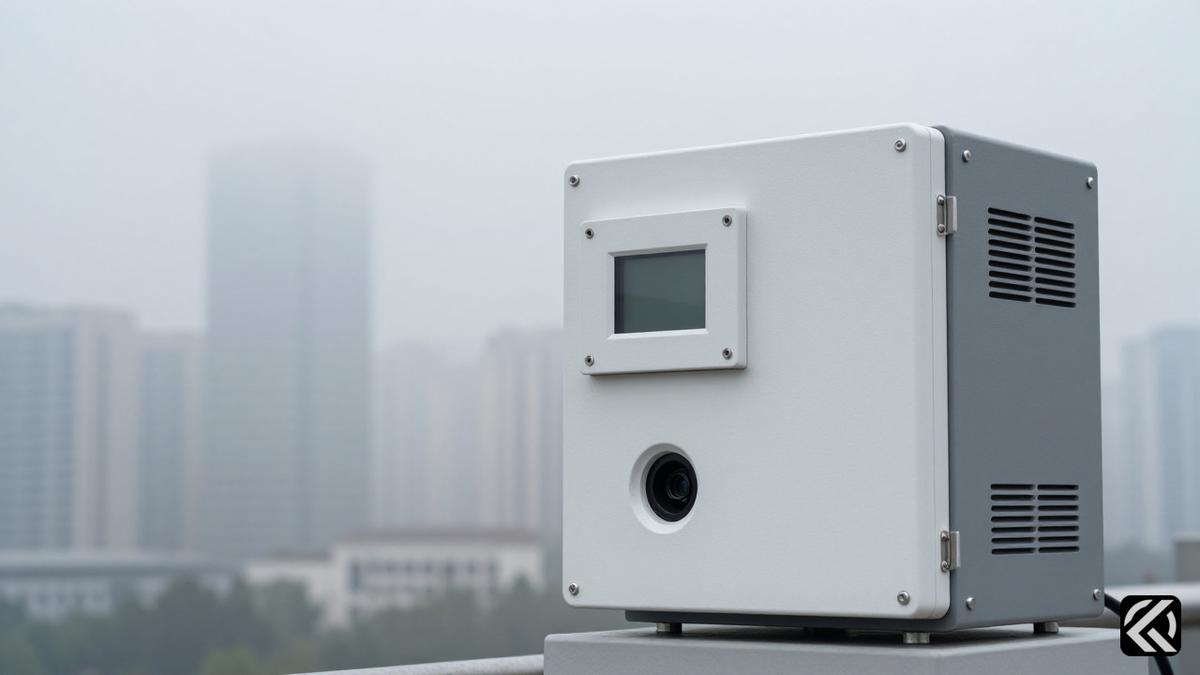
Delhi officials consider raising monitoring limits after equipment failed to record extreme pollution levels, leaving a critical AQI data gap during Deepavali.
The Central Pollution Control Board (CPCB) on Tuesday, November 10, 2026, indicated that it was actively considering steps to capture peak levels of particulate matter (PM) that exceed the existing monitoring range. This strategic review follows a significant incident where air quality data from several government monitoring stations in Delhi went missing for hours during the severe pollution spike following Deepavali on Sunday.
Reports from The Hindu on Monday, November 9, 2026, highlighted that these data gaps resulted in an artificially lower official air quality index (AQI). This technical limitation made the air quality appear better than it actually was, misleading the public regarding the severity of the pollution event.
In a statement released on Tuesday, the CPCB clarified that PM levels were previously measured only up to 1,000 micrograms per cubic metre (µg/m³) for AQI calculations. This specific limit explained the missing data observed on Deepavali night, when actual concentrations of pollutants surpassed this established threshold.
The statement explained the technical root of the issue: “The PM analysers deployed at the time of introduction of the NAQI (National Air Quality Index) [in 2015] were calibrated for a measurement range of 0-1,000 µg/m³. Accordingly, consistent with this, the designed system of automated data validation treats hourly readings beyond the calibrated range as outside range, and such readings are not used in the computation.”
This means that during extreme episodes, such as the firecracker bursts during Diwali, the system interpreted the excessive concentrations as errors or gaps. The CPCB noted, “During extreme episodes, which are occasional, like Diwali firecracker bursting, this may appear as a data gap at the particular station concerned, and those hours do not contribute to the 24-hour average of the relevant pollutant for the concerned station.”
Deliberations are currently in progress within the CPCB regarding how to process data that falls “beyond system design range.” The board is engaged in internal discussions and consultations to address these technological limitations that obscure the true extent of pollution during peak events.
The CPCB also emphasized that spikes in ambient pollutant concentrations, often caused by short-lived events like firecracker bursting, are episodic. The statement asserted that “The NAQI recognises that prolonged exposure, rather than a momentary reading, is a more relevant indicator of ill effects on human health.” This defense, however, has drawn criticism from experts who argue that missing data during peak hours undermines the reliability of the entire index.
Under the AQI calculation methodology adopted by the CPCB in 2015, the overall index is derived from eight parameters. It is calculated only if data are available for a minimum of three pollutants, with one necessarily being either PM2.5 or PM10. However, the methodology has remained static despite advancements in monitoring technology.
An official told The Hindu, “The methodology was formed in 2015 and at that time it was decided that the accuracy was good only up to 1,000 µg/m³ and both PM2.5 and PM10 were capped at it for calculation of AQI. But the equipment got better with time and Delhi’s air quality analysers and instruments were also updated, but the methodology was never updated after that.”
Recognizing this disconnect between hardware capabilities and software methodology, the official added, “But now there are discussions of raising this cap so that peak values above 1,000 µg/m³ could be measured.” This potential adjustment aims to ensure that the AQI data gap does not mask the true severity of pollution events in the future.
The scope of this issue is significant given the number of monitoring points in the capital. Of the 59 air quality monitoring stations in Delhi, 46 are operated by the Delhi Pollution Control Committee (DPCC). While the DPCC does not calculate the AQI itself, it recorded PM2.5 and PM10 levels exceeding 1,000 µg/m³ on Deepavali night, although several readings were initially missing. The CPCB relies on data from these 46 DPCC stations, along with readings from other monitoring stations, to calculate the official AQI for the region.
The failure to record these high values created a misleading picture of Delhi air pollution during the critical post-Diwali period. Experts pointed out that the artificial suppression of data points during the most dangerous hours of the day effectively lowered the daily average, providing an incomplete safety assessment for residents.
Delhi’s air quality improved to the ‘poor’ category on Tuesday, November 10, 2026, with the 24-hour average AQI recorded at 299. This figure sits just below the ‘very poor’ threshold of 300. Experts attributed this improvement to increased wind speeds, which helped disperse the particulate matter. They stated that air quality was likely to improve further over the next few days as weather conditions continued to favor dispersion.
Despite the immediate easing of pollution levels, the underlying issue of data integrity during peak pollution events remains unresolved. The CPCB’s decision to potentially raise the monitoring cap is a critical step toward ensuring that future AQI readings reflect the true health risks posed by extreme pollution episodes. Until the methodology is updated to match the capabilities of modern instruments, gaps in data may continue to obscure the reality of Delhi's air quality challenges.
The potential revision of the 1,000 µg/m³ cap represents a significant shift in how Delhi’s air quality is monitored and reported. If implemented, this change would allow the CPCB to capture the full intensity of pollution spikes caused by events like Diwali, rather than capping them at an arbitrary limit. This adjustment is crucial for accurate public health warnings and policy formulation. As equipment capabilities have outpaced the 2015 methodology, updating the system is a necessary step to restore public trust in the AQI. Future monitoring will likely provide more granular and truthful data, enabling better preparedness for similar pollution events.
Nov 17, 2026 16:45 UTC
US Intel Warns of Iran Dirty Bomb Plot in DC
Nov 17, 2026 12:48 UTC
Quad Summit Manila: Modi, Trump Focus on Indo-Pacific Security
Nov 17, 2026 10:43 UTC
Ukraine Strike Collapses Crimean Bridge Ahead of Diplomatic Talks
Nov 16, 2026 16:25 UTC
Beijing Claims Historic Significance for Trilateral Talks in Shenzhen
Nov 16, 2026 18:23 UTC
Cyclone Akvan: Storm System Intensifies Toward Andhra Pradesh