Section
India’s parliamentary committee issues a stern ultimatum to Meta, demanding an apology for removing Prime Minister Modi’s video or face the revocation of legal immunity.
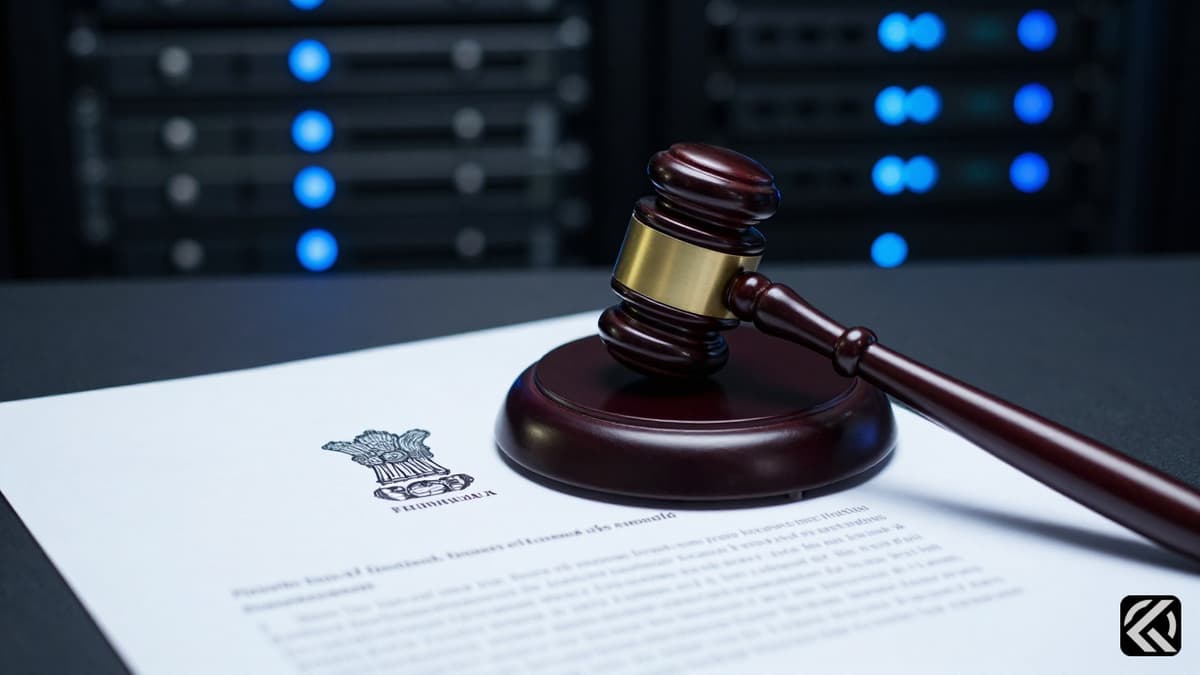
On Wednesday, August 5, 2026, a parliamentary standing committee issued a severe ultimatum to Meta, directing the company’s CEO, Mark Zuckerberg, to apologize for the removal of a video featuring Prime Minister Narendra Modi. The Parliamentary Standing Committee on Communications and Information Technology warned that the company’s legal immunity could be revoked if this demand is not met within three days. The directive stems from the company’s controversial decision to block the Prime Minister’s July 23 video message, which was distributed during youth protests at Jantar Mantar and other locations across the country.
The escalation was formalized in a letter sent from the Lok Sabha Secretariat to IT Secretary S. Krishnan and copied to Home Secretary Govind Mohan. Nishikant Dubey, the Bharatiya Janata Party (BJP) representative heading the committee, led the panel in seeking the withdrawal of Instagram’s safe harbour protections. Senior government officials have expressed strong ire over the incident, demanding an exhaustive explanation from Meta and a formal apology from its founder. The committee’s stance reflects a growing tension between state authorities and social media platforms regarding content moderation and political sensitivity.
The committee’s letter explicitly stated the consequences of non-compliance. “During the deliberations, the Committee demanded an apology from Mr. Mark Zuckerberg, Meta Chief on this issue,” the letter read. It further clarified that if an unqualified apology is not tendered within three days of receiving the letter, the protection and immunity given under Section 79(3) of the IT Act may be withdrawn. In such a scenario, action would be taken against Zuckerberg as a publisher rather than an intermediary. This legal shift would significantly alter Meta’s liability, potentially holding the company directly responsible for third-party content it hosts.
Section 79 of the IT Act, 2000, currently stipulates that an intermediary is not liable for third-party information, data, or communication links hosted on their platforms, provided certain conditions are met. The IT Rules, 2021, have expanded these conditions, requiring platforms to take down content upon notice from law enforcement or designated government officers. However, the committee’s demand to strip these protections entirely marks a significant escalation in regulatory pressure. The move aims to hold platform leaders personally accountable for what the government deems as erroneous content blocking affecting national leadership.
Beyond the Meta controversy, the committee addressed other major tech firms, demanding that Google India’s safe harbour also be lifted. The committee cited cybercrime complaints in Hyderabad where complainants lost over ₹48 lakh due to fraud via apps downloaded from Google Play. The Google India country manager was named as a co-accused in these cases. By lifting safe harbour, Google would become liable for individual user posts, shifting the burden of content verification directly onto the platform publisher. This parallel demand suggests a broader governmental intent to tighten control over intermediary platforms under the Section 79 IT Act framework.
The committee’s actions follow a heated hearing on Monday, August 3, 2026, where representatives from Meta, Google, and X (formerly Twitter) appeared before the panel. During this session, Opposition MPs pushed back against the ruling party’s line of questioning, arguing that content moderation should remain free from political influence. Despite these objections, the committee proceeded to draft the strict ultimatum, highlighting a deepening divide between legislative authority and digital platform governance.
Legal experts have raised questions about the feasibility of the committee’s demands. Ravi Goyal, founder of law firm Scriboard, told The Hindu that there is no express legal provision allowing the government to directly remove safe harbour protection under Section 79. He explained that such protection is not a blanket immunity but applies to specific content or instances. Even if an intermediary is found ineligible for protection regarding specific content, it may still avail protection for other services, subject to legal compliance. Such determinations are typically made on a case-to-case basis by a court of law, not unilaterally by a parliamentary committee.
The committee also addressed content safety issues, citing BBC reporting on child sex abuse material (CSAM) advertisements on Instagram. They demanded immediate action against intermediary platforms that host CSAM and material demeaning women. This dual focus on political content removal and illegal material suggests an attempt to consolidate regulatory oversight across multiple violation types. The IT Ministry and Meta did not immediately respond to queries regarding the letter, while Google declined to comment, indicating a cautious approach to the developing legal crisis.
The committee’s ultimatum forces a critical examination of intermediary liability in India. If Meta fails to apologize, the potential revocation of safe harbour could set a precedent for holding tech CEOs personally liable for platform content. This move may compel global tech firms to adopt stricter, pre-emptive content moderation policies to avoid political backlash. The demand against Google further intensifies pressure on digital infrastructure providers, potentially leading to increased compliance costs and localized content restrictions. The outcome will likely shape the future balance of power between India’s legislative bodies and international technology companies.
Aug 17, 2026 14:29 UTC
USS Abraham Lincoln Crew Faces Mental Health Crisis During Extended Deployment
Aug 17, 2026 04:30 UTC
Trump Reduces Joint Military Exercises With South Korea
Aug 17, 2026 02:52 UTC
Kushner Meets Hamas in Egypt Over Rejected Gaza Ceasefire Plan
Aug 16, 2026 20:37 UTC
Kushner Mediates Gaza Ceasefire Amidst Escalating US-Iran Conflicts
Aug 18, 2026 00:16 UTC
Hemant Soren Cancels JSSC-CGL Amid Ongoing Agitation