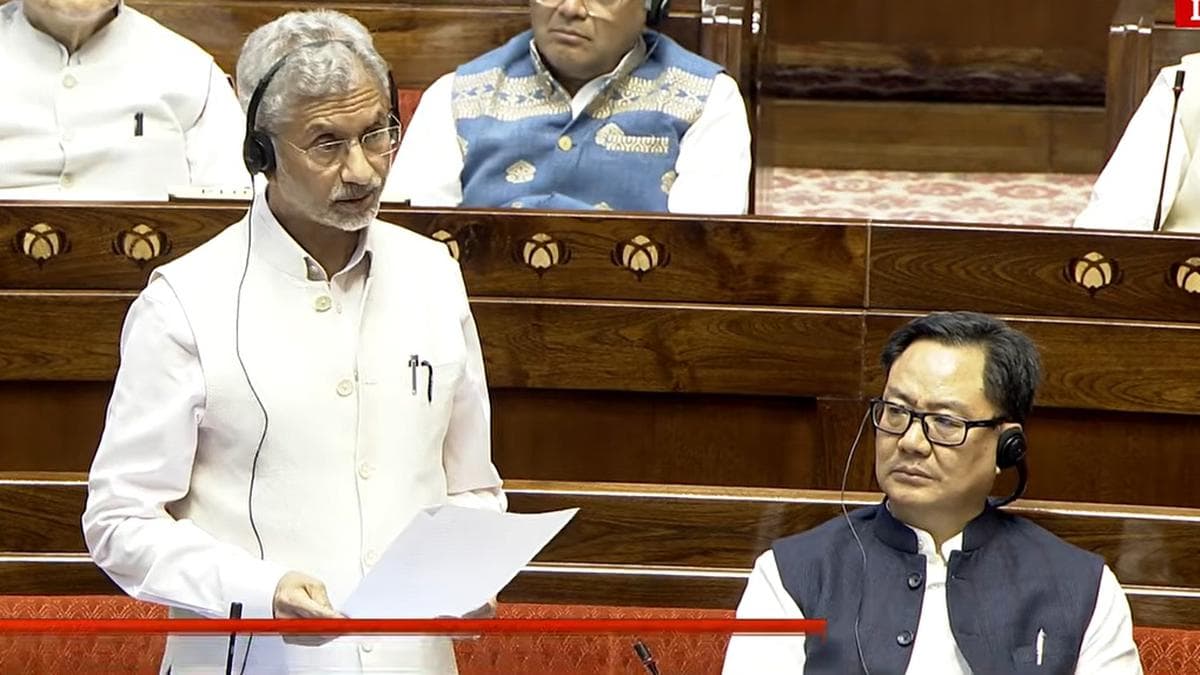
Chaos erupted in the Lok Sabha as the External Affairs Minister addressed the West Asia war, detailing evacuation efforts while Opposition members protested loudly.
The recent Budget session of Parliament witnessed significant unrest and heated exchanges regarding foreign policy and national security. During a live session on March 9, 2026, the Lok Sabha became the center of attention as External Affairs Minister S. Jaishankar delivered a critical statement concerning the ongoing war in West Asia. The proceedings were marked by intense altercations between the government and the Opposition, with members protesting loudly through placards and sloganeering while the Minister attempted to outline India's diplomatic stance.
The session began with a tense atmosphere as parliamentary procedures were tested. Parliamentary Affairs Minister Kiren Rijiju took the floor to address the conduct of the Opposition members inside the House. He expressed strong dissatisfaction with their behavior, stating that he had never witnessed such irresponsible conduct in his lifetime. Meanwhile, BJP MP Jagdambika Pal, who was presiding over the session as Chairman, attempted to maintain order. He noted that the issues raised by the Opposition via placards were already being addressed by the External Affairs Minister. When the Opposition members remained unsatisfied with the response, Mr. Pal suggested they could raise these points in a meeting of the Business Advisory Committee (BAC).
Despite these suggestions, long altercations continued between protesting members and the Chairman. Members displayed placards in the Well of the House, disrupting proceedings. Mr. Pal informed the Opposition that displaying placards during a discussion was against the rules and reminded them that a debate on the motion against Speaker Om Birla was scheduled for the day. He attempted to pacify the members by noting that Mr. Rijiju had assured the government was ready for a debate, but these efforts were unsuccessful. Consequently, the House was adjourned till 3 p.m. to allow order to be restored.
Following the reconvening of the Lok Sabha, the session saw BJP Leader of the House J.P. Nadda strongly criticizing the Opposition's behavior during Mr. Jaishankar’s statement. Nadda accused the Opposition of having no interest in the nation or the actual debate, characterizing their actions as an attempt to cause anarchy. He described their activities as "hooliganism" rather than constructive discussion.
Nadda recalled similar incidents from previous sessions, specifically citing discussions on electoral reforms in December 2025 and the space programme where the Opposition walked out. He further noted that members had also walked out during debates on Operation Sindoor, the Pahalgam terror attack, and the Waqf Bill. Additionally, he pointed out that the Opposition had walked out when Finance Minister Nirmala Sitharaman replied to the debate on the Union Budget 2026-2027. According to Nadda, the Opposition has no interest in "Viksit Bharat" or "Atmanirbhar Bharat," and their focus lies solely in doing politics rather than developing the nation.
Amidst this political friction, the Chairman intervened to allow Mr. Jaishankar to complete his statement. The External Affairs Minister sat on the front row of the House as he began his address. He was interrupted by Opposition members urging the chair to admit discussions on matters raised under various rules. When Mr. Pal denied these requests, a heated altercation broke out between him and Asaduddin Owaisi. The Opposition appeared stern in raising their demands, with Leader of the Opposition Mallikarjun Kharge attempting to speak regarding the West Asia conflict and potential problems for India’s energy situation.
External Affairs Minister S. Jaishankar outlined India's guiding factors regarding the West Asia war. He emphasized that the interests of the Indian consumer were the overriding priority in the government's approach. The Minister listed three core principles governing India's stance: first, India favors peace and urges a return to dialogue and diplomacy, advocating for de-escalation and restraint to ensure civilian safety; second, the wellbeing and security of the Indian community in the region is the top priority, with continued work alongside regional governments; and third, national interests, including energy security and trade flows, remain paramount.
Jaishankar confirmed that India had communicated with the Heads of State of all countries in the region. The government received assurances regarding the well-being of the host governments. Diplomatic channels were maintained with the U.S., although contacts with Iran at the leadership level were described as difficult at that specific time. However, the Minister noted he had spoken to Iranian Foreign Minister Araghchi on February 20, 2026, and again on March 5, 2026, promising continued high-level conversations in the coming days.
A significant portion of the statement focused on the safety of Indian citizens residing in the conflict zone. Jaishankar highlighted that there are nearly one crore Indian citizens living and working in Gulf nations, with thousands more in Iran for study and employment. The region is critical for energy security, oil, and gas supply, serving as a major trading partner accounting for almost $200 billion annually. The conflict also impacted marine shipping, where Indians form a large part of the crews. Tragically, the Minister noted that two Indian mariners had already been lost in such incidents, with one remaining missing.
The government had been assessing the situation since the 12-day war occurred in June 2025. Warnings were issued to residents in Iran as early as January 2026 to avoid non-essential travel and to register with the Indian Embassy. An advisory on February 14, 2026, urged nationals to leave by all available means, followed by another on February 23, 2026, reiterating the same instruction. The embassy facilitated the relocation of students in Tehran outside the capital and assisted pilgrims and business people in crossing over to Armenia before returning home.
Additionally, the Minister addressed a specific humanitarian incident involving an Iranian vessel. On February 20, 2026, the Iranian side requested permission for three ships to dock at Indian ports. This was accorded on March 1, 2026. The IRIS Lavan docked in Kochi on March 4, 2026, with the crew currently in Indian Naval facilities. Jaishankar stated this was considered the right thing to do, and the Iranian Foreign Minister had expressed thanks for the humane gesture.
While the Minister spoke, the Opposition continued to protest loudly, demanding a discussion on the issue. Mr. Kharge tried to raise the death of Indian nationals during the conflict but faced protests from the Treasury Bench. The Chairman intervened to allow Mr. Kharge to speak under Rule 176 after repeated requests, though the Opposition eventually resorted to sloganeering again before the Minister resumed his statement on flight and border-crossing arrangements.
In a lighter moment during the session, Chairman Radhakrishnan praised the Indian men’s cricket team for their victory in the ICC T20 World Cup the previous day, which was met with applause from members. The House eventually moved to take up matters raised with the permission of the Chair regarding energy security, where Jaishankar reiterated that consumer interests were the priority before concluding his speech.
The Budget session proceedings highlighted the complex intersection of domestic parliamentary politics and international crisis management. While the government maintained a firm stance on national interest and energy security, the Opposition focused on demanding immediate discussions regarding the safety of citizens and the conduct of the administration. The session concluded with the External Affairs Minister providing detailed assurances on diplomatic efforts and evacuation support, even as procedural challenges continued to test the House's ability to function smoothly amidst high-stakes geopolitical tensions.
May 1, 2026 03:50 UTC
Trump Administration Declares Iran Conflict Terminated
Join 50,000+ readers getting the global briefing every morning.
No spam. Unsubscribe anytime.
May 1, 2026 03:50 UTC
Trump Administration Declares Iran Conflict Terminated
Apr 25, 2026 01:38 UTC
Iranian FM Araghchi Heads to Islamabad for Critical US-Iran Talks
Apr 25, 2026 01:13 UTC
Calm Suspect in Delhi Rape-Murder Case Faces Mental Evaluation
Apr 24, 2026 23:24 UTC
Raghav Chadha joins BJP, Shaking AAP’s Rajya Sabha Strength