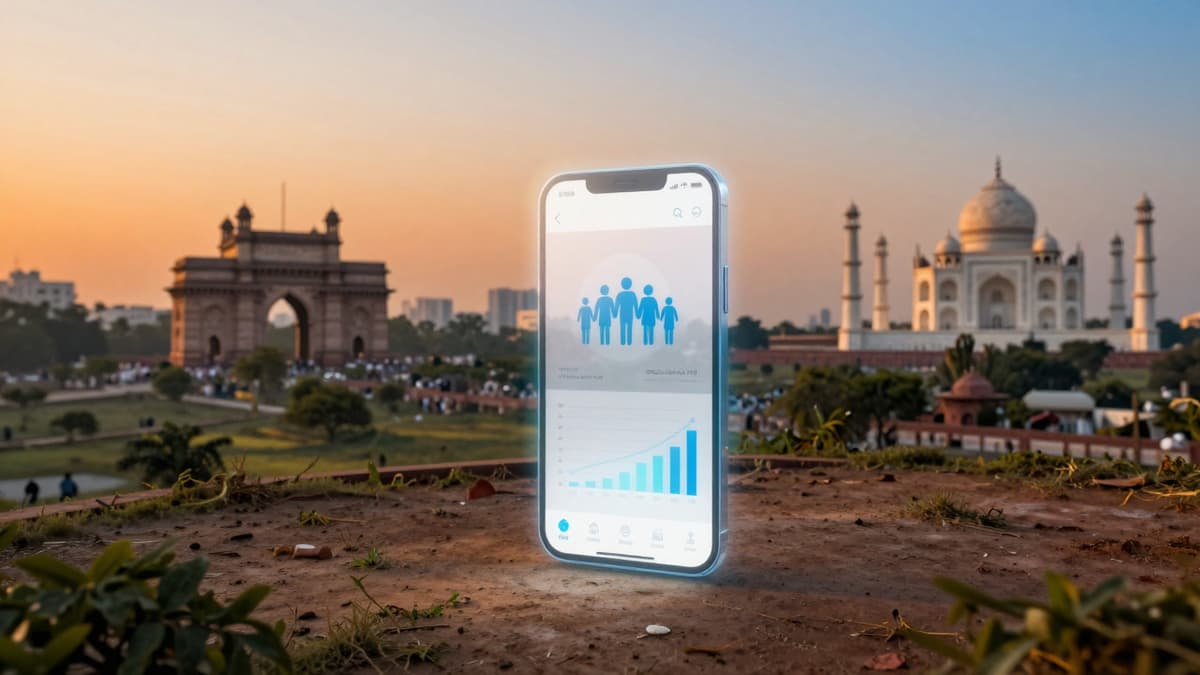
India launches its massive digital demographic exercise on April 1, 2026, offering a new online self-enumeration option for citizens to submit data before enumerator visits.
The long-awaited Census 2027 officially kicks off across India on April 1, 2026, marking a significant shift toward digitization. This comprehensive demographic exercise will cover the entire nation, introducing a vital new facility known as self-enumeration to streamline data collection.
As the country prepares for this massive administrative undertaking, the Office of the Registrar General and Census Commissioner has announced a modernized approach. Unlike previous iterations relying solely on paper-based fieldwork, this India Census digital initiative empowers citizens to provide their household information online via a web-based portal. This digital-first strategy aims to offer respondents unprecedented flexibility, allowing them to complete the census schedule at their own convenience rather than waiting for a door-to-door visit.
To participate in this new self-enumeration process, respondents must follow a specific protocol via the dedicated online portal. The process begins with a login step, where users access the system using a mobile number. Following authentication, individuals must utilize a provided map tool to accurately identify their exact residential location. Once the location is verified, the user proceeds to fill in the required details, completing the household information and the census schedule.
Upon submission, the system automatically generates a unique Self-Enumeration ID for each respondent. This identifier is crucial for the subsequent stages of the census. When the designated census enumerator eventually visits the household during the standard door-to-door phase, the respondent must provide this specific ID. The enumerator will then verify the data against the digital record, confirming its accuracy before officially including it in the final Census count.
The self-enumeration facility is designed with inclusivity in mind, supporting all available data entry in any of the 16 recognized languages. While the self-enumeration window opens on April 1, the specific dates for this phase vary significantly across different States and Union Territories. For instance, the first group of regions, including Andaman and Nicobar Islands, Goa, Karnataka, and Delhi (NDMC and Cantt. Board), has a window running from April 1 to April 15, 2026. Other regions like Gujarat and Uttarakhand have staggered start dates, with dates extending into May, June, and beyond.
The timeline for West Bengal remains unique, with dates currently marked as "To be decided." In contrast, regions like Assam, Manipur, and Tamil Nadu will have their self-enumeration windows open much later in the year, running through July and August 2026. It is crucial for citizens to verify their specific state's schedule, as the facility is not available nationwide on a single unified date.
A census is fundamentally a massive administrative and statistical exercise that collects, compiles, and analyzes demographic, social, and economic data on the entire population. India's Census is recognized as one of the world's largest such exercises, traditionally managed by the Ministry of Home Affairs. Contrary to popular belief regarding election cycles, the census is not held every five years; in India, it is conducted once every decade.
This decennial tradition explains the significance of Census 2027, following the suspension of the 2021 census due to the COVID-19 pandemic, which severely impacted field activities and data collection at that time. The digital transition aims to prevent similar logistical bottlenecks in the future.
The scope of questions for the upcoming census has been partially defined. The first phase of Census 2027 will include 33 questions covering a range of topics. These inquiries will range from the sex of the head of the household and the type of cereal consumed to the number of couples usually living in the household. However, the data collection process is not complete after this initial phase. The second phase, which includes the enumeration of caste data, is scheduled for February 2027. Specific questions for this second phase have not yet been notified to the public.
The shift to a fully digital architecture is expected to significantly alter the timeline for data availability. Most Census data sets are expected to be published within the year 2027 itself. This accelerated release schedule is a direct result of moving away from the traditional method of collecting data on paper, which subsequently required scanning and manual processing. Instead, enumerators will now record data directly into mobile applications.
This technological upgrade is projected to ensure near real-time processing of information, drastically speeding up the overall workflow. The India Census digital framework promises to make the massive task of capturing the nation's demographics more efficient, ensuring that the valuable information provided by citizens is utilized and released to the public in a timely manner.
The launch of self-enumeration in 2026 marks a definitive pivot for India's demographic data collection, shifting from a paper-heavy, lagging process to a real-time digital operation. As the self-enumeration window concludes across various states and transitions into the physical enumerator visits, the integration of mobile applications will likely establish a new standard for speed and accuracy in future censuses. The immediate effect will be a reduction in data processing time, potentially allowing the government to release critical demographic insights within the same year the census is conducted, rather than years later. This digital foundation could facilitate more agile policy-making based on near-immediate population data, fundamentally changing how India tracks its social and economic evolution.
Jun 8, 2026 02:17 UTC
Magnitude 7.8 Quake Shakes Philippines, Urging Immediate Evacuations
Join 50,000+ readers getting the global briefing every morning.
No spam. Unsubscribe anytime.
Jun 8, 2026 02:17 UTC
Magnitude 7.8 Quake Shakes Philippines, Urging Immediate Evacuations
Jun 8, 2026 00:51 UTC
Trump Claims Iran Nuclear Deal Imminent Despite Diplomatic Fractures
Jun 8, 2026 00:47 UTC
Iran Fires Missiles at Israel After Beirut Strike
Jun 7, 2026 22:38 UTC
Congress Party Claims Unity for INDIA Bloc Delhi Meeting


