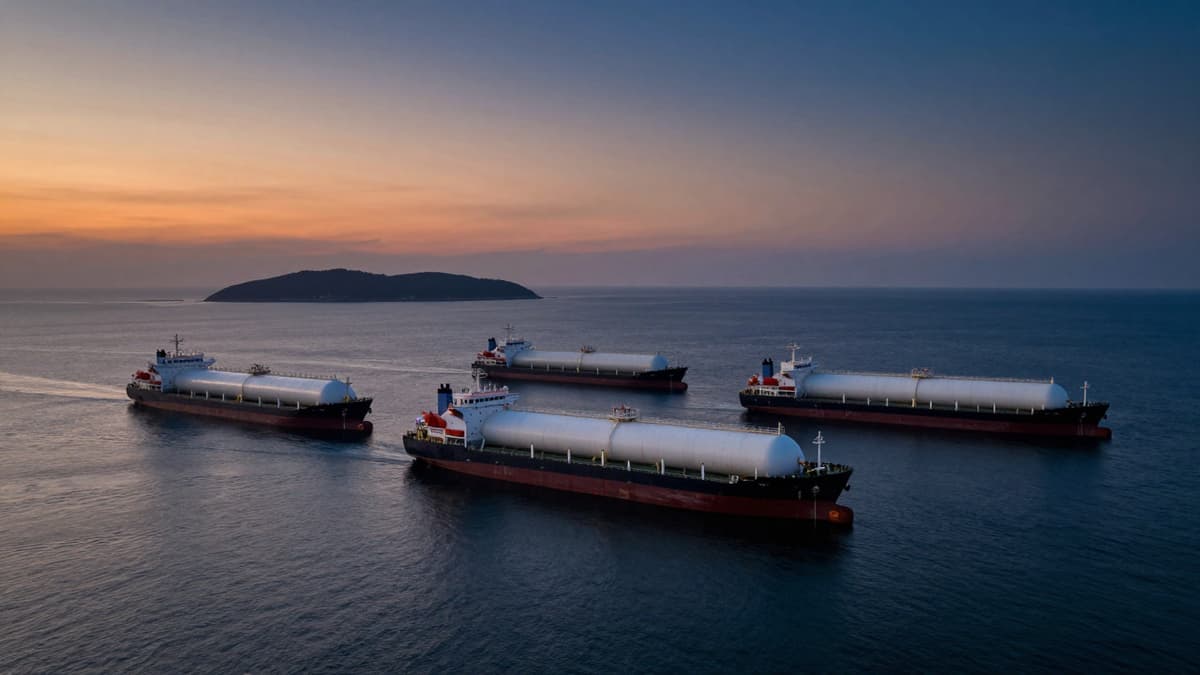
Five Indian-flagged LPG carriers carry over 170,000 tonnes of gas while awaiting passage near the Strait of Hormuz, where Iran has tightened control amid rising regional tensions.
Five Indian-flagged liquefied petroleum gas (LPG) carriers are currently anchored in waters just southwest of the Strait of Hormuz, specifically north of Dubai-Ras Al Khaimah, according to data from ship tracking websites. These vessels, which are all bound for India, are bunching together to coordinate a joint transit through the critical waterway. The five ships are collectively transporting a cargo of more than 1.7 lakh tonnes of LPG. Their delay comes on a day when Iran appeared to have significantly clamped down on all ship movements crossing the strait, despite earlier assurances that friendly nations would be permitted passage.
This standoff follows escalating rhetoric and actions connected to the Iran-Israel war, prompting Iran's Revolutionary Guards to issue a stark warning on Friday, March 27, 2026. The Guards announced that they had turned back three container ships attempting to transit the Strait of Hormuz that morning. According to a statement released on the Sepah News website, the IRGC Navy issued warnings to these vessels, which were of different nationalities, before halting their progress. The Guards cited the "lies of the corrupt U.S. President" as the motivation for their action, explicitly stating that the route was closed to any vessels traveling to or from ports linked to what Iran considers its enemies.
In response to the heightened security environment, Iran has maintained a complex stance on transit approvals. While the country previously announced that ships from India, Russia, Iraq, Pakistan, China, and Thailand could pass through the strait, it simultaneously barred vessels from the U.S., Israel, and specific Gulf States involved in the current conflict. On the day of the turnbacks, Iranian Foreign Minister Seyed Abbas Araghchi reiterated these restrictions, noting that ships from the U.S., Israel, and involved Gulf States would not be allowed to pass.
The current bottleneck involves a specific logistical route that has become a point of contention. A total of 26 ships have been approved by Iran recently to transit the strait. These approved vessels utilize a specific route around Larak Island, which is located just off the Iranian coast. This specific detour has been dubbed the "Tehran toll booth" by the leading shipping journal Lloyd's List, indicating its status as a controlled and monitored checkpoint. The majority of the 26 approved ships are owned by Greek and Chinese entities, though the fleet also includes Indian, Pakistani, and Syrian-owned vessels, reflecting the diverse but restricted nature of current maritime traffic in the region.
The presence of the five Indian carriers, which are Indian flagged and bound for their home country, highlights the delicate balance India must maintain in this geopolitical flashpoint. While India is considered a friendly nation capable of passing through, the sudden closure of the route to three other container ships suggests a volatile operational environment. The IRGC's statement emphasized that the closure was a direct response to misinformation from U.S. leadership regarding the openness of the strait. This suggests that the situation is dynamic and could change rapidly based on diplomatic interactions or further developments in the Iran-Israel war.
The clustering of the ships is a strategic move to "troop out" of the strait together, likely to ensure safety and mutual support while navigating the restricted waters. This tactical grouping underscores the challenges faced by the maritime industry in the region. The delay of over 170,000 tonnes of LPG is a significant economic and logistical event, as India relies on these imports. The situation remains fluid, with the IRGC maintaining a tight grip on the waterway and determining which vessels are deemed "friendly" enough to proceed versus those that might be linked to adversaries.
The current stagnation of Indian-flagged ships at the Strait of Hormuz signals a likely continuation of restricted transit as long as the broader Iran-Israel war persists without de-escalation. Given that Iran has established a strict protocol where only vessels from specific friendly nations can pass, and that the US and its allies face immediate turnbacks, it is probable that the "Tehran toll booth" route around Larak Island will remain the primary, and potentially the only, method for authorized transit for some time. The reliance on a single approved route suggests that future transit may become even more scrutinized, potentially leading to further delays for commercial vessels attempting to deliver essential energy resources to India and other regional allies. The situation indicates a high-risk environment where maritime logistics are directly dictated by immediate military and political developments rather than standard commercial protocols.
Jun 8, 2026 00:51 UTC
Trump Claims Iran Nuclear Deal Imminent Despite Diplomatic Fractures
Jun 8, 2026 00:47 UTC
Iran Fires Missiles at Israel After Beirut Strike
Jun 7, 2026 22:00 UTC
US, Iran Peace Hops Fade 100 Days Into War
Jun 7, 2026 20:57 UTC
Iran Strikes Israel: IRGC Promises Week of Continuous Offensive
Jun 8, 2026 02:28 UTC
Trump Walks Out of Meet the Press After Rejecting Evidence Demands


