Despite initial fears of a sparse turnout, 30,000 people filled Portland streets for the No Kings protests, marking a significant challenge to federal authority.
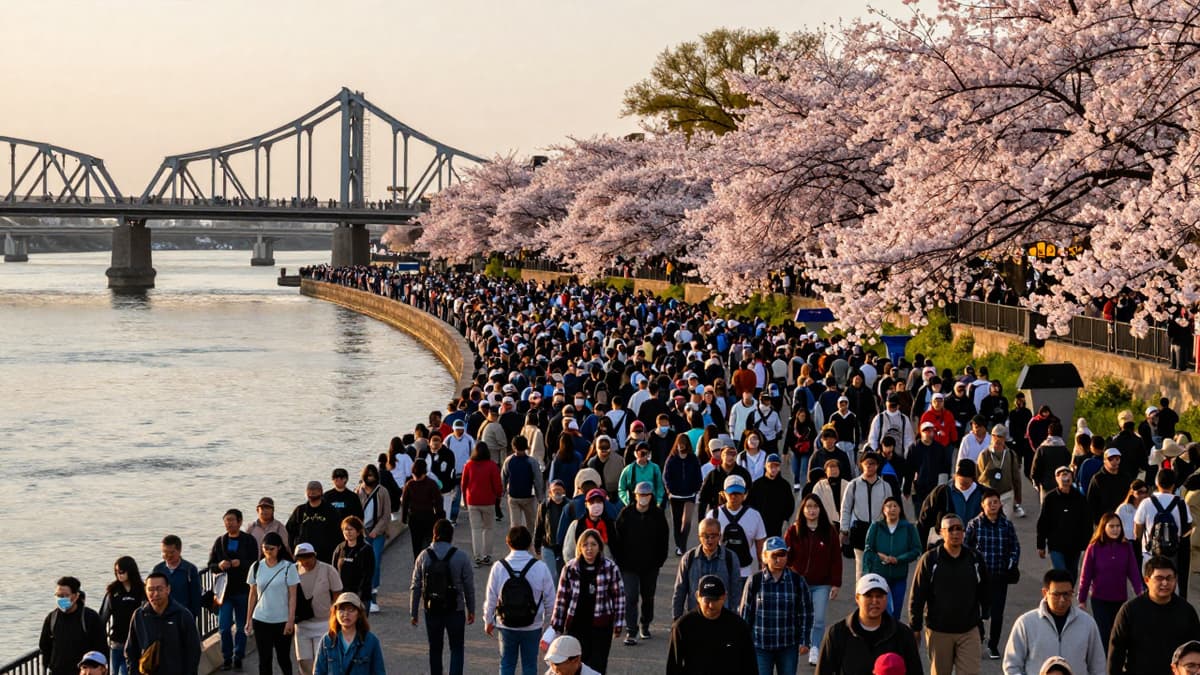
The surge of approximately 30,000 people in downtown Portland on March 31, 2026, marked a record-breaking No Kings protests event. This massive turnout, occurring despite fears of a smaller crowd, represented a direct challenge to the Trump administration and its recent federal actions. The rally saw thousands gathering on the riverbanks and bridges, transforming the waterfront into a sea of chanting demonstrators.
Initial concerns about a thin crowd were voiced by Michael Maria, a veteran participant who recalled a significantly larger attendance at the previous October march. That autumn, Portland had been a focal point of federal conflict, with President Donald Trump labeling the city "war-ravaged" and deploying the National Guard to protect ICE operations. However, as the national spotlight shifted to Minneapolis and the winter brought new terrors, attendance in Portland had seemed uncertain. Despite the anticipation of a large national movement, the specific turnout in downtown Portland was questioned by observers before the event began.
On the morning of the protest, fears of a crackdown appeared justified. Just days prior, an appeals court had stayed injunctions that had previously limited the use of tear gas and mortar launchers outside the city's detention center. The three-judge panel, which included two Trump appointees, ruled in favor of the administration, effectively greenlighting crowd control measures. This decision, coupled with a previous labor march in late January where peaceful civilians were tear-gassed, created an atmosphere of nervousness. Many residents, including friends of Michael Maria, opted to join protests in suburbs like Lake Oswego and Beaverton, fearing imminent federal action in the city center. Additionally, prominent figures like Sen. Ron Wyden chose to attend rallies in outlying conservative areas rather than the downtown waterfront.
Yet, the anticipated fear of a sparse crowd failed to materialize. As the day progressed, thousands of people flooded the city streets. By noon, the riverbanks were thronged with marchers, and both the Burnside and Steel Bridges became packed with participants. The crowd, numbering an estimated 30,000, prepared to march a two-mile route crossing from the west side of the city to the east and back again. Organizers estimated that 8 million people protested nationwide, a figure that underscores the scale of the dissatisfaction with the current federal leadership.
The movement's nature remains intentionally broad, described as a "big tent" with fluid demands. Participants expressed a wide array of grievances, ranging from attacks on trans and immigrant rights to opposition to military actions in Iran and Venezuela. Derek, a Hillsboro resident, cited the administration's history of lying as a primary motivator, while Ezra, a trans resident, emphasized the need to protest the policing of bodies and deportation efforts. Albert Gonzalez, whose family is from Mexico, spoke of the mistreatment of immigrants and gay Americans, while Ian Keim, a pacifist Mennonite, argued that his religious beliefs required him to stand against war.
The protests also highlighted the ongoing friction with law enforcement and the judiciary. Despite the massive crowds, the reinforcement of protesters at the Portland ICE facility in the south was unexpectedly weak compared to previous years. As evening fell, only about 250 protesters remained at the specific building, though many still wore gas masks and carried signs referencing democracy and due process. This shift in focus suggests a strategic change in how demonstrators are engaging with federal authority. The previous year's protests often saw a trickle of demonstrators converging at the ICE building, leading to clashes that served as a pretext for the deployment of the National Guard and fueled right-wing narratives about "antifa."
The implications of this year's turnout extend beyond the immediate visual spectacle. Organizers like Laurel Barnes emphasized that the goal is not a singular event but a continuous effort to fight fascism through persistence. The movement has already influenced court rulings and local legislation, creating unintended consequences that ripple through the relationship between police and federal agents. While the national commentariat focuses on upcoming elections, the protesters argue that change requires sustained pressure rather than waiting for two-year electoral increments.
The 30,000-person turnout in Portland signals a durable and expanding resistance that is likely to continue influencing federal-state relations. Given the history of federal crackdowns at the Portland ICE facility and the subsequent legal battles, future demonstrations may see even more strategic dispersion to suburbs to avoid targeted gas deployment. The record-breaking national estimate of 8 million protesters suggests that the Trump administration faces a sustained challenge that transcends immediate electoral cycles. As the movement evolves from a celebratory note to a serious confrontation with policies on immigration and war, the physical presence of these crowds will likely continue to shape judicial and legislative outcomes, forcing authorities to navigate a landscape where the cost of enforcement continues to rise due to public visibility and unified opposition.
Jun 8, 2026 00:51 UTC
Trump Claims Iran Nuclear Deal Imminent Despite Diplomatic Fractures
Jun 8, 2026 00:47 UTC
Iran Fires Missiles at Israel After Beirut Strike
Jun 7, 2026 22:00 UTC
US, Iran Peace Hops Fade 100 Days Into War
Jun 7, 2026 20:57 UTC
Iran Strikes Israel: IRGC Promises Week of Continuous Offensive
Jun 8, 2026 02:28 UTC
Trump Walks Out of Meet the Press After Rejecting Evidence Demands