Section
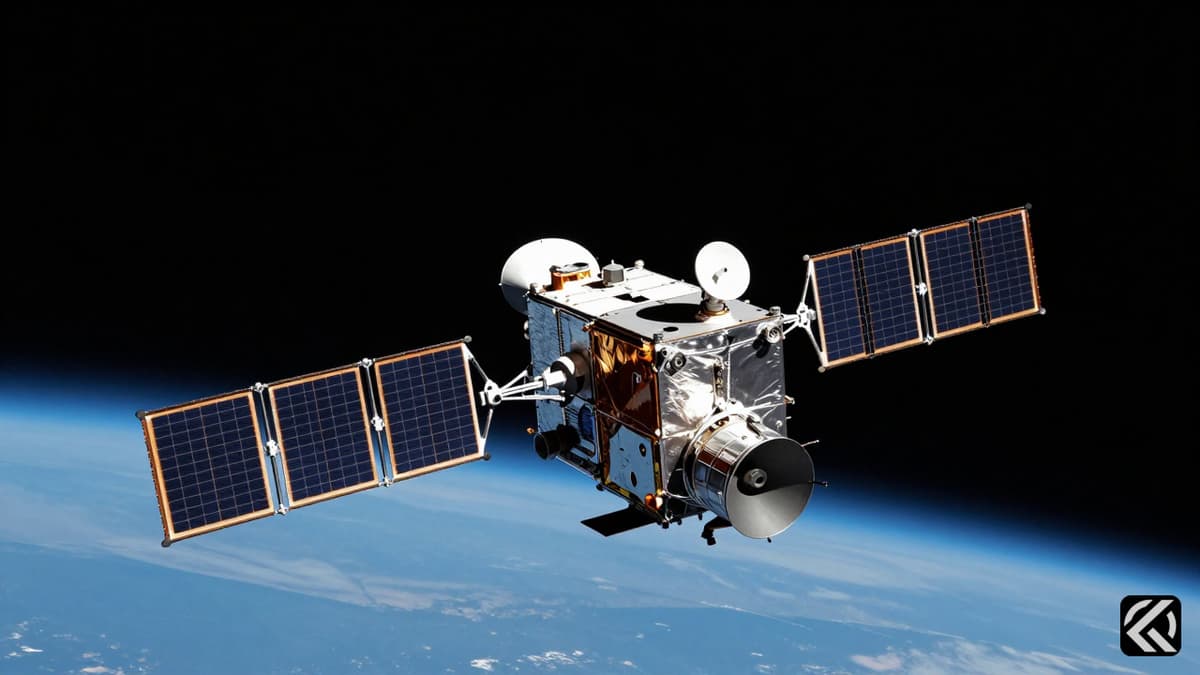
The US military has officially confirmed the deployment of on-orbit weapons to defend American forces, marking a strategic shift in space domain defense capabilities.
The United States military has officially confirmed the deployment of weapons in space, marking a significant escalation in its strategic posture. Air Force Secretary Troy Meink made the announcement on Monday, providing the first public acknowledgment of such capabilities in orbit. This move serves as a deliberate signal to potential adversaries regarding America’s readiness to defend its assets.
During his address at the Air, Space and Cyber Conference in National Harbor, Maryland, Meink emphasized the necessity of these new defenses. “Today we continue to ensure we remain ready to meet the challenges of evolving threats wherever they exist,” he stated. He clarified that the United States now possesses on-orbit space control weapons designed to protect the joint force from hostile actions. However, he declined to provide specifics on the nature of these weapons or when they were deployed, refusing further elaboration when asked.
This declaration aligns with broader strategic goals outlined by the Trump administration, which established the US Space Force in 2019 to bolster national defense capabilities. The administration views space dominance as critical in an advancing arms race, particularly as China and Russia challenge American supremacy in the domain. Official statements from the Space Force highlight that China integrates space capabilities into its military modernization strategy, while Russia treats space as a decisive warfighting domain.
Military officials have frequently warned about the aggressive postures of these nations. Recent intelligence indicates that Russia has tested satellite constellation training missions potentially demonstrating attack and defend tactics. Meanwhile, China has advanced its development of nuclear-capable hypersonic missiles. There are also unconfirmed reports, denied by Moscow, suggesting Russian efforts to develop space-based nuclear weapons capable of generating electromagnetic pulses to disable commercial and government satellites.
Such disruptions could have catastrophic effects on global infrastructure, including weather prediction, disaster response, banking systems, and navigation networks. Maintaining dominance in this arena is therefore viewed as essential for national security. Meink reiterated this point, stating, “It is critically important that we maintain our dominance not only in the air but in space, and so we’ve had to take steps to make sure that when we’re threatened, we can take care of that.”
While the 1967 Outer Space Treaty prohibits nuclear weapons in orbit, it does not ban conventional weapons or ground-based anti-satellite systems. This legal ambiguity allows for the development of the technologies now being confirmed. The move follows a December executive order by President Trump, which designated space superiority as a measure of national willpower. This order prioritized next-generation missile defense technologies and countered any placement of nuclear weapons in space.
President Trump has also proposed the Golden Dome missile defense system, a multibillion-dollar initiative inspired by Israel’s Iron Dome. This ambitious plan aims to intercept missiles globally, with Trump hoping for completion by 2028. The Pentagon has scheduled the first major test of this shield just before the 2028 election, according to sources familiar with the matter.
Meink also revealed that a US space-based interceptor program has advanced rapidly, moving “from initial contract to flight-ready hardware in less than one year.” This accelerated timeline underscores the urgency of the current geopolitical climate and the administration’s commitment to swift technological deployment. Despite these advancements, specific details regarding the interceptor program remain scarce.
The confirmation of on-orbit weapons signifies a shift from theoretical deterrence to tangible military capability. It reflects a broader trend of militarizing space, driven by the perceived need to counter advanced offensive capabilities developed by rival powers. As the US continues to define its role in the orbital domain, the focus remains on maintaining a strategic advantage through both conventional defense and next-generation interception technologies.
The confirmation of US space weapons and the development of the Golden Dome system signal a definitive militarization of orbit. This shift is likely to intensify the arms race with China and Russia, who may accelerate their own offensive and defensive space programs in response. The reliance on satellite infrastructure for global stability increases vulnerability, potentially leading to heightened geopolitical tensions. Long-term, this era may redefine international security norms, with space supremacy becoming a central pillar of national defense strategies globally.
Oct 6, 2026 02:48 UTC
Yemen Forces Recapture Mocha in Major Counteroffensive
Oct 6, 2026 00:07 UTC
Teen Loses Hand in French School Protest Clashes Amid Escalating Violence
Oct 5, 2026 22:36 UTC
UAE Shares FlyDubai Crew Data After Pilot Seize Control Attempt
Oct 5, 2026 22:00 UTC
US Withdraws Heavy Bombers From UK Base Amidst Rising Tensions With Iran
Nov 5, 2026 20:16 UTC
Pia Dandiya Claims Landmark Florida Win in 2026 Midterms