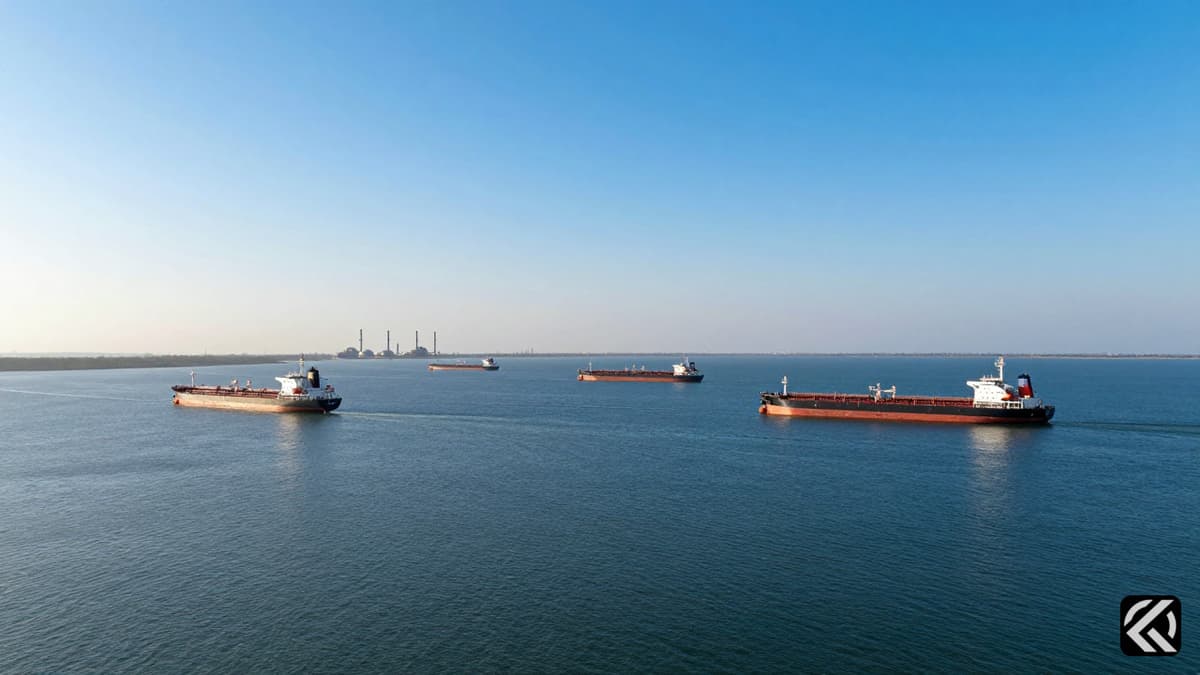
A conditional ceasefire between the US and Iran has triggered a sharp drop in oil prices and a rally in Asian stock markets, signaling hope for the reopening of the vital Strait of Hormuz.
The global energy market and stock exchanges reacted instantly as the US and Iran agreed to a conditional two-week ceasefire deal that mandates the reopening of the strategic Strait of Hormuz waterway. This sudden diplomatic breakthrough caused benchmark Brent crude to plummet approximately 13% to $94.80 per barrel, while US-traded oil dropped more than 15% to $95.75. Despite this sharp correction, current trading levels remain significantly higher than the roughly $70 per barrel seen before the conflict erupted on February 28.
President Trump announced the agreement on social media, stating he would suspend bombing and attacks on Iran for a two-week period contingent on Tehran ensuring the safe opening of the strait. He had issued a stern ultimatum just prior to the announcement, setting a 20:00 EDT deadline on Tuesday and warning that "a whole civilisation will die tonight" if no accord was reached. In response, Iranian Foreign Minister Abbas Araghchi confirmed on social media that Tehran would agree to the ceasefire deal provided attacks against Iran were halted, asserting that safe passage through the Strait of Hormuz would be possible.
The market volatility reflects the high stakes of the region's energy infrastructure. The conflict had previously disrupted supplies, with Iran threatening to attack ships attempting to use the strait in retaliation for US and Israeli airstrikes. The cost of energy had surged significantly, particularly after strikes on Qatar's Ras Laffan industrial hub in mid-March, which reduced the country's export capacity by 17%. This hub produces about a fifth of the world's liquefied natural gas, and its owners estimate it could take five years to repair the damage caused by the attacks.
Financial data from the aftermath of the announcement shows a distinct shift in global sentiment. Japan's Nikkei 225 gained 5%, while South Korea's Kospi jumped nearly 6%. In Hong Kong, the Hang Seng rose by 2.8%, and Australia's ASX 200 increased by 2.7%. These gains indicate that markets viewed the agreement as a de-escalation of a crisis that had been threatening to push energy prices to record highs. Xavier Smith, a research director at AlphaSense, noted that President Trump was likely wary of letting energy prices "skyrocket," as an escalation could inflict a "self-inflicted economic wound." Smith suggested that the pressure on Trump's approval ratings and the risk of such economic damage deterred him from further conflict escalation.
Despite the cessation of hostilities, the physical realities of the region remain complex. Analyst Saul Kavonic from MST Marquee observed that while tankers stranded near the strait may now pass through, providing relief for markets in the coming weeks, it is unlikely that energy production in the Middle East will fully resume until there is confidence in a lasting peace. Kavonic added that it could take months for production to restart, with potential physical damage requiring years and over $25 billion to repair, according to research firm Rystad Energy.
Prior to the ceasefire deal, there were reports of limited movement through the waterway. Some ships managed to pass through, though in far smaller numbers than usual. China acknowledged that several of its vessels had successfully crossed since the war began. Additionally, a Malta-flagged container vessel owned by the French company CMA CGM confirmed its passage via media outlet BFM TV, and shipping giant MOL confirmed that a Japanese ship carrying natural gas also made it out of the strait.
The Asian economy has been particularly affected by the economic fallout of the Iran war, as many nations in the region are heavily reliant on energy from the Gulf. The ceasefire offers immediate relief to these markets. If the agreement holds, oil prices are expected to return to normal states, although the transition will not be instantaneous. The path to full normalization involves navigating significant physical and political hurdles that extend far beyond the immediate two-week suspension of hostilities.
The immediate ceasefire deal marks a critical pause rather than a permanent resolution to the regional instability. While the reopening of the Strait of Hormuz offers a temporary reprieve for global shipping, the long-term trajectory of oil prices remains uncertain. With repairs to critical infrastructure like the Ras Laffan hub estimated to take five years and costing over $25 billion, the supply chain is poised for a prolonged period of constrained capacity. Experts predict that until a lasting peace deal is solidified and physical damage is addressed, energy production will remain below pre-conflict levels, keeping prices elevated above the $70 baseline seen before the war. Asian markets, heavily dependent on Gulf energy, will remain in a state of cautious monitoring as they await the full resumption of normal trade flows.
Jun 8, 2026 04:15 UTC
Trump Urges Netanyahu to Halt Iran Strike for Peace
Join 50,000+ readers getting the global briefing every morning.
No spam. Unsubscribe anytime.
Jun 8, 2026 02:28 UTC
Trump Walks Out of Meet the Press After Rejecting Evidence Demands
Jun 8, 2026 02:17 UTC
Magnitude 7.8 Quake Shakes Philippines, Urging Immediate Evacuations
Jun 8, 2026 00:51 UTC
Trump Claims Iran Nuclear Deal Imminent Despite Diplomatic Fractures
Jun 8, 2026 00:47 UTC
Iran Fires Missiles at Israel After Beirut Strike


