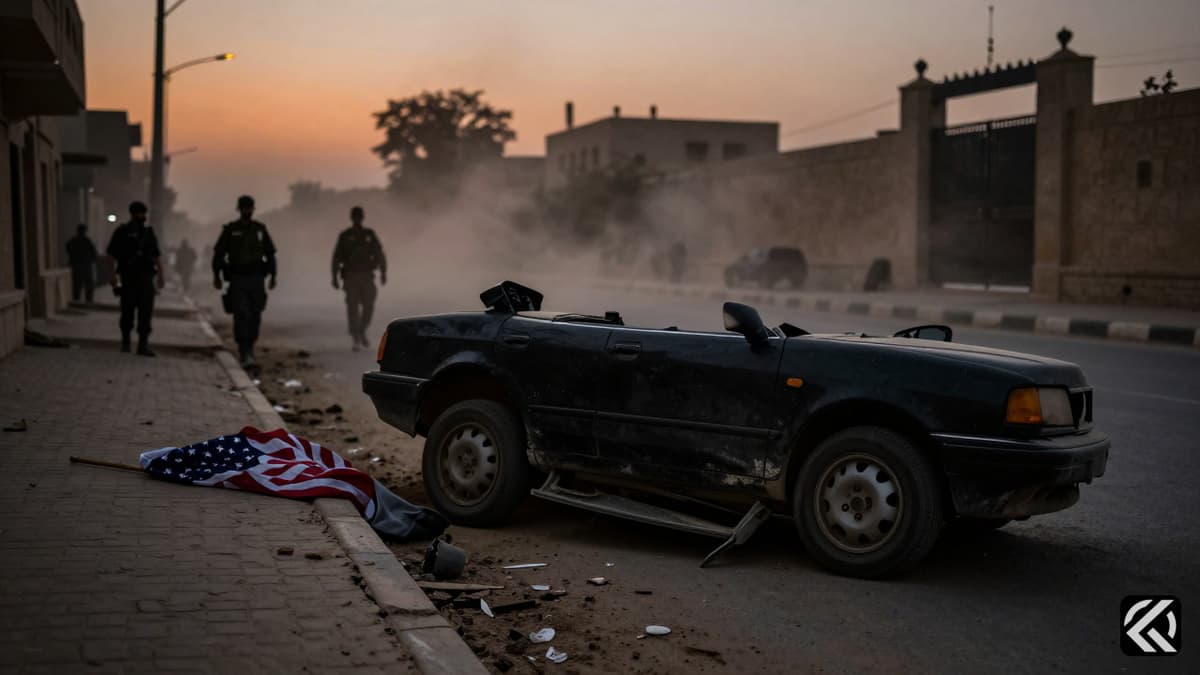
US journalist Shelly Kittleson has been released after a week in captivity in Baghdad. The release follows a specific ultimatum from the Iran-backed militia group responsible for her abduction.
The release of American freelance journalist Shelly Kittleson in Baghdad marks a significant development in a high-stakes crisis involving international security forces. According to Secretary of State Marco Rubio, the 49-year-old was freed one week after her initial abduction on March 31. This resolution comes after the Shelly Kittleson kidnapping was claimed by an Iran-backed militia group, prompting a swift response from Washington and Baghdad regarding her safety and subsequent departure.
The unfolding of events began when the militia group, known as Kataib Hezbollah, announced earlier on Tuesday that they would release Kittleson. However, this decision was not unconditional; the group explicitly stated that the release was contingent upon her immediate departure from Iraq. While Rubio characterized the event as a reflection of the Trump Administration's commitment to citizen safety, uncertainty lingered initially as Alex Plitsas, a CNN national security analyst and Kittleson's friend, noted a lack of immediate official US confirmation for the release.
At the time of the abduction, local Iraqi authorities launched an immediate security operation. The Iraqi government reported that security forces engaged in a pursuit of the suspects, resulting in one of the kidnappers' vehicles overturning and the subsequent arrest of a single individual. This initial response highlighted the active role of local forces in the immediate aftermath of the incident, though the group later claimed responsibility for the act.
In a separate communication, the group indicated they would release a recording detailing Kittleson's "role and activities in Iraq." This statement, while lacking specific details at the time, suggested a deeper narrative regarding her journalistic activities that the group intended to highlight. The broader context of the kidnapping is rooted in a volatile security environment. The incident occurred amidst a wave of attacks targeting US-associated interests across Iraq and the region. These hostilities have been driven by the ongoing conflict involving Iran, its allied Iraqi Shia militias, and the United States since the outbreak of the US-Israeli war on Iran.
The warning signs prior to the abduction were significant. It is understood that US officials had contacted Kittleson multiple times before the incident to alert her of specific threats against her safety. In a prior interview with CBS, Plitsas revealed that the US government had warned Kittleson about a targeted threat from Iran-backed paramilitaries. He stated that Kittleson had been informed that her name appeared on a list held by Kataib Hezbollah. This list reportedly included individuals the group intended to kidnap or kill, with a specific focus on female journalists.
The release statement by Secretary of State Rubio emphasized the administration's "steadfast commitment to the safety and security of American citizens, no matter where they are in the world." Rubio also expressed gratitude to Iraqi officials for their assistance in securing the journalist's release. Currently, the focus has shifted from the immediate rescue to ensuring a safe departure. The US is reportedly working to support her exit from the country, adhering to the conditions set forth by the Kataib Hezbollah release ultimatum.
Despite the official confirmation from the Secretary of State, the immediate reaction from the journalist's inner circle reflected a mix of relief and caution. Alex Plitsas acknowledged seeing the "alleged statement" regarding the release but noted that until official confirmation is received from the United States government, the situation remains fluid. This distinction underscores the gravity of diplomatic and security protocols in active conflict zones, where official validation is crucial before public declarations are made.
The role of the Iran-backed militia Iraq groups in this narrative remains central to the unfolding story. The group's decision to release Kittleson, while conditional, represents a tactical move within a larger geopolitical struggle. The demand for her immediate departure serves as both a gesture of release and a method to remove her from the region, potentially to avoid further diplomatic complications or international scrutiny regarding their activities.
The resolution of the Shelly Kittleson kidnapping highlights the complex interplay between US diplomatic efforts, local Iraqi security capabilities, and the aggressive posture of Iran-aligned militias. The arrest of one suspect and the recovery of a vehicle during the initial pursuit indicate that local forces are capable of responding to such crises, even in the face of organized paramilitary threats. However, the fact that a journalist was targeted despite prior warnings suggests a persistent and evolving threat landscape for Americans in the region.
Looking forward, the conditional nature of the release-requiring Kittleson to leave immediately-sets a precedent for future interactions between US citizens and these groups. If such conditions continue to define the release of American nationals, it could lead to a cycle of abductions and forced exiles, complicating US diplomatic relations and humanitarian efforts in Iraq. The ongoing attacks on US-associated targets, linked to the regional war, suggest that the security environment is unlikely to stabilize quickly. Consequently, the US may need to intensify its security protocols and warnings for citizens in the region, as the Kataib Hezbollah release scenario may become a recurring pattern in this volatile theater of conflict.
Jun 8, 2026 00:51 UTC
Trump Claims Iran Nuclear Deal Imminent Despite Diplomatic Fractures
Jun 8, 2026 00:47 UTC
Iran Fires Missiles at Israel After Beirut Strike
Jun 7, 2026 22:00 UTC
US, Iran Peace Hops Fade 100 Days Into War
Jun 7, 2026 20:57 UTC
Iran Strikes Israel: IRGC Promises Week of Continuous Offensive
Jun 8, 2026 02:28 UTC
Trump Walks Out of Meet the Press After Rejecting Evidence Demands


