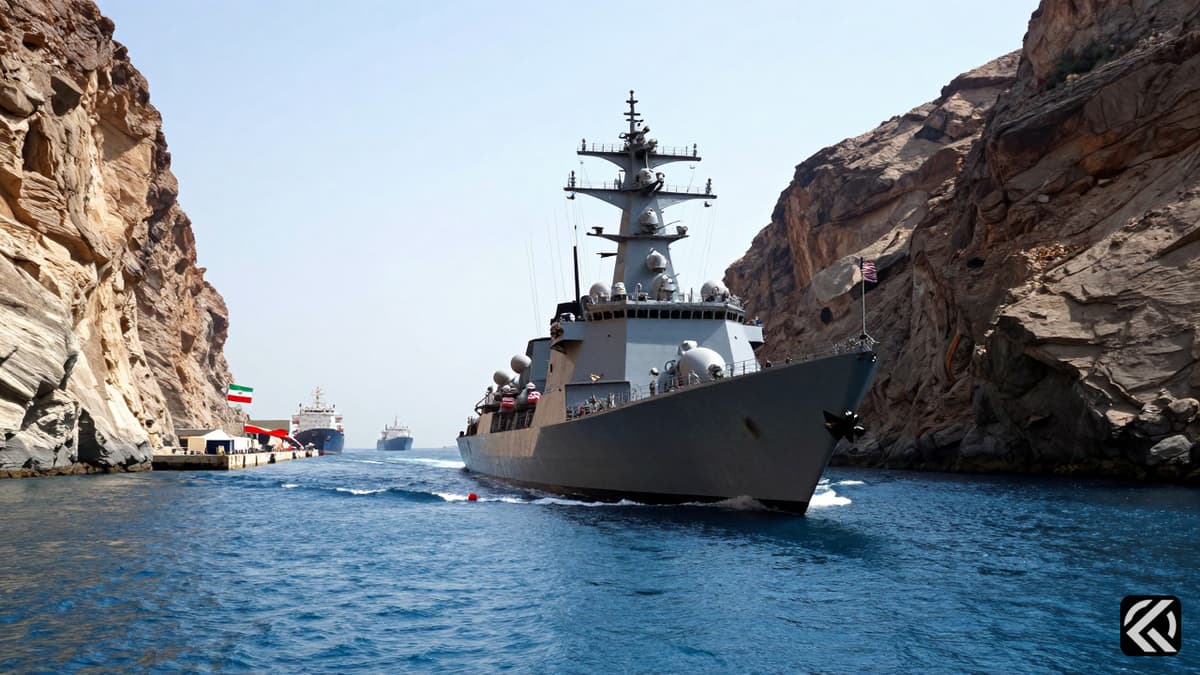
The US military has launched a blockade of Iranian ports in the Strait of Hormuz, triggering a sharp rise in oil prices and escalating tensions just as ceasefire talks failed.
Oil prices climbed sharply on Monday after the US military announced it would implement a shipping blockade against Iranian ports in the Strait of Hormuz. This decisive military action, scheduled to begin at 10 a.m. ET, marks a significant escalation that could test the current ceasefire status while tightening global oil supply.
The announcement comes immediately after the United States and Iran failed to agree on terms to end the ongoing war during weekend talks. In response to the diplomatic stalemate, the United States Central Command stated that naval forces would restrict all maritime traffic entering and exiting Iranian ports. While CENTCOM emphasized that the move would not impede freedom of navigation for vessels transiting to non-Iranian ports, the US blockade of Iranian ports represents a direct challenge to Tehran's strategic leverage.
Tehran, which has reportedly been collecting tolls from ships seeking transit through the strait, has vowed to retaliate against any military vessels operating in the area. The Strait of Hormuz tension has escalated rapidly, with Iran’s parliamentary speaker, Mohammad Bagher Ghalibaf, stating on Monday that the "so-called blockade" would soon make Americans "nostalgic for $4-$5 gas."
The immediate financial impact has been severe, triggering a significant oil prices spike that sent shockwaves through global markets. Brent crude, the primary global oil benchmark, rose by 7% to reach $102 a barrel. This represents a massive gain of 40% since the start of the war. Simultaneously, WTI, the US benchmark, climbed 7.8% to $104 a barrel, marking a level more than 50% higher than before the conflict effectively shuttered the vital shipping lane.
The surge in prices reflects the critical importance of the region to global energy security. Iran accounts for roughly 4% of the world's oil supply, a significant portion of which is exported to China. The blockade aims to cut off a crucial source of funding for Iran's government and military operations. According to Capital Economics chief economist Neil Shearing, Iran's oil exports were valued at approximately $45 billion last year, constituting 13% of the country's Gross Domestic Product.
Data from the analytics firm Kpler indicates that the blockade is occurring during a period of heightened production. Iran's oil exports averaged around 1.85 million barrels a day through March, which is about 100,000 barrels a day higher than the average recorded between December and February. By blocking these exports, the US strategy directly targets the economic lifeline that has been bolstered since the war began.
The uncertainty surrounding the enforcement of the blockade has also created apprehension among investors. Stock markets wobbled on Monday, with S&P 500, Dow, and Nasdaq futures pointing to a weaker open. In Asia, most major stock indexes closed modestly lower, and leading European indexes also traded down.
Neil Shearing warned that the US move "risks creating new potential flashpoints" in the conflict. He posed critical questions regarding the scope of the naval operation, asking, "Would the US Navy seize allied ships that have paid tolls to Tehran? Would it target Chinese vessels in the Strait?" Shearing noted that if the US were to seize vessels that are not Iranian, it would "represent a significant escalation" of the conflict, potentially drawing in other global powers.
The situation remains volatile as the US military prepares to enforce the restrictions. CENTCOM clarified that while they are blocking Iranian trade, they are not blocking general navigation. However, the practical application of this distinction may prove difficult as Iranian retaliatory threats loom. The oil prices spike is expected to persist as markets weigh the potential for a prolonged disruption in the region's energy flows.
The implementation of the maritime blockade marks a critical turning point in the conflict, as it shifts from diplomatic deadlock to active naval enforcement. The move is designed to financially pressure the Iranian government by seizing the revenue stream from oil exports, which had reached an average of 1.85 million barrels a day prior to the announcement. However, the response from Tehran suggests that this strategy may backfire by triggering severe retaliatory actions. As the US forces prepare to enter the strait, the risk of accidental collisions or intentional engagements with non-US vessels creates a volatile environment. If the conflict expands to include the seizure of Chinese or allied vessels, the global economic impact will deepen, potentially causing a sustained disruption in global oil markets far beyond the immediate 7% spike observed on Monday. The long-term trajectory depends entirely on whether the blockade deters further Iranian aggression or forces a more aggressive military response that could close the Strait entirely.
Jun 8, 2026 00:51 UTC
Trump Claims Iran Nuclear Deal Imminent Despite Diplomatic Fractures
Jun 8, 2026 00:47 UTC
Iran Fires Missiles at Israel After Beirut Strike
Jun 7, 2026 22:00 UTC
US, Iran Peace Hops Fade 100 Days Into War
Jun 7, 2026 20:57 UTC
Iran Strikes Israel: IRGC Promises Week of Continuous Offensive
Jun 8, 2026 02:28 UTC
Trump Walks Out of Meet the Press After Rejecting Evidence Demands


