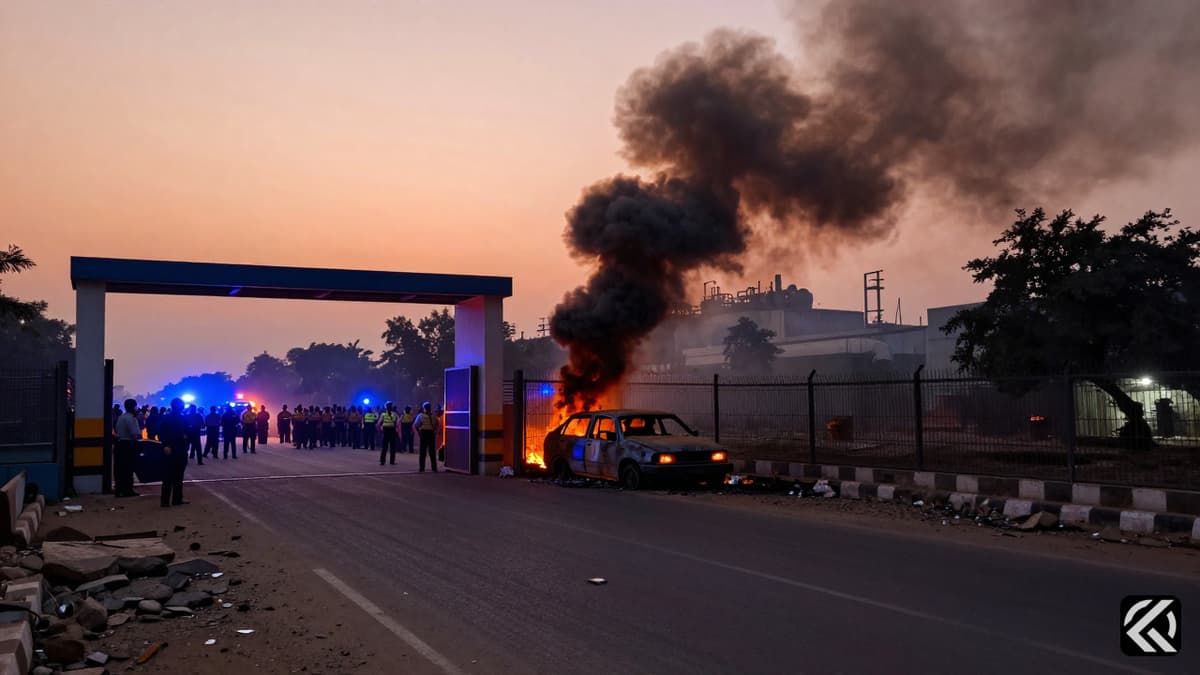
A peaceful demonstration over wage demands in Noida spiraled into chaos, with torching and stone pelting. Authorities have now mandated specific wage and safety improvements to quell the unrest.
The industrial sector of Noida Phase 2 descended into chaos on Monday as a demonstration by factory workers turned violent. What began as a routine agitation over wage demands spiraled out of control, resulting in widespread vandalism, the torching of vehicles, and a rain of stones. Authorities confirmed that the situation deteriorated significantly as tensions peaked, forcing a heavy police response to contain the unrest and prevent further damage to property.
The catalyst for this escalation was a sharp disparity in compensation standards between neighboring states. The protests intensified specifically after a significant wage increase was implemented in Haryana, where minimum wages rose substantially. This move highlighted a stark contrast with Uttar Pradesh, where wages remain significantly lower, creating a widening Uttar Pradesh minimum wage gap that has fueled growing dissatisfaction among the workforce in Noida. Workers demanded higher minimum wages to bridge this divide, leading to two consecutive days of agitation before Monday's violent climax.
During the unrest, the situation turned destructive as the mob resorted to severe property damage. Several vehicles were damaged, and at least one vehicle was set on fire. Reports confirmed that stone pelting further aggravated the volatile atmosphere, causing additional damage to infrastructure in the area. In response to the escalating violence, a large police force was rushed to the location. Officials stated that personnel were deployed in significant numbers specifically to disperse the crowd, contain the immediate unrest, and ensure that law and order was brought back under control.
Following the outbreak, the Noida administration moved swiftly to address the root causes of the anger. A set of comprehensive measures was announced aimed at resolving worker concerns regarding pay and conditions. The administration pledged that workers will receive their annual bonus before November 30, ensuring a financial assurance for the remainder of the year. Furthermore, a strict mandate was issued to ensure salaries are paid by the 10th of every month to prevent delays.
Beyond immediate financial relief, the new directives focus on long-term labor rights and safety. The administration mandated comprehensive medical cover and stricter workplace safety measures to protect the workforce. A key provision of the new safeguards includes the dignified treatment of workers, ensuring their basic rights are respected. To improve work-life balance, workers will now be entitled to a compulsory weekly off. The regulations stipulate that any work performed on this designated day must be compensated at double the regular rate. Similarly, any overtime work undertaken will also be paid at twice the regular rate, serving as a significant financial incentive and safeguard for laborers.
The administration has indicated that these measures are part of a broader strategy to address the grievances that led to the Noida factory workers wage protest. The focus is not only on immediate payment fixes but also on structural changes to working conditions and grievance redressal mechanisms. Officials stated that the situation is being closely monitored following the violence. While the immediate threat has been contained by the deployment of security forces, efforts are currently underway to restore normalcy in the area. Officials are keeping a vigilant watch to prevent any further flare-ups in the industrial belt, signaling a commitment to long-term stability.
The administration's response underscores the gravity of the situation. By addressing both the financial disparities and the working conditions, the goal is to prevent a recurrence of such intense unrest. The implementation of double pay for overtime and weekly offs aims to directly counter the dissatisfaction stemming from the wage gap. However, the immediate aftermath of the violence has placed a heavy demand on local law enforcement and administrative resources to maintain peace.
The Noida administration's rapid response, characterized by the announcement of annual bonuses and strict payment schedules, signals a shift towards addressing structural wage inequalities. By mandating double pay for overtime and weekly offs, the region is attempting to align its labor standards closer to neighboring states like Haryana. While the immediate deployment of police has quelled the Noida Phase 2 violence, the long-term impact will depend on the consistent enforcement of these new safety and wage protocols. If these measures are implemented effectively, they may prevent future flare-ups caused by the persistent Uttar Pradesh minimum wage gap, ensuring that the industrial belt can operate without the disruption of worker-led agitation.
Jun 8, 2026 00:51 UTC
Trump Claims Iran Nuclear Deal Imminent Despite Diplomatic Fractures
Jun 8, 2026 00:47 UTC
Iran Fires Missiles at Israel After Beirut Strike
Jun 7, 2026 22:00 UTC
US, Iran Peace Hops Fade 100 Days Into War
Jun 7, 2026 20:57 UTC
Iran Strikes Israel: IRGC Promises Week of Continuous Offensive
Jun 8, 2026 02:28 UTC
Trump Walks Out of Meet the Press After Rejecting Evidence Demands


