Section
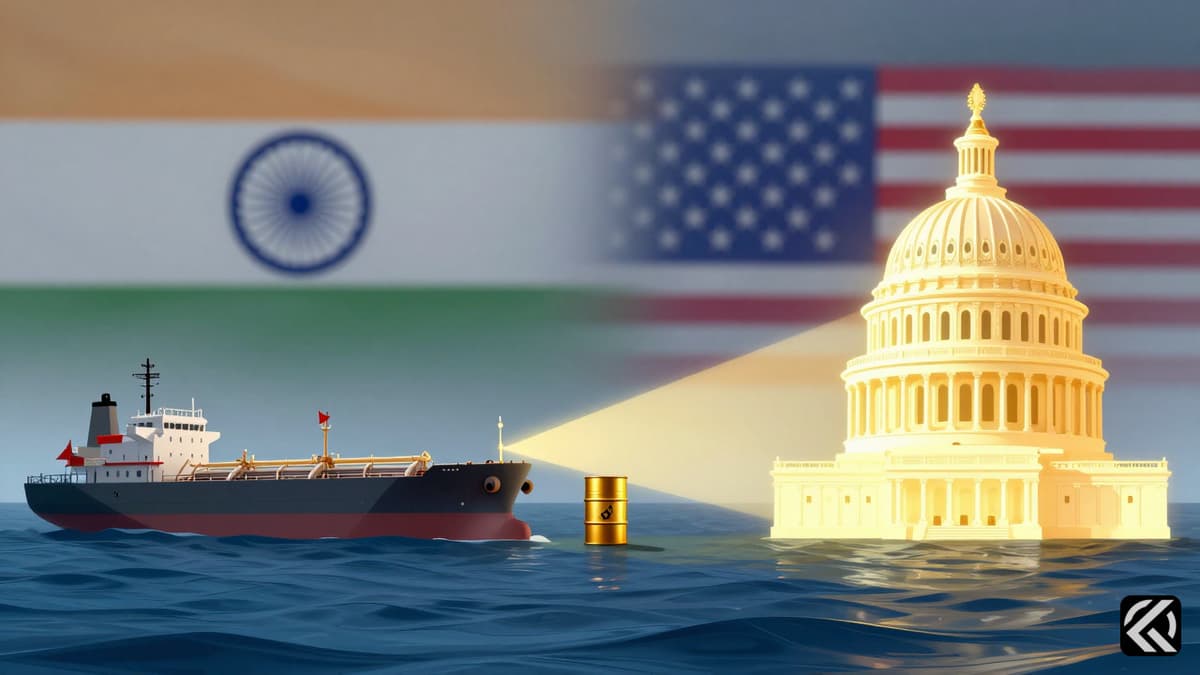
New US legislation targeting Russian oil imports threatens to strain diplomatic relations, with India firmly defending its energy security needs amidst escalating tariff warnings.
In a significant escalation of economic pressure, the United States Congress has approved a sweeping bill that could impose severe tariffs on nations purchasing Russian oil, prompting immediate diplomatic pushback from New Delhi. India has warned the United States that these new measures could significantly impact US India bilateral ties, just hours after the US House of Representatives passed the legislation. This move by the US government aims to curb financial support for Moscow’s war effort in Ukraine, directly challenging India’s longstanding reliance on discounted Russian crude.
The US House of Representatives passed this comprehensive sanctions and tariff bill on Wednesday, intending to increase economic pressure on Russia following its full-scale invasion of Ukraine in February 2022. The bill specifically targets Russia’s energy and defense sectors, President Vladimir Putin, and senior officials, alongside the “shadow fleet” of tankers used to bypass Western sanctions. Crucially, it authorizes President Donald Trump to impose stiff tariffs of up to 100 percent on countries, including India, to reduce their dependence on Russian oil and gas. The bill has now been sent to Trump to sign into law, marking a pivotal moment in global energy geopolitics.
India’s foreign ministry responded on Thursday by reiterating its firm commitment to ensuring energy security for its 1.4 billion people. The ministry noted the passage of the bill and added that New Delhi had raised the issue with various US interlocutors in recent months. Officials stated they had “very clearly articulated” the potential implications for the bilateral relationship and the international energy market. The Indian side emphasized its determination to take all necessary measures to protect its trade and economic interests, signaling that the government will work closely with trade and industry bodies to address the legislation’s implications.
As the world’s third-biggest oil importer, India is among the biggest buyers of Russian oil. This trade relationship has been instrumental in helping Moscow replenish its budget despite being hit with sweeping Western sanctions. New Delhi has repeatedly sought to resist pressure to reduce its oil trade with Russia, arguing that its large population and economy require secure, affordable, and reliable energy supplies. The potential imposition of Indian tariffs on Russian oil would create a complex economic and political dilemma for New Delhi, forcing it to choose between maintaining diplomatic harmony with Washington and securing cost-effective energy resources for its domestic stability.
The controversy highlights the deepening fault lines in global energy markets. By targeting the financial mechanisms that allow Russia to sustain its military operations, the US aims to isolate Moscow economically. However, this strategy inherently conflicts with the energy needs of major emerging economies like India. The bill’s focus on extending sanctions on Iran further complicates the geopolitical landscape, suggesting a broader tightening of Western economic levers against nations aligned with or supplying Russia. For India, the challenge is not just economic but strategic, as it navigates a delicate balance between its historical ties with Russia and its growing partnership with the United States.
The timing of this legislative move is critical. With the bill awaiting Trump’s signature, the administration has the power to enforce these tariffs, which could drastically alter the cost structure of Indian imports. The foreign ministry’s statement serves as both a warning and a negotiation tactic, highlighting that any punitive measures must be weighed against their broader impact on international stability. New Delhi’s insistence on protecting its trade interests indicates that it will not easily yield to external pressure, even if it risks straining the relationship with its powerful ally.
The passage of this US Congress bill signals a hardening stance in US foreign policy, prioritizing aggressive economic coercion over diplomatic accommodation with major energy consumers. If enacted, the potential US India bilateral ties repercussions will likely manifest in prolonged diplomatic friction and a reassessment of strategic alignment between the two nations. India’s refusal to curtail its Russian oil imports underscores the limits of Western sanctions in a multipolar world. Future impacts may include India diversifying its energy sources more aggressively, seeking new trade agreements, or leveraging its position to negotiate exemptions, potentially reshaping global energy trade flows for years to come.
Oct 3, 2026 04:08 UTC
FlyDubai Co-Pilot Banned in Oman Over Extremism Concerns
Oct 3, 2026 00:50 UTC
Israel-Mumbai Campaign Honors Captain Smit After Flydubai Incident
Oct 2, 2026 18:13 UTC
Captain Smit Machchhar’s Courage Saves Flydubai Flight FZ1073 From Disaster
Oct 2, 2026 16:45 UTC
Captain Smit Machchhar Saves Plane Mid-Fall
Oct 3, 2026 10:04 UTC
UAE Official: Flydubai Co-Pilot’s Attack Was Terror Act