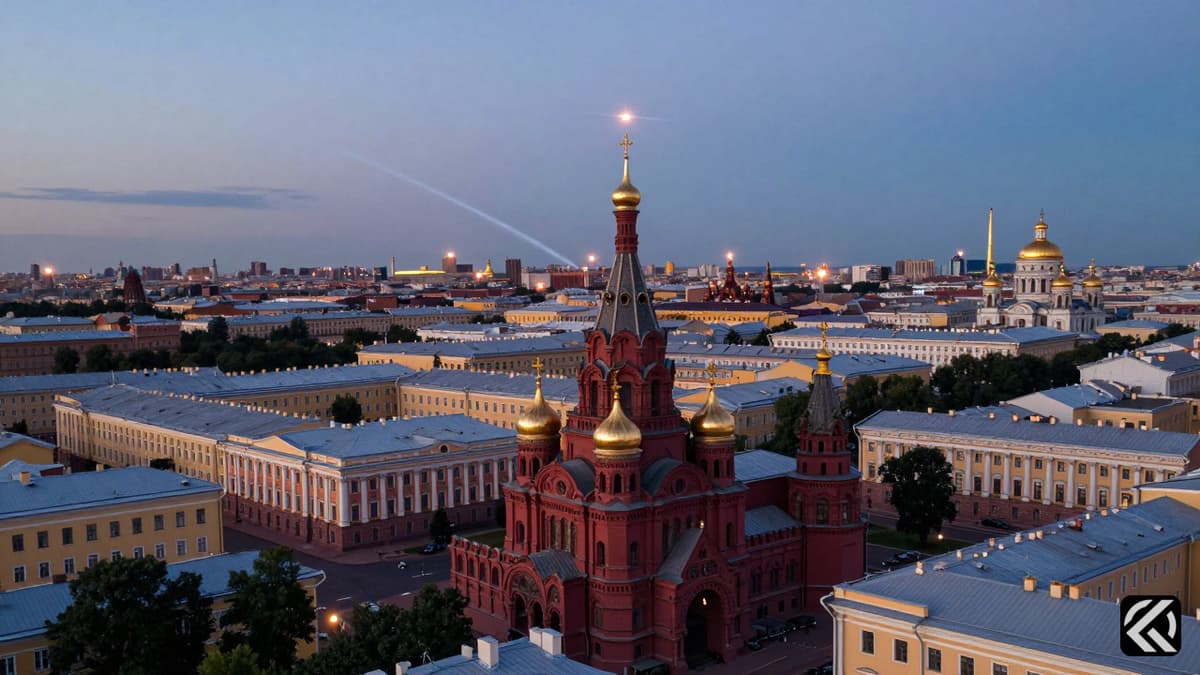
Ukraine’s massive drone campaign targets St Petersburg’s military infrastructure amid Russia’s flagship economic forum, marking a sharp escalation in the ongoing conflict.
In a significant escalation of the ongoing conflict, Russian authorities confirmed that Ukraine launched an "unprecedented attack" targeting the city of St Petersburg and the surrounding Leningrad region. This military operation coincided with the final day of Russia’s annual St Petersburg Economic Forum, a major event designed to attract foreign investment from thousands of guests across 130 countries.
Governor Aleksandr Drozdenko reported that air defense systems intercepted and shot down more than 140 drones over the region. The intensity of the assault prompted city governor Alexander Beglov to issue a rare directive urging residents to remain indoors for the first time since the war began in 2022. Despite the heavy aerial activity, official reports indicated that buildings sustained only "insignificant" damage, although a fire broke out at an unspecified military facility, leading to the evacuation of residents in the affected area.
Ukrainian President Volodymyr Zelensky claimed responsibility for the strikes, describing them as a "just response" to Russian attacks. He stated that Ukrainian forces successfully targeted Russia’s arsenals and a naval base in Kronstadt, which serves as the main outpost of the Russian Navy's Baltic Fleet. Zelensky emphasized the logistical feat involved, noting that his drones covered a distance of 1,000km (620 miles) to reach the target zone. The attack was part of what he termed "long-range sanctions," a euphemism for deep-strike operations against Russian infrastructure.
The military action followed a sharp diplomatic rift between Ukrainian and Russian leadership. On Thursday, Zelensky had published an open letter calling for a ceasefire and face-to-face negotiations with Vladimir Putin to end the war. He argued that it would be "wrong to simply wait" for the conflict to again attract attention from the United States. However, at the St Petersburg Economic Forum on Friday, Putin dismissed these overtures. He stated there was no point in meeting with Zelensky, accusing the Ukrainian leader of wanting to "keep fighting" while his country claimed it was time to end the war. Putin reiterated that a truce would only allow Ukraine to regroup, adding that Russia would only end the war when its specific goals were met.
Russia’s longstanding demands include Ukraine’s withdrawal from the Donetsk, Luhansk, Kherson, and Zaporizhzhia regions, as well as abandoning efforts to join NATO. Ukraine has consistently refused to cede territory, arguing that such concessions would embolden Moscow to invade again in the future. The recent strikes on St Petersburg highlight the widening geographical scope of Ukrainian operations, which now reach deep into Russia’s second-largest city, just days after earlier strikes targeted the outskirts of the same area.
In addition to the aerial assault on St Petersburg, Ukrainian forces continued to impact logistics in occupied territories. In the Russian-occupied Luhansk region, Moscow-installed authorities suspended coach services on two motorways and banned commuter train services. They also prohibited the transportation of groups of children, citing security reasons. An analyst told the BBC that Ukrainian drone strikes since the beginning of May have hit more than 200 lorries and over 30 fuel trucks, severely disrupting supply lines. Furthermore, Zelensky confirmed that an oil depot 500km (310 miles) away in the southern Krasnodar region was also hit, demonstrating the reach of Ukraine’s strategic bombing campaign.
The convergence of high-profile diplomatic forums and deep-strike military operations underscores a critical phase in the war. As Putin hosts the St Petersburg Economic Forum, aiming to project normalcy and attract international business, Ukraine has directly challenged this narrative by striking at the heart of the host city’s infrastructure. This dual strategy of political isolation and military pressure suggests that Kyiv intends to make the cost of the war unsustainable for Moscow on multiple fronts. The suspension of logistics in Luhansk further indicates that Ukraine is targeting the economic and operational viability of occupied regions, not just frontline trenches. Looking ahead, this escalation may force Russia to divert more resources to air defense and internal security, potentially straining its military capabilities elsewhere. Conversely, the rejection of ceasefire talks by Putin signals that the diplomatic window for negotiation remains closed, suggesting that the conflict will likely intensify in the short term with more long-range strikes becoming a regular feature of the warfare strategy. The success of these operations could also encourage further international support for deep-strike capabilities, altering the long-term dynamics of the Zelensky vs Putin confrontation.
Jun 8, 2026 22:55 UTC
Netanyahu Vows Forceful Response to Future Iran Attacks
Join 50,000+ readers getting the global briefing every morning.
No spam. Unsubscribe anytime.
Jun 8, 2026 22:55 UTC
Netanyahu Vows Forceful Response to Future Iran Attacks
Jun 8, 2026 20:56 UTC
Netanyahu Halts Iran Fighting, Vows Future Force
Jun 8, 2026 20:54 UTC
Justice Department Moves to Strip Citizenship from 17 Individuals
Jun 8, 2026 18:37 UTC
Trump Denied War Pledge Despite Clear Campaign Records


