President Trump hints at a breakthrough deal while the Strait of Hormuz faces a deadline, as US forces rescue a downed F-15 pilot amid escalating regional strikes.
U.S. President Donald Trump announced on Sunday, April 5, 2026, that a diplomatic breakthrough with Iran is highly probable by Monday, April 6. This statement arrives as Tehran faces a strict deadline to reopen the Strait of Hormuz or face heavy bombing from American forces.
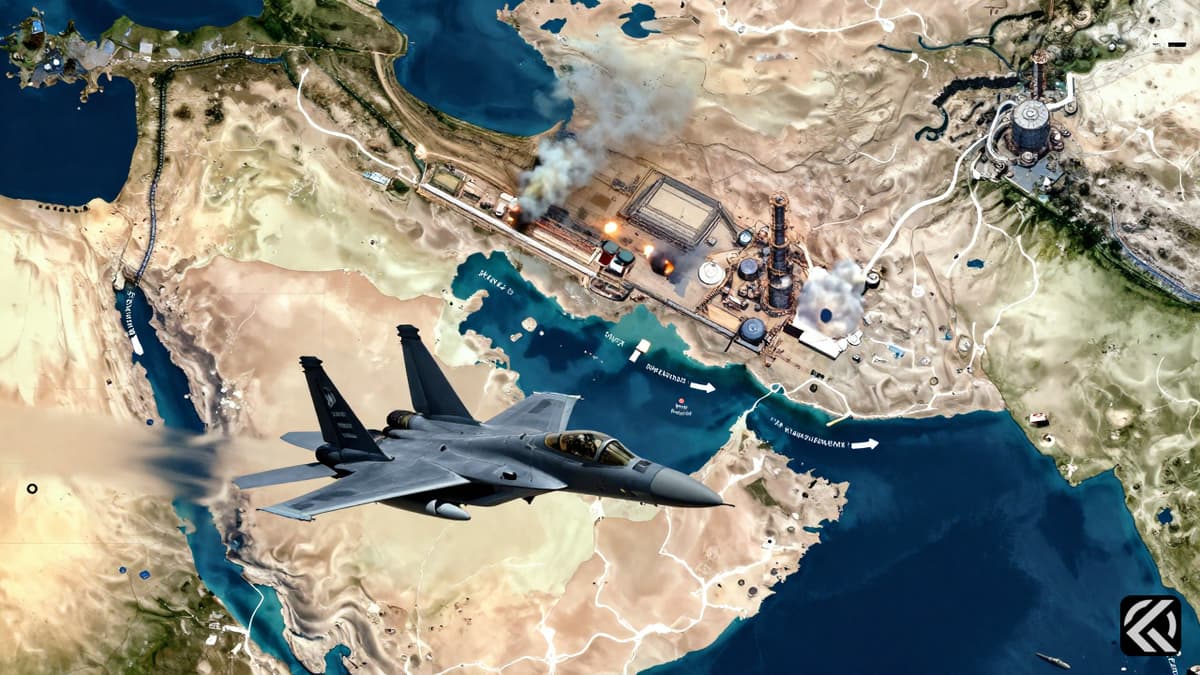
This potential shift in strategy follows a period of intense hostility, including a threatening social media post from the President regarding strikes on Iranian power plants and bridges. Amidst this rising tension, United States officials confirmed the successful recovery of a pilot whose aircraft was shot down over Iranian territory. The rescue occurred after an F-15 jet was brought down by Iranian air defenses, marking a critical development in the unfolding conflict.
As diplomatic channels potentially open, regional actors continue their military preparations. A senior Israeli defense official stated that Israel is ready to launch attacks on Iranian energy infrastructure within the next week, awaiting final approval from the United States. These potential strikes come in direct response to the latest demands placed on Tehran regarding the critical waterway. Meanwhile, reports from Iranian news agencies confirm casualties resulting from recent cross-border attacks on industrial sites.
The immediate context for President Trump's optimistic outlook involves a rapidly evolving military situation. On the evening of Saturday, April 4, 2026, two U.S. officials provided confirmation to Reuters that a rescue operation had been successfully concluded. The operation secured an airman whose F-15 jet had been downed during operations in Iran. While the officials did not immediately release specific tactical details regarding the rescue itself, the confirmation of the pilot's recovery marks a significant human element in the broader strategic standoff.
This incident involved the second crew member of a two-person team, both of whom were part of the F-15 unit. Iranian authorities had stated on Friday that their air defense systems successfully brought down the aircraft, setting the stage for the subsequent rescue efforts. The recovery of this airman adds a layer of complexity to the narrative, as the United States balances humanitarian concerns and military success with its diplomatic ultimatum.
President Trump's comments to Fox News underscored this precarious balance. He expressed a belief that there is a "good chance" of reaching a deal with Iran by the following day. The President's statement was delivered in the wake of his earlier, expletives-laden post which explicitly threatened to strike Iran's power plants and bridges if the Strait of Hormuz was not reopened. The juxtaposition of this military threat with the prospect of a negotiated settlement highlights the volatile nature of the current geopolitical climate.
The timeline is tight, with the President citing Monday, April 6, as the target for a potential agreement. This deadline is critical not just for the Strait of Hormuz, which remains a chokepoint of global energy transport, but for the de-escalation of hostilities in the region. The immediate pressure on Tehran to comply with the demand to reopen the waterway suggests that the window for diplomatic resolution is narrow and contingent on swift action.
Beyond the diplomatic maneuvers led by the White House, regional allies are actively preparing for further escalation. An Israeli defense official, speaking on the matter, indicated that Israel is in a state of readiness to attack Iranian energy facilities. The official noted that the timeframe for such operations would be within the coming week. However, the execution of these strikes is contingent upon receiving approval from the United States, illustrating the coordination required between the two nations before further military action is taken.
This preparation to target energy infrastructure appears to be a direct response to the pressure being applied by the Trump administration. The move to target energy facilities suggests a strategy aimed at maximizing leverage over Tehran. The official's statement confirms that while the diplomatic track may be opening, the military posture remains aggressive and ready to deploy force if necessary. The proximity of the deadline for the Strait of Hormuz intensifies the urgency of these preparations.
Concurrently, the impact of the ongoing conflict is already being felt on the ground. An Iranian official reported that five people were killed following strikes on Saturday, April 4, 2026. These attacks targeted a petrochemical hub located in the southwest of the country. The news agency ISNA confirmed these casualties, providing grim evidence of the rising cost of the confrontation. The location of the strike, a petrochemical hub, aligns with the potential targets mentioned by the Israeli defense official, indicating that such facilities are indeed within the scope of the current offensive capabilities.
The convergence of a potential diplomatic deal, the rescue of a downed pilot, and ongoing military strikes creates a complex situation where peace and war seem to exist simultaneously. The United States and Israel appear to be utilizing a dual approach of threat and action while simultaneously engaging in negotiations. This multi-layered strategy aims to force a resolution regarding the Strait of Hormuz before the situation spirals further out of control.
The situation remains fluid as the United States navigates the critical window between its ultimatum and the potential for a negotiated settlement. The Trump Iran ultimatum serves as the central pivot, threatening heavy bombing while leaving the door open for a deal. If the Strait of Hormuz does not reopen as demanded, the likelihood of expanded military engagement increases significantly. However, the successful F-15 jet rescue demonstrates the United States' capability to operate within the contested airspace and recover its personnel, potentially bolstering confidence in its military leverage.
The potential for a deal by April 6 offers a glimmer of hope for de-escalation, yet the actions of both the Israeli defense establishment and the ongoing strikes indicate that the path to peace is fraught with immediate risks. The cost of the war is rising, evidenced by the casualties reported in the petrochemical hub. As the deadline approaches, the international community watches closely to see if diplomacy can prevail over the momentum of military action that has already begun to reshape the region.
The convergence of diplomatic overtures and military threats creates a tense final countdown toward the April 6 deadline. If negotiations succeed, the region may avoid further destruction of energy infrastructure, but the failure of these talks could trigger the heavy bombing previously threatened by the administration. The upcoming week will be decisive in determining whether the Strait of Hormuz remains a zone of tension or a reopened artery for global trade, with the fate of the deal hanging in the balance against the backdrop of recent airstrikes and the rescue of American personnel.
Jun 8, 2026 04:15 UTC
Trump Urges Netanyahu to Halt Iran Strike for Peace
Join 50,000+ readers getting the global briefing every morning.
No spam. Unsubscribe anytime.
Jun 8, 2026 02:28 UTC
Trump Walks Out of Meet the Press After Rejecting Evidence Demands
Jun 8, 2026 02:17 UTC
Magnitude 7.8 Quake Shakes Philippines, Urging Immediate Evacuations
Jun 8, 2026 00:51 UTC
Trump Claims Iran Nuclear Deal Imminent Despite Diplomatic Fractures
Jun 8, 2026 00:47 UTC
Iran Fires Missiles at Israel After Beirut Strike


