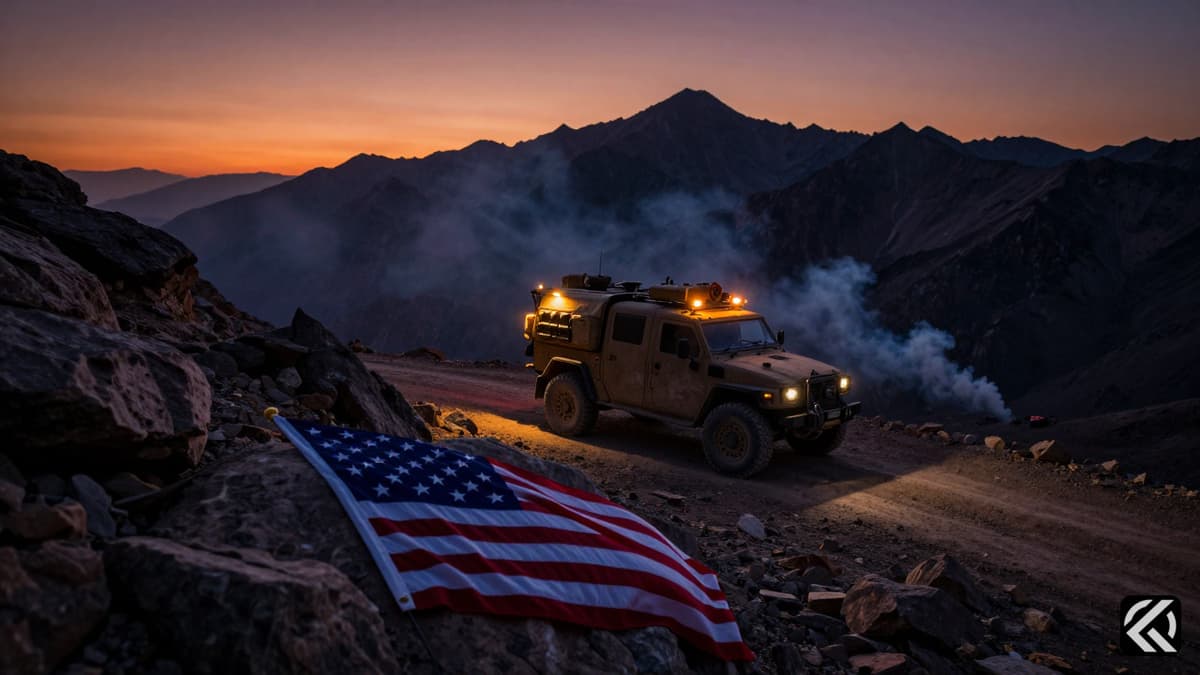
In a stunning development during the sixth week of hostilities, the US military executed a daring rescue of a wounded F-15 pilot behind enemy lines in Iran.
The United States military has successfully extracted an airman who was trapped behind enemy lines after Iran shot down his F-15 fighter jet, according to government officials. This critical breakthrough occurred early on Sunday, April 5, 2026, bringing an end to a significant crisis facing President Donald Trump as the conflict enters its sixth week.
The rescue announcement arrives amidst a volatile escalation in the region, as Iran launched a barrage of missiles and drones targeting both Israel and Kuwait early Sunday. The timing coincides with a fierce ultimatum issued by Mr. Trump just one day prior, giving the Islamic Republic a 48-hour window to negotiate a deal or face "all Hell." This sequence of events marks a critical juncture in the ongoing Iran-US war, where diplomatic threats have quickly transitioned into direct kinetic action and high-stakes military operations.
In a statement posted on X by White House Press Secretary Karoline Leavitt, President Trump detailed the scope of the operation. "Over the past several hours, the United States Military pulled off one of the most daring Search and Rescue Operations in U.S. History," Mr. Trump wrote, highlighting the extreme peril faced by the crew member. He described the soldier as a "brave Warrior" who was located deep behind enemy lines in the "treacherous mountains of Iran," where he was reportedly being hunted by adversaries.
The President confirmed that while the service member sustained injuries during the incident, his condition is stable. "He sustained injuries, but he will be just fine," Mr. Trump stated on Truth Social, offering reassurance regarding the outcome of the mission. This specific incident represents only the latest in a series of intense efforts, as Mr. Trump revealed that this successful extraction follows a separate, highly sensitive operation. "This miraculous Search and Rescue Operation comes in addition to a successful rescue of another brave Pilot, yesterday, which we did not confirm, because we did not want to jeopardize our second rescue operation."
The secrecy surrounding the second rescue underscores the high risks involved in these operations and the strategic necessity of keeping the US military's capabilities and locations hidden from enemy forces. The decision to keep the previous rescue unconfirmed demonstrates a calculated approach to preserving the safety of ongoing and future missions, a strategy that appears to have paid off with the successful recovery of the F-15 airman.
The broader context of this rescue is defined by the rapidly deteriorating security situation. The launch of Iranian missiles and drones against Israel and Kuwait suggests that the conflict is expanding beyond bilateral skirmishes into a wider regional confrontation. The urgency of the US pilot rescue effort cannot be overstated, as the downing of an F-15 indicates a significant breach in US air superiority and the willingness of Iranian forces to engage high-value assets directly.
President Trump's response has been equally aggressive, combining the relief of the rescue with a stern warning to the leadership of the Islamic Republic. The "all Hell" comment indicates a shift toward a more forceful posture, suggesting that the window for a diplomatic resolution is narrowing rapidly. The fact that the rescue was achieved during such a heightened state of alert speaks to the resilience and capability of the US military in contested environments.
The recovery of the airman serves as a pivotal moment in the narrative of the Iran-US war, signaling that despite the chaos and the intensity of the fighting, the United States retains the ability to project power and protect its citizens even in the most hostile terrain. The detailed account provided by the White House emphasizes the human cost of the conflict while simultaneously projecting strength and resolve.
The successful extraction of the F-15 pilot, coupled with the immediate resumption of missile launches by Iran against Israel and Kuwait, suggests a volatile trajectory for the coming days. As the 48-hour ultimatum issued by President Trump approaches its deadline, the region faces the distinct possibility of further intensification. The failure to secure a deal within the stipulated timeframe could trigger the "all Hell" scenario warned of by the President, potentially leading to a significant expansion of hostilities across the Middle East. The resilience demonstrated in the rescue mission highlights the US commitment to its personnel, yet the surrounding geopolitical tension indicates that the crisis remains far from resolved.
Jun 8, 2026 00:51 UTC
Trump Claims Iran Nuclear Deal Imminent Despite Diplomatic Fractures
Jun 8, 2026 00:47 UTC
Iran Fires Missiles at Israel After Beirut Strike
Jun 7, 2026 22:00 UTC
US, Iran Peace Hops Fade 100 Days Into War
Jun 7, 2026 20:57 UTC
Iran Strikes Israel: IRGC Promises Week of Continuous Offensive
Jun 8, 2026 02:28 UTC
Trump Walks Out of Meet the Press After Rejecting Evidence Demands


