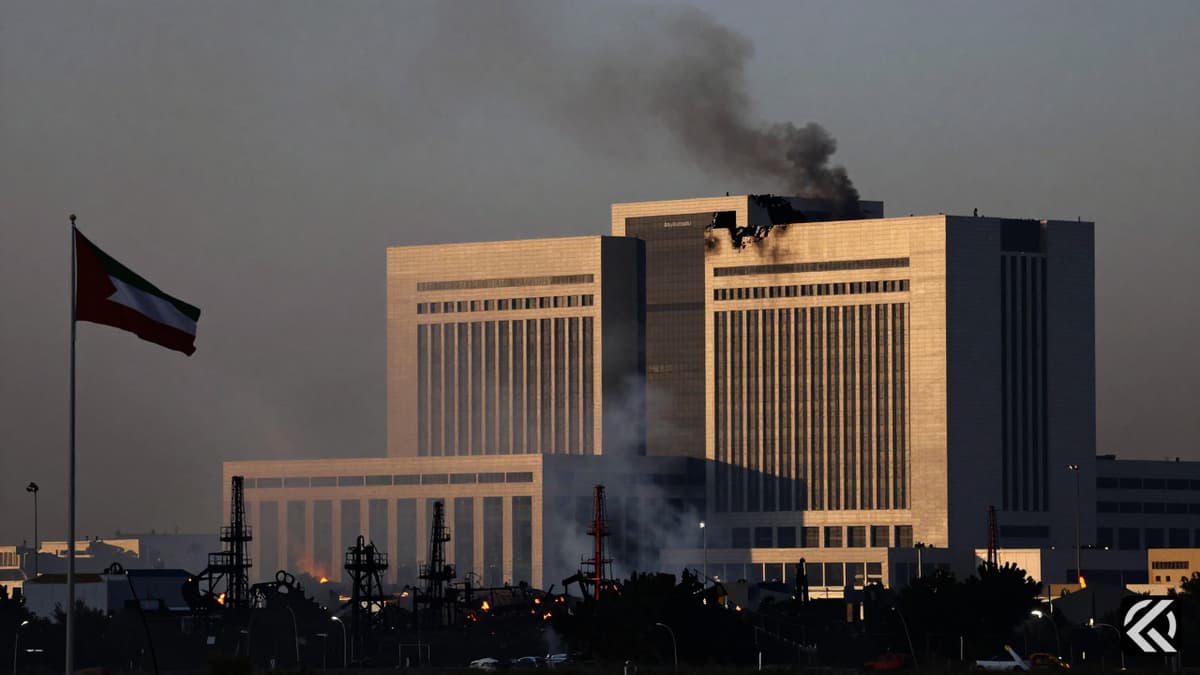
Flames erupted at Kuwait's ministries complex and Shuwaikh oil sector following a hostile drone strike attributed to Iranian aggression, leaving the nation's infrastructure damaged but unharmed.
The Kuwait drone attack on Saturday evening, April 4, 2026, marked a significant escalation in regional tensions as a hostile drone struck the country's ministries complex building and the nearby Shuwaikh oil sector complex. The strike, which caused significant material damage to the infrastructure, was explicitly attributed by Kuwait's Finance Ministry to "unjust Iranian aggression," resulting in emergency responses without any reported human injuries.
Immediately following the incident, the Kuwaiti Ministry of Finance issued a formal statement on X confirming that the attack occurred during the evening hours of April 4. The statement detailed that the Ministries Complex building in Kuwait City was the primary target, with the explosion and subsequent fires visibly affecting the area. Videos circulating of the event showed flames erupting from a part of the Shuwaikh oil sector complex, indicating the breadth of the threat. Despite the severity of the material damage, authorities confirmed that no casualties have been reported so far, attributing the lack of human loss to the swift response of emergency teams and the effectiveness of the air defenses.
The financial ministry's statement emphasized that the attack was a direct result of "unjust Iranian aggression." The text stated, "This resulted in significant material damage to the building, with no human injuries reported, praise be to God." The authorities further noted that emergency teams and relevant authorities responded immediately to the incident in accordance with approved procedures. This confirmation underscores the structured and rapid reaction of Kuwaiti emergency services in managing the aftermath of the strike.
The incident did not occur in isolation but is part of a broader and intensifying regional conflict. Kuwait's military reported that its air defense systems were actively intercepting incoming missiles and drones. The Kuwaiti army posted on X, stating, "Kuwaiti Air Defenses are currently responding to hostile missile and drone threats," and clarified that any explosions heard by the public were the result of air defence interceptions rather than direct impacts on populated areas. This active defense response highlights the nation's preparedness in the face of the ongoing offensive.
The attack is widely understood to be in retaliation for the February 28 strikes by the United States and Israel. These initial strikes have since escalated into a broader regional conflict, with Gulf states, including Kuwait, coming under Iranian attacks. The situation has been described as critical, with reports indicating that Iranian aggression is being pressed on across the Gulf in response to the earlier military actions by the US and Israel. The timeline suggests a rapid escalation from specific targeted strikes to a wider drone and missile campaign involving multiple Gulf nations.
In the wake of the attack, the geopolitical landscape has seen a shift towards heightened alertness. The phrase "unjust Iranian aggression" used by the Finance Ministry reflects the official stance taken by Kuwait against the source of the attack. The conflict has also drawn international attention, with reports suggesting that Iran is challenging global timelines and deadlines, with some analysis suggesting a "forever war" stance against those perceived as adversaries. The closure of the Hormuz Strait has been a point of contention, with Iran daring to challenge global powers, though the specific status of the strait is a subject of intense monitoring.
The physical impact on the Shuwaikh oil sector is a critical component of the damage reported. The visual evidence of flames erupting from the oil sector complex indicates that energy infrastructure is now a direct target in this escalation. The presence of the oil sector in the vicinity of the ministries complex suggests a coordinated effort to destabilize key economic and governmental hubs simultaneously. The lack of casualties, while tragic in the context of the damage, is a testament to the interception efforts that prevented the full impact of the drones on civilian populations.
The financial ministry's declaration that the attack was due to "unjust Iranian aggression" frames the narrative within a specific geopolitical context. It places the responsibility squarely on Tehran, linking the event to a chain of retaliation initiated by the US and Israel. The statement also highlights the resilience of the Kuwaiti state, noting that despite the significant material damage, the system remained functional, and no lives were lost.
As the region grapples with this new phase of conflict, the role of air defense systems has become central. The ability to intercept incoming threats in real-time has prevented a more catastrophic loss of life, but the material damage to the ministries complex and the oil sector signals a new level of vulnerability for Gulf states. The situation remains fluid, with the international community watching closely as the conflict potentially expands further across the Gulf region.
The attack on Kuwait's ministries complex and Shuwaikh oil sector has solidified the narrative of a widening regional war driven by retaliatory actions. The confirmed link to "unjust Iranian aggression" suggests that this is not an isolated incident but part of a sustained campaign by Iran against Gulf allies of the United States and Israel. The active interception of threats by Kuwaiti air defenses indicates a high state of readiness, yet the successful penetration of the drone strike into the heart of the ministries complex and the oil sector reveals a critical vulnerability in the current security landscape.
Looking ahead, the potential for further escalation remains high. The fact that the attack occurred despite active air defense interceptions suggests that the volume and sophistication of the incoming threats are increasing. If the pattern of attacks continues to target both governmental and energy infrastructure, the long-term impact on Kuwait's economy and regional stability could be severe. The destruction of the Shuwaikh oil sector complex, a vital economic asset, could disrupt energy flows and trigger broader economic repercussions across the Gulf.
Furthermore, the political ramifications are likely to deepen. The explicit attribution of the attack to Iran will almost certainly strengthen diplomatic ties between Kuwait and its Western allies, potentially leading to increased military cooperation and intelligence sharing. However, it also raises the stakes for Iran, which may feel compelled to escalate its own operations to demonstrate resolve against what it perceives as external aggression. The "forever war" rhetoric mentioned in relation to the Hormuz Strait deadline adds a layer of uncertainty, indicating that the conflict could enter a prolonged phase with no immediate resolution in sight. The region stands at a precarious tipping point where the balance of power and the safety of civilians remain in the delicate hands of ongoing diplomatic and military maneuvers.
Jun 8, 2026 06:22 UTC
Xi Jinping Lands in Pyongyang for Rare Kim Jong Un Meeting
Jun 8, 2026 04:15 UTC
Trump Urges Netanyahu to Halt Iran Strike for Peace
Jun 8, 2026 02:17 UTC
Magnitude 7.8 Quake Shakes Philippines, Urging Immediate Evacuations
Jun 8, 2026 00:51 UTC
Trump Claims Iran Nuclear Deal Imminent Despite Diplomatic Fractures
Jun 8, 2026 10:44 UTC
INDIA Bloc Leaders Gather in Delhi Amidst Internal Tensions


