Amidst rising regional tensions, Oman and Iran hold high-level talks to ensure vessel transit, even as President Trump warns of severe consequences if the waterway remains blocked.
The Foreign Ministry of Oman confirmed on Sunday that officials from the country and Iran convened to address the critical issue of maritime transit. These Iran-Oman talks occurred on Saturday at the level of undersecretaries within the respective foreign ministries, attended by specialists from both nations. The primary objective of the meeting was to explore various options to ensure the smooth passage of vessels through the strategic waterway, which has become a focal point of regional instability.
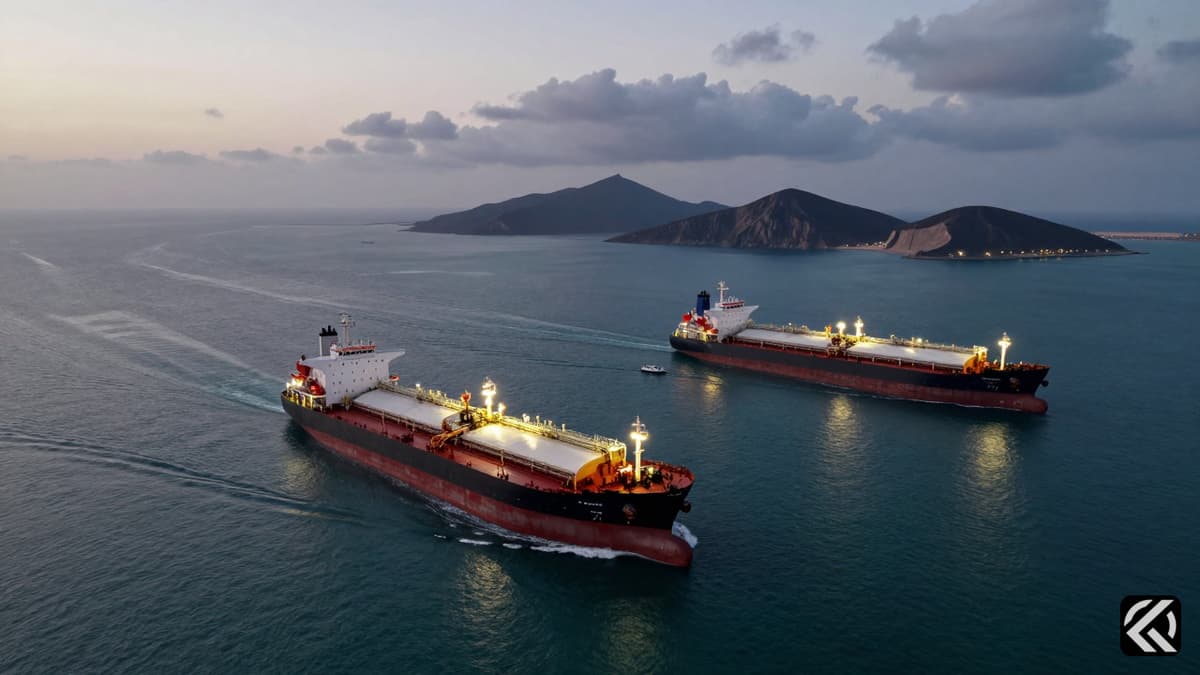
The urgency of these discussions is underscored by recent developments on the ground. On Sunday, tracking data monitored by the shipping journal Lloyd's List revealed three Omani ships transiting the Strait of Hormuz. This convoy, consisting of two large oil supertankers and one liquefied natural gas (LNG) carrier, was sailing unusually close to the Omani coast, outside the corridor approved by Iran near Larak Island. This activity comes just days after an Iranian official stated that the Islamic Republic was drafting a protocol with Oman to monitor traffic through the strait, a vital chokepoint where about one-fifth of global oil supplies travel.
The diplomatic effort is taking place against a backdrop of severe restrictions imposed by Iran's Islamic Revolutionary Guard Corps (IRGC). Since the war began on February 28, the IRGC has allowed a limited number of vessels, including those linked to Pakistan, France, and Turkey, to transit. However, the restrictions have left approximately 3,000 other vessels stranded, effectively creating a blockade that threatens global energy markets. The disruption has injected significant volatility into the market, forcing oil- and gas-importing countries to urgently seek alternative sources for their energy needs.
The situation has drawn sharp reactions from the United States. United States President Donald Trump utilized a social media post over the weekend to issue a stark warning. He threatened to unleash "all Hell" if the Strait of Hormuz is not opened by Monday, highlighting the immediate pressure on the region to resolve the transit issues. This Trump threat underscores the high stakes involved, as the waterway remains a critical artery for energy shipments moving from the Gulf to Europe and Asia.
Regional efforts to de-escalate the crisis are also underway through separate diplomatic channels. Egypt's Foreign Minister, Badr Abdelatty, held calls on Sunday to discuss proposals for regional de-escalation. These conversations included dialogue with US Special Envoy Steve Witkoff and regional counterparts, specifically Iranian Foreign Minister Abbas Araghchi. The Egyptian ministry stated that these discussions aimed to find a path toward stabilizing the volatile situation.
The feasibility of a peaceful resolution remains a subject of intense debate among international observers. Amin Saikal, a professor emeritus at the Australian National University, warned that an expansion of the war would be "hell for the whole region." Speaking to Al Jazeera, Saikal emphasized that a negotiated settlement is essential to prevent further devastation. However, he cautioned that the current trajectory suggests a narrow window for diplomacy.
"Unless President Trump decides that this conflict has caused so many problems for him domestically, as well as internationally, that it is really time to reach some compromise with the Iranians," Saikal concluded, highlighting the potential role of domestic and international political pressures in shifting the stance of global leaders. The convergence of the Strait of Hormuz becoming a flashpoint and the diplomatic maneuvers by Oman and Iran represents a critical juncture. As the region grapples with the ongoing US-Israeli war on Iran, the success of these talks could determine whether the global energy supply chain remains functional or faces prolonged disruption.
The Iran-Oman talks represent a significant diplomatic attempt to bridge the gap created by recent military escalations. While the meeting focused on expert proposals to be studied, the immediate presence of ships near the Omani coast suggests that some level of cooperation or at least mutual understanding is being tested. The ability to monitor traffic through a protocol between the two nations could serve as a precursor to broader de-escalation efforts.
Looking ahead, the path forward remains uncertain. The combination of strict transit restrictions by the IRGC, the high stakes of global energy markets, and the aggressive rhetoric from the United States creates a complex environment. If the diplomatic channels initiated by Oman and Iran fail to yield immediate results, the risk of further escalation remains high. The region awaits further developments as the deadline for US action looms, with the ultimate outcome potentially reshaping the geopolitical landscape of the Middle East for the foreseeable future.
Jun 8, 2026 00:51 UTC
Trump Claims Iran Nuclear Deal Imminent Despite Diplomatic Fractures
Jun 8, 2026 00:47 UTC
Iran Fires Missiles at Israel After Beirut Strike
Jun 7, 2026 22:00 UTC
US, Iran Peace Hops Fade 100 Days Into War
Jun 7, 2026 20:57 UTC
Iran Strikes Israel: IRGC Promises Week of Continuous Offensive
Jun 8, 2026 02:28 UTC
Trump Walks Out of Meet the Press After Rejecting Evidence Demands


