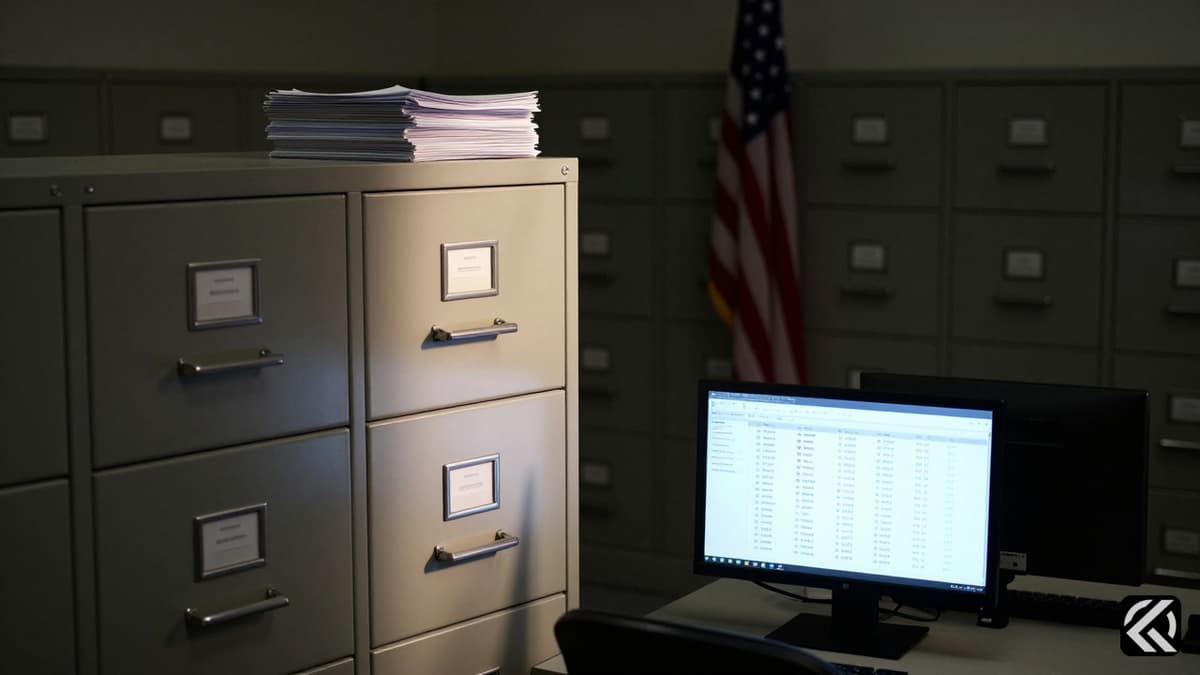
The Trump administration is aggressively building a national voter database, sparking fears of disenfranchisement and new legal battles over election integrity and federal overreach.
The Trump administration is intensifying its campaign against alleged voter fraud, launching aggressive new steps to build a national citizen database and hunt for suspected noncitizen voters. This sweeping effort, framed as essential for election integrity, involves an executive order, a newly empowered prosecutor, and a surge of lawsuits targeting states that refuse to share sensitive voter data.
Fresh warnings have emerged from critics who argue that amassing vast troves of voter data across the country could be weaponized to block eligible Americans from voting. This escalation creates fresh doubts regarding the legitimacy of the upcoming 2026 midterm elections. The Justice Department has finalized a deal with the Department of Homeland Security, granting the latter access to sensitive voter-roll data demanded from states to cross-reference against a citizenship verification program that has been widely criticized for its inaccuracy.
Trump officials have floated a new pressure tactic for states refusing to hand over full voter rolls: conditioning hundreds of millions of dollars in homeland security grants on the sharing of voter data. States would be required to run their registration rolls through the federal immigration records system or lose the funding. Heather Honey, an election skeptic brought into DHS to work on "election integrity," reportedly raised this idea during a call with Federal Emergency Management Agency leaders, though a DHS spokesperson stated there were no immediate changes to announce.
The administration has now sued 30 states and the District of Columbia for failing to produce unredacted voter lists voluntarily. During a March 26 hearing, a DOJ lawyer acknowledged for the first time that the goal of obtaining this confidential data includes having the DHS scan the rolls for ineligible names. The DHS citizenship verification program currently employed is known to generate an inflated number of potential noncitizens, raising significant concerns about the reliability of the data used for these purges.
Elizabeth Frost, litigation chair at the Elias Law Group, cautioned that the methods used to sort or search the data are not fully transparent. She noted that data can be manipulated to "tell a certain story," potentially creating a false narrative about voter eligibility depending on how the elections eventually sort out. Since returning to office, Trump has continued to claim that US elections are plagued by fraud, tasking multiple agencies with hunting down evidence of foreigners tainting results.
On Tuesday, President Donald Trump signed an executive order focused on citizenship data and mail ballots that appears to create a national citizen database, directly challenging the constitutional command that states are the primary administrators of elections. The directive aims to create "citizenship lists" for every state by drawing on Social Security data and other federal records. However, experts argue the federal government lacks the legal authority or internal tools to amass a complete list of eligible voters independently.
Last year, the administration revamped the SAVE (Systematic Alien Verification for Entitlements) program, linking immigration records with Social Security databases and passport information. While more than two dozen states voluntarily use this system, Texas officials recently sued by advocates for flagging potential noncitizens, highlighting the tool's unreliability. The Trump administration intends to use this system to conduct its own reviews of state voter rolls, with DOJ officials claiming it is "100% accurate," despite state and local officials reporting that it has ensnared many citizens.
State and local officials have expressed deep concern over the administration's attempt to centralize the vetting of voters. One anonymous Republican state elections chief described the move as incredibly problematic and unconstitutional, stating the federal government is attempting to do the states' jobs without proper authorization. Despite the DOJ's assertions, the system has led to the identification of thousands of potential noncitizens, many of whom are citizens who have since naturalized. With Democrats and advocates swiftly suing to block the directive, courts are expected to halt the latest push, following similar interventions that stopped parts of the 2025 executive order. The administration maintains that these measures are necessary to ensure only American citizens vote, arguing that election integrity remains a top priority for the President and the American people.
Jun 8, 2026 00:51 UTC
Trump Claims Iran Nuclear Deal Imminent Despite Diplomatic Fractures
Jun 8, 2026 00:47 UTC
Iran Fires Missiles at Israel After Beirut Strike
Jun 7, 2026 22:00 UTC
US, Iran Peace Hops Fade 100 Days Into War
Jun 7, 2026 20:57 UTC
Iran Strikes Israel: IRGC Promises Week of Continuous Offensive
Jun 8, 2026 02:28 UTC
Trump Walks Out of Meet the Press After Rejecting Evidence Demands