Section
President Trump claims total US control over the Strait of Hormuz, highlighting a naval blockade and Iran’s economic woes. See the latest on US-Iran tensions.
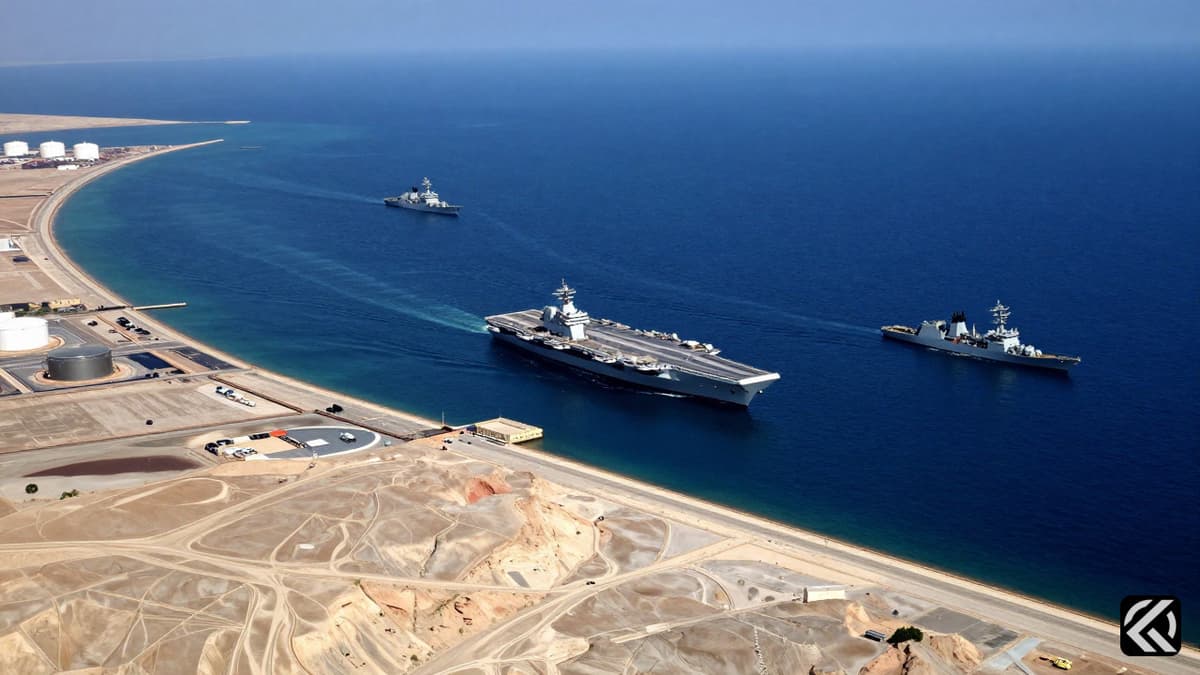
President Donald Trump has declared that the United States exercises "total control" over the strategically vital Strait of Hormuz, asserting that Washington intends to maintain its hold over the critical waterway. This declaration comes amidst high tensions with Iran, where diplomatic efforts to reopen the shipping route are ongoing despite significant military posturing from both sides.
The US president made these claims in a Wednesday post on Truth Social, describing the US naval blockade of Iranian ports as a "WALL OF STEEL" that leaves Tehran with no capacity to challenge American military forces. Trump dismissed Iran’s military capabilities while painting a grim economic portrait of the Islamic Republic, stating that the country has "No Money" and is suffering from 300% inflation that is worsening daily. He characterized Iran as "all talk and no action," noting that it is no longer the "Bully of the Middle East," and added a religious reference with the phrase "Praise be to Allah."
The confrontation over the Strait of Hormuz represents one of the world’s most important maritime chokepoints, which carries a significant share of global oil supplies. The waterway has faced severe disruption since the conflict involving Iran, Israel, and the US escalated. To enforce its position, the US has imposed a strict naval blockade on Iranian ports while maintaining a major military presence in the Gulf region. This military strategy is part of a broader effort to exert pressure on Tehran through both economic and military means.
Iran, however, has refused to allow normal traffic to resume until specific conditions are met. Tehran has explicitly linked the reopening of the strait to a series of demands, including an immediate end to the naval blockade and international sanctions. Furthermore, Iran is demanding compensation for the damage caused to its infrastructure and economy during the ongoing conflict. Tehran has accused Washington of using coercive military and economic pressure to force concessions, a stance that has hardened diplomatic relations and stalled immediate resolutions.
Despite the aggressive rhetoric and physical blockade, indirect diplomatic contacts between the US and Iran have continued in the background. These efforts are primarily focused on preventing a wider regional conflict and restoring maritime traffic, which has been largely closed to normal operations due to the standoff. The primary concern for global markets is the potential for prolonged disruption, which could lead to severe energy shortages and price spikes worldwide.
With the naval blockade effectively closing the Strait to normal commercial traffic, attention has shifted to alternative routes for energy exports and imports. Shippers are increasingly looking toward the Red Sea and the Bab el-Mandeb Strait as viable alternatives. However, these routes are not without their own dangers. The wider regional tensions escalated further this week after Iran-backed Houthi rebels attacked a ship off the coast of Yemen.
The Houthi attack resulted in the deaths of six people, including three Pakistani nationals, renewing fears that the violence could spread to other strategic shipping routes. This incident highlights the fragile security environment in the broader Middle East and the interconnected nature of the conflicts. The attacks on commercial vessels demonstrate that the conflict is not limited to the Persian Gulf but extends to vital global trade corridors, complicating diplomatic efforts to de-escalate the situation.
The current standoff between the United States and Iran over the Strait of Hormuz signals a dangerous escalation in US-Iran tensions that could have long-lasting effects on global energy security. If the naval blockade and diplomatic stalemate persist, global shipping routes will remain under significant threat, forcing nations to rely on less efficient alternative paths like the Red Sea, which are already vulnerable to Houthi aggression. The economic strain on Iran, highlighted by Trump’s claims of zero funds and hyperinflation, may force Tehran to reconsider its demands, but the insistence on compensation and sanctions removal creates a high barrier to immediate resolution. Consequently, global energy markets are likely to face prolonged volatility as supply chains adapt to these restricted chokepoints. Unless indirect diplomatic contacts yield a breakthrough that ends the blockade and addresses Iran's grievances, the region faces a continued risk of wider conflict, potentially drawing in more international actors and destabilizing the Middle East for years to come. The assertion of "total control" by the US may serve as a short-term deterrent, but it does not resolve the underlying geopolitical fractures that require comprehensive diplomatic engagement to heal.
Aug 17, 2026 14:29 UTC
USS Abraham Lincoln Crew Faces Mental Health Crisis During Extended Deployment
Aug 17, 2026 04:30 UTC
Trump Reduces Joint Military Exercises With South Korea
Aug 17, 2026 02:52 UTC
Kushner Meets Hamas in Egypt Over Rejected Gaza Ceasefire Plan
Aug 16, 2026 20:37 UTC
Kushner Mediates Gaza Ceasefire Amidst Escalating US-Iran Conflicts
Aug 18, 2026 00:00 UTC
Trump’s False Claims on South Korea Defense Payments Disputed