Section
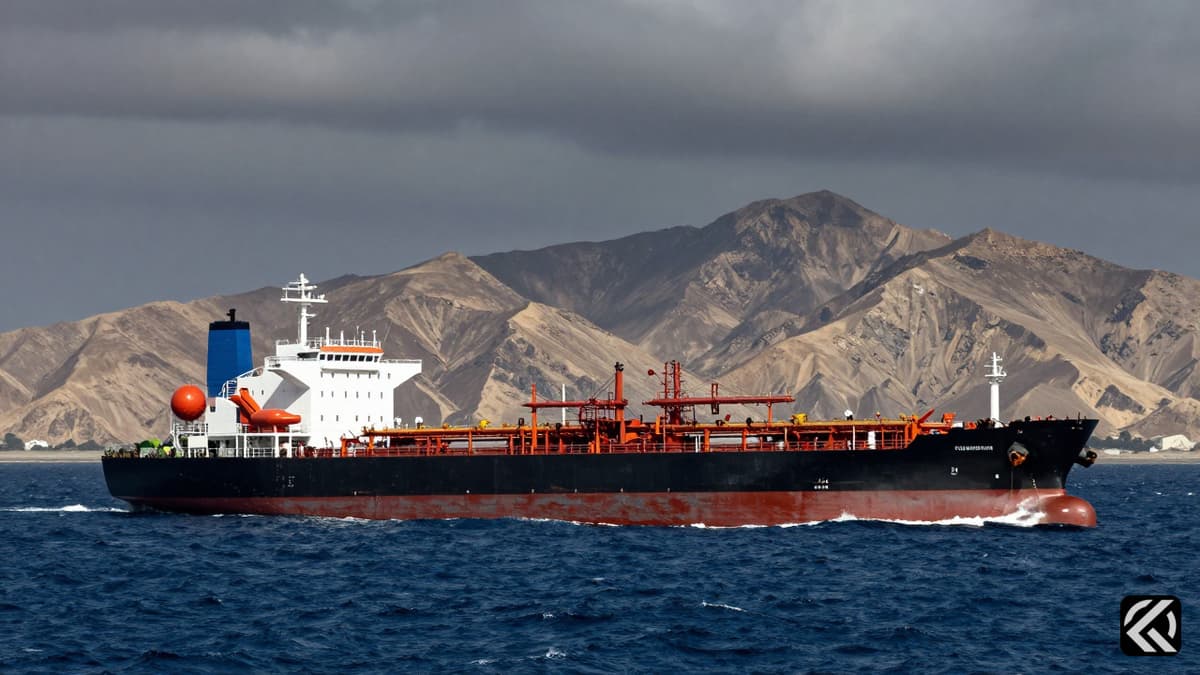
At least seven tankers reversed course near Yemen, highlighting the escalating risks of the Houthi maritime embargo and its potential to spike global energy costs.
At least seven oil tankers have executed sharp U-turns in waters close to Yemen since the Iran-linked Houthi group announced a "maritime embargo" against Saudi Arabia on Monday, according to ship-tracking data.
All of these vessels were traveling either to or from Saudi ports when they made sudden changes of course immediately following the embargo's announcement. The incident underscores the fragility of the Houthi maritime embargo's impact on commercial shipping, as nearly 15% of global sea trade moves through the Red Sea. This crucial waterway connects the Mediterranean and the Gulf of Aden through two strategic choke points: the Suez Canal in Egypt and the Bab al-Mandab Strait between Yemen and the Horn of Africa.
The Red Sea has become an increasingly vital route for the export of Saudi oil exports since the US-Israeli war with Iran led to the effective closure of the Strait of Hormuz. This closure has severely restricted the flow of oil and gas from the Gulf, forcing a shift in logistics. Rosemary Kelanic from the US-based Defense Priorities think tank noted that this situation has played a "major role in relieving pressure to global markets." However, she warned that if the Houthis further restrict trade, "prices will go up."
Kelanic told BBC Verify that any Houthi attacks on vessels in the Red Sea or Gulf of Aden "will suppress all international traffic not just Saudi-bound vessels." This broader implication suggests that the conflict extends beyond bilateral tensions, affecting global supply chains. The EU's naval force in the region, Aspides, recommended on Wednesday that "merchant vessels linked to Israeli, US or Saudi interests avoid transiting the Red Sea and Gulf of Aden until the threat level decreases," according to an advisory seen by Reuters news agency.
Specific tracking data from MarineTraffic highlights the immediacy of the threat. The crude oil tanker Rodos, loaded with Saudi crude, departed for India from the Red Sea port of al-Muajiz on Monday evening. The Liberian-flagged ship set off south towards the Bab al-Mandab Strait but about nine hours later made a U-turn and began sailing north instead. Additionally, ship-tracking data shows that at least eight ships bound for the Red Sea have made U-turns instead of entering the Bab al-Mandab Strait from the south.
A Hong Kong-flagged crude oil tanker sailing from China called New Prime also turned around as it headed towards Saudi Arabia on Monday and now appears to be waiting in the Arabian Sea. While the reasons for each course change cannot be independently verified, maritime risk management company Vanguard stated that "the timing is consistent with the embargo announcement."
In an email to shipowners on Monday, which the BBC has seen, the Houthis said "vessels are banned from loading or discharging cargo at any Saudi ports." The group added that ships "may be subject to targeting in any location within the operational reach." The Houthis have stated their embargo is in retaliation to a Saudi blockade of ports and airports in Houthi-controlled north-western Yemen. Saudi Arabia has condemned the allegation and has vowed to "take all necessary measures to protect its ships in accordance with international law."
Yemen has been devastated by a civil war since 2014, when the Houthis captured the capital of Sana'a from the government. The conflict escalated in 2015, after a Saudi-led coalition of Arab states intervened to try and restore the official government. There has been an informal truce between the Houthis and Saudi Arabia since 2022. But last week, the Houthis launched missiles at an airport in south-western Saudi Arabia in response to air strikes on Sanaa's airport that they blamed on the kingdom.
Shortly after the Gaza war broke out in October 2023, the Houthis began attacking merchant vessels in the Red Sea and Gulf of Aden, saying they were acting in support of the Palestinians. These attacks led to four ships being sunk, one vessel seized, and nine crew members killed. This history of aggression suggests that the current embargo is part of a broader strategy to leverage maritime power.
The recent closure of the Strait of Hormuz has significantly altered Saudi logistics. Saudi Arabia has diverted more than 70% of its crude exports from the Gulf to the Red Sea port of Yanbu through an east-west pipeline. About four million barrels per day have been shipped from Yanbu in recent weeks, compared with about 973,000 a year earlier, according to data from Kpler and maritime analytics platform Signal Ocean.
Naveen Das, a senior oil analyst from Kpler, told BBC Verify the only option left to the Saudis if the Bab al-Mandab Strait is effectively closed would be to move oil all the way through the Mediterranean and around the southern tip of Africa to get to Asia. This alternative route is significantly longer and more expensive, highlighting the strategic importance of the Red Sea.
The immediate impact of the blockade on consumers may not be drastic, but the conflict with Iran has made the global energy system more vulnerable to shocks like these. Naveen Das added, "We could weather it for two weeks, three weeks, even a month, but even in that time, we will see higher freight rates, higher energy prices and that bleeds into higher energy consumer costs." If the Red Sea shipping crisis persists, the global economy will likely face sustained inflationary pressure on energy, forcing a costly and inefficient rerouting of oil supplies for months to come.
Aug 17, 2026 14:29 UTC
USS Abraham Lincoln Crew Faces Mental Health Crisis During Extended Deployment
Aug 17, 2026 04:30 UTC
Trump Reduces Joint Military Exercises With South Korea
Aug 17, 2026 02:52 UTC
Kushner Meets Hamas in Egypt Over Rejected Gaza Ceasefire Plan
Aug 16, 2026 20:37 UTC
Kushner Mediates Gaza Ceasefire Amidst Escalating US-Iran Conflicts
Aug 18, 2026 00:00 UTC
Trump’s False Claims on South Korea Defense Payments Disputed