Section
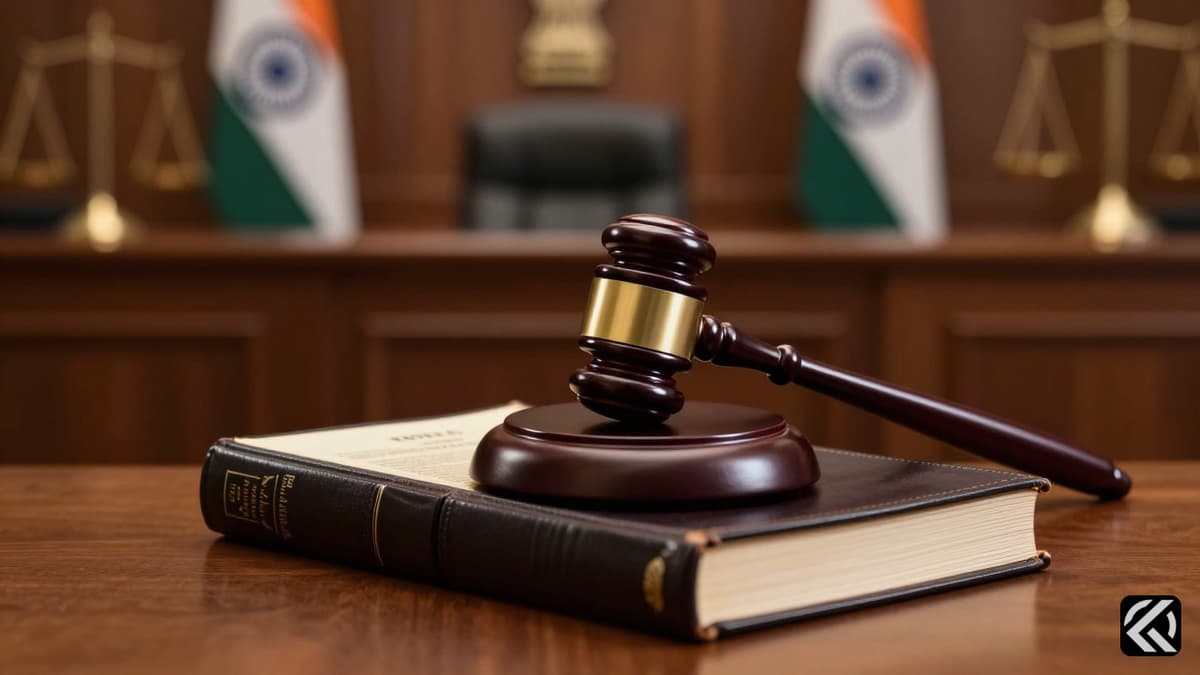
The Supreme Court clarifies that while the government defines the National Song, it cannot impose criminal penalties on those objecting to specific Vande Mataram Stanzas on religious grounds.
The Supreme Court of India has delivered a significant observation clarifying the boundaries of state power regarding national symbols. While affirming that a democratically elected government determines the scope of the National Song, the Bench ruled that the state cannot subject conscientious objectors to penal consequences for refusing to sing specific parts of the song. This judgment was delivered on Tuesday, September 22, 2026, by a three-judge Bench headed by Chief Justice Surya Kant and including Justice Joymalya Bagchi.
The court’s observation came during a hearing on a petition filed by renowned Carnatic vocalist and author T.M. Krishna. Krishna, represented by senior advocate S. Muralidhar and advocate Prasanna S., challenged the Prevention of Insults to National Honour (Amendment) Act, 2026, along with administrative directions issued by the Ministry of Home Affairs. The petition argues that these legal measures compel the mass singing of the entire six stanzas of the song at public functions, with non-compliance risking imprisonment or fines.
Justice Bagchi emphasized that the definition of what constitutes the National Song is a matter for the state, but this power does not extend to violating religious freedoms. "What is the National Song is not in dispute… It is for the democratically-elected state to decide and give aspiration as to what the National Song is, whether it should be two stanzas or four stanzas," the Justice stated. However, the Bench firmly noted that "nobody can infract Article 25 and 26 [religious freedom] or subject a conscientious objector to penal consequences." The Court clarified that individuals who choose to recite only one or all stanzas must not face criminal prosecution for their choice.
The legal dispute centers on the amended Section 3 of the 2026 Act, which mandates a uniform code of conduct for public functions. The petition contends that this regulation compels a "ceremony of assent" to a symbol whose last four stanzas are "expressly devotional, deity-invoking and non-secular." By mandating the rendition of all six stanzas under penal sanction, the state transforms a contested historical symbol into a compelled orthodoxy. The petition argues this creates a substantively coded message of majoritarian religious alignment, inflicting expressive subordination on believing Muslims and other conscientious objectors.
During the hearing, Dr. Muralidhar highlighted that the 2026 Act fails to even define what a "National Song" is, arguing that such a definition requires broader debate and consensus rather than being thrust upon citizens under threat of penalty. He further pointed out that the Home Ministry’s office memorandum involved in the enforcement was never gazetted and cited no supporting provision of law. The Solicitor General, Tushar Mehta, intervened to assert that Vande Mataram has been recognized as the National Song since pre-Independence, citing historical customs and usages as proof. He also remarked that law-making cannot be conducted "as per Naxalites’ idea," a comment that was strongly objected to by Dr. Muralidhar as offensive and unbecoming of a law officer.
Justice Bagchi drew comparisons to secular models, noting that the American Constitution uses the word "God" in its National Anthem without compromising secularism. "Religious flavour or an icon or homage to a particular God may not perhaps impact secularism in a constitutional democracy," the Judge reasoned. The Bench indicated it would closely examine whether the 2026 amendment and subsequent government circulars effectively choke the rights of conscientious objectors. The court reiterated that the 1986 precedent in Bijoe Emmanuel versus State of Kerala, which upheld the right to religious freedom and silent objection, still holds true.
This ruling establishes a critical precedent for the balance between national uniformity and individual religious liberty in India. By affirming that penal action against those refusing specific Vande Mataram Stanzas is unconstitutional, the Supreme Court reinforces the protection of Article 25. The government’s amended Act must now be viewed through the lens of this constitutional tolerance. Legal experts anticipate that this decision may lead to a reevaluation of administrative directives imposed by the Ministry of Home Affairs. The state retains the authority to define the National Song, but it cannot use penal law to enforce compliance with all its stanzas. This boundary ensures that national symbols remain inclusive rather than coercive, potentially influencing future legislation regarding national protocols and public conduct laws in India.
Oct 6, 2026 02:48 UTC
Yemen Forces Recapture Mocha in Major Counteroffensive
Oct 6, 2026 00:07 UTC
Teen Loses Hand in French School Protest Clashes Amid Escalating Violence
Oct 5, 2026 22:36 UTC
UAE Shares FlyDubai Crew Data After Pilot Seize Control Attempt
Oct 5, 2026 22:00 UTC
US Withdraws Heavy Bombers From UK Base Amidst Rising Tensions With Iran
Nov 5, 2026 20:16 UTC
Pia Dandiya Claims Landmark Florida Win in 2026 Midterms