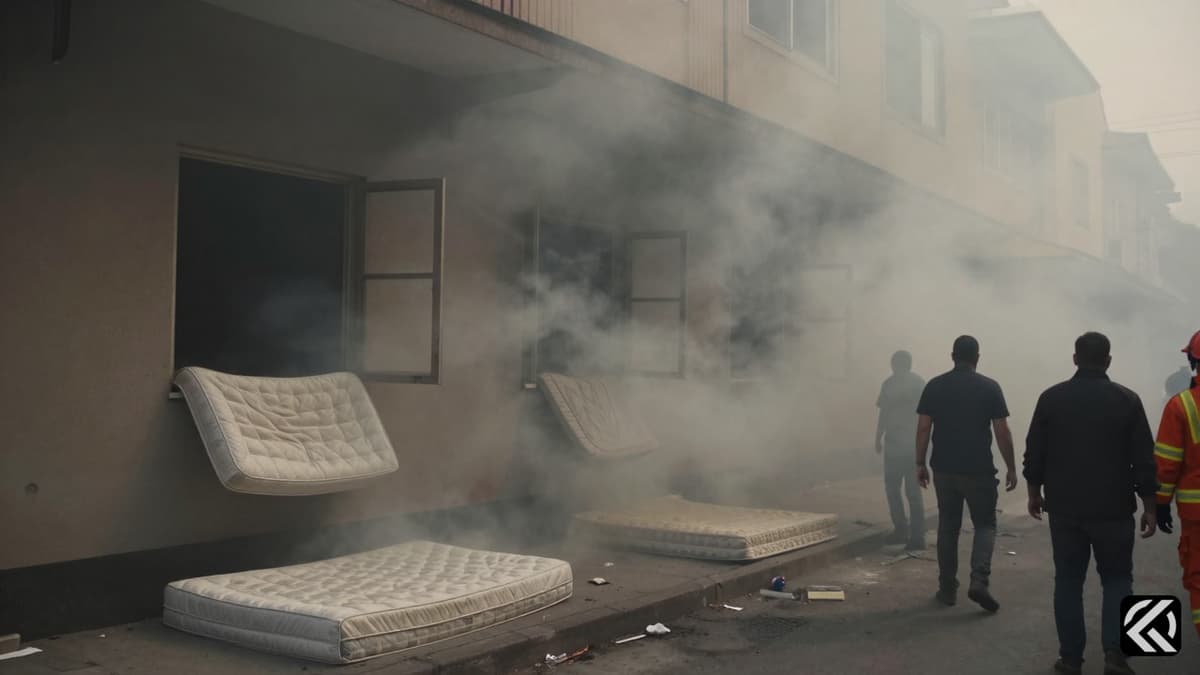
Desperate locals defied smoke and flames to rescue trapped guests at a Delhi hotel, highlighting urgent safety concerns in the area near Max Hospital.
The chaos began around 8:30 a.m. on Wednesday, June 3, 2026, when a massive blaze erupted at a five-story bed-and-breakfast hotel in Delhi’s Hauz Rani area. As thick smoke engulfed the structure, local residents immediately rushed to rescue trapped occupants, acting with urgent speed even before official fire tenders could arrive on the scene.
The fire spread rapidly across three floors of the building, leaving numerous guests stranded inside amidst dense smoke and intense panic. The establishment was notably deficient in safety features, reportedly possessing only one common entry and exit point and lacking any emergency staircase, which severely hampered escape efforts.
Riyazuddin, a 61-year-old roadside shop owner opposite the building, was among the first to respond to the crisis. He quickly retrieved mattresses from his shed and spread them below the building’s windows, creating a makeshift safety net for those attempting to jump to ground level. Moments later, trapped residents began leaping through windows to escape the flames. However, the situation was fraught with difficulty; not all rooms had windows, and some that did were jammed shut or constructed with unbreakable glass.
“I laid out around 15 mattresses. One man who rolled over from the second floor broke his leg. Everything was extremely tense,” said Riyazuddin, describing the harrowing scene as people sought safety from the growing inferno.
Mohammed Israr Khan, a 40-year-old resident, also played a crucial role in the rescue. He rushed to the site after receiving a call from his brother around 8:40 a.m. Along with locals Wasim, Amir, Shahrukh, Afzal, Hazi, and Anish, Khan helped pull victims out of windows and carry them toward ambulances. The locality, situated in close proximity to Max Hospital, is known for housing many hotels used by patients and their families who have visited the capital for medical treatment. Locals reported that the majority of the occupants were foreign nationals holding medical visas.
When rescue teams and volunteers finally entered the building, visibility was near zero. “When we entered the building with police and rescue teams, we could not see anything. There was only smoke, screams and wailing from every floor,” Mr. Khan recounted. He added, “Many were trapped in the basement. Some bodies were still burning, but we used our bare hands. Time is critical in such situations.”
The emotional toll on rescuers was immense. Mr. Khan stated that he performed CPR on eight individuals during the ordeal. “I vomited a couple of times. It was a deadly sight. Around five people we brought out were already dead,” he said, his voice reflecting the gravity of the loss. In a particularly poignant moment, a victim’s phone rang while Mr. Khan was assisting with the rescue. It was the person’s mother inquiring about her child. “I could not say anything and handed the phone to the police. I didn’t want to be the bearer of the bad news,” he explained.
Rescuers noted that the building’s single entry-exit point and inaccessible windows made the operation incredibly difficult. The hazardous conditions were so severe that some volunteers and police personnel reportedly collapsed after inhaling excessive amounts of smoke. Wasim Raja, another local, recounted finding two unconscious women in a bathroom where they had locked themselves to escape the fire. “I carried them out on a mattress by myself. Most people staying there were already weak and had come to Delhi for treatment,” he said.
The tragedy cast a shadow over the daily lives of those in the narrow lane. A local pharmacist, whose shop has operated in the area for over 27 years, expressed deep concern. “A mother and her child bought medicines from me yesterday. They were supposed to travel to Agra today. I don’t know if they made it,” he said, highlighting the uncertainty faced by many connected to the facility.
Hours after the fire was extinguished, panic lingered in the neighborhood. The area is characterized by narrow lanes crisscrossed with dangling electrical wires and houses numerous multi-story hotels. Several guests from nearby lodges were seen checking out with their luggage, visibly worried about safety in similar buildings, many of which share the same defects of having only one staircase and lacking fire equipment.
The incident triggered immediate reactions from those with relatives in the vicinity. A man who flew in from Lucknow after hearing reports of the Delhi hotel fire said, “My father is staying here for treatment and cannot speak. I was supposed to come tomorrow, but I took the first flight as soon as I heard the news with name of the hotel because it sounded similar to the one where my father is staying.” His story underscored the anxiety rippling through the medical tourism network, where families rely on the safety of local accommodations while their loved ones undergo critical care.
The rescue operation exposed severe deficiencies in the safety standards of lodging facilities in the Hauz Rani area, particularly those catering to international medical tourists. The lack of emergency staircases, single entry-exit points, and unbreakable windows in several rooms created fatal bottlenecks during the escape. The involvement of numerous foreign nationals on medical visas suggests that these establishments serve a high-volume, vulnerable demographic that may lack immediate local support networks.
The immediate aftermath, marked by locals performing CPR and creating makeshift safety nets with mattresses, indicates a total absence of immediate internal safety protocols. The presence of dangling electrical wires in the narrow lanes further points to broader infrastructural negligence in the district. Given the proximity to Max Hospital and the steady influx of patients, it is highly probable that similar buildings will continue to face scrutiny. In the long term, this incident is likely to trigger stricter inspections and mandatory safety upgrades for hotels in the region, as authorities and the public demand accountability for the preventable dangers that led to the loss of life. The event serves as a critical warning for the hospitality sector serving medical travelers, emphasizing that fire safety cannot be an afterthought in densely populated urban health hubs.
Jun 8, 2026 22:55 UTC
Netanyahu Vows Forceful Response to Future Iran Attacks
Join 50,000+ readers getting the global briefing every morning.
No spam. Unsubscribe anytime.
Jun 8, 2026 22:55 UTC
Netanyahu Vows Forceful Response to Future Iran Attacks
Jun 8, 2026 20:56 UTC
Netanyahu Halts Iran Fighting, Vows Future Force
Jun 8, 2026 20:54 UTC
Justice Department Moves to Strip Citizenship from 17 Individuals
Jun 8, 2026 18:37 UTC
Trump Denied War Pledge Despite Clear Campaign Records


